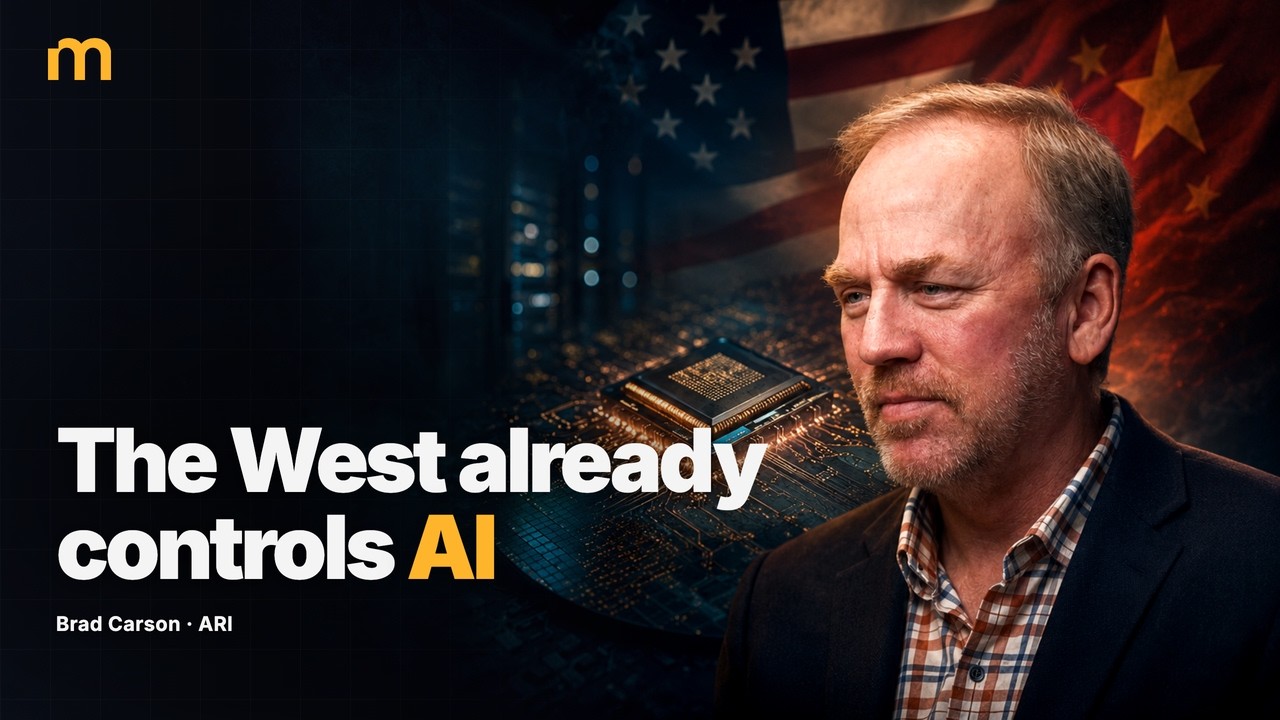
Brad Carson, a former Congressman and Pentagon official, shares his insights on the current state and future of artificial intelligence (AI), emphasizing that AI is not an unstoppable force but a technology that society can and should actively shape. He highlights the critical role of the United States in controlling AI development, particularly through its dominance in semiconductor manufacturing, which can effectively limit other nations’ ability to develop advanced AI systems. Carson stresses the importance of regulation and oversight, advocating for mandatory testing and transparent evaluation of frontier AI models to ensure public trust and safety.
Carson discusses the anthropomorphizing of AI, warning against treating AI systems as sentient beings with rights akin to humans. He argues that AI should be regarded as machines subject to product liability laws rather than First Amendment protections, which some industry actors use to resist regulation. He also addresses the challenges of AI misuse, such as deepfake pornography and harmful content, emphasizing shared responsibility between developers and users. Carson supports government intervention to require AI companies to remove harmful training data and design products that minimize risks, balancing innovation with accountability.
On the military front, Carson critiques the increasing reliance on AI and autonomous systems in warfare, pointing out the opacity and unpredictability of neural networks compared to traditional deterministic systems. He warns about the ethical and legal complexities introduced by AI-driven targeting and decision-making, where probabilistic assessments replace clear-cut categorizations of combatants. Despite concerns about an AI arms race, Carson remains optimistic that international agreements and controls, similar to past arms control treaties, are possible. He underscores the necessity of diplomatic engagement with countries like China to manage AI risks collaboratively.
Carson also reflects on the dynamics between private AI companies and government agencies, using the example of Anthropic’s reluctance to fully cooperate with the Pentagon due to ethical concerns. He views such tensions as indicative of broader challenges in balancing commercial interests, national security, and ethical considerations. Carson advocates for a regulatory framework that clarifies lawful uses of AI and ensures government accountability, while recognizing the importance of competition among a few leading AI labs to drive innovation and distribute power more evenly.
Finally, Carson highlights the knowledge gap within the U.S. Congress regarding AI, noting that lawmakers have limited time to deeply understand complex technologies. He praises efforts to bring technical experts into congressional staff roles but calls for the establishment of a dedicated, nonpartisan congressional think tank focused on technology policy. He warns that public distrust of AI, fueled by fears of job loss and societal disruption, poses a significant risk to the technology’s future. Carson urges AI practitioners and advocates to engage actively in public discourse and policymaking to build trust and ensure AI benefits are broadly shared.