Nvidia is making a significant push into quantum computing, aiming to revolutionize how computers process information. Unlike classical computers that use bits representing either 0 or 1, quantum computers use qubits, which can exist in multiple states simultaneously thanks to a phenomenon called superposition. This unique property allows quantum computers to solve certain complex problems much faster than classical computers by effectively searching multiple possibilities at once. However, qubits are extremely fragile, requiring ultra-cold temperatures and precise conditions to function without errors, which has been a major challenge in advancing quantum computing.
The potential applications of quantum computing are vast and impactful. Quantum computers could dramatically accelerate drug discovery by simulating molecular interactions at an unprecedented scale, improve climate modeling with more accurate predictions, optimize financial portfolios in real time, and enhance artificial intelligence by processing massive datasets more efficiently. Despite these advantages, quantum computers are prone to errors, and correcting these errors in real time is critical. Classical computers, especially AI-powered supercomputers, are essential for monitoring and correcting quantum errors, but until now, there has been no efficient way to tightly integrate these two systems.
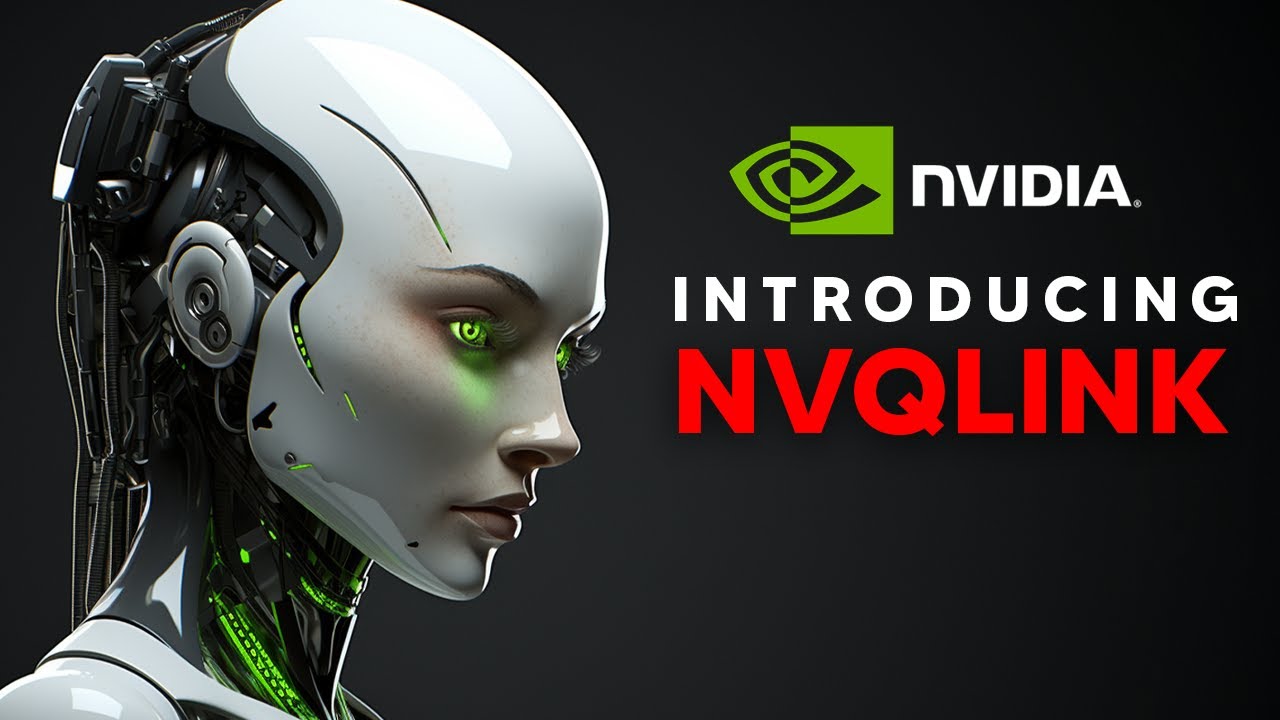
Nvidia’s breakthrough comes with the introduction of NVQ Link, a high-speed, low-latency connection that directly links quantum processors with Nvidia’s AI GPUs. This connection allows AI algorithms running on GPUs to instantly detect and correct errors in quantum computations, enabling the two systems to work seamlessly as one hybrid unit. NVQ Link is designed to be universal, supporting various quantum technologies, and has already gained support from numerous quantum computing companies and national laboratories. This hybrid approach leverages the strengths of both quantum and classical computing, allowing researchers to tackle complex problems more effectively.
The real-world impact of NVQ Link is already being seen in research institutions. Scientists are using this hybrid system to simulate protein folding, which is crucial for understanding diseases like Alzheimer’s and cancer, and to design new materials with desirable properties. Climate scientists are running more detailed models to better predict the effects of climate change. In AI, NVQ Link could drastically reduce the time and energy required to train large models, enabling more sophisticated and powerful AI systems that can handle vast amounts of data, potentially transforming fields like medicine and scientific research.
Despite the excitement, there are important concerns and challenges. The technology is expensive and initially accessible only to large corporations and governments, potentially widening the technological divide. There are also security risks, as powerful quantum computers could break current encryption methods, prompting a race to develop quantum-resistant security. Moreover, the full implications of quantum AI hybrid systems are not yet fully understood, and practical large-scale quantum computing is still likely 15 to 30 years away. While NVQ Link represents a major step forward, it is part of a long journey toward realizing the full potential of quantum computing.