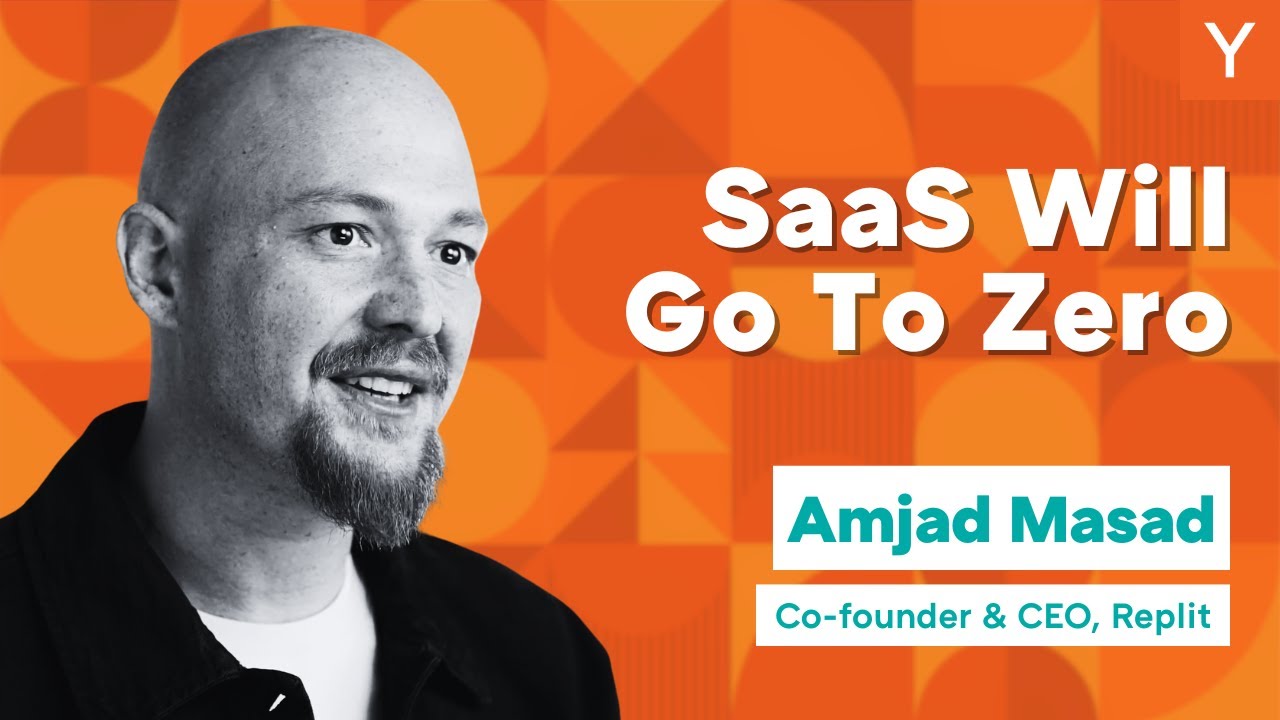
In the talk, Replit CEO Amjad Masad discusses the future of software creation, emphasizing a transition from software development being an expert-only domain to something accessible to everyone. Drawing parallels with the evolution of computing from mainframes to personal computers, he highlights how software engineering is undergoing a similar democratization. Replit’s mission is to simplify programming by building an integrated development environment (IDE), language runtimes, cloud services, and now focusing heavily on AI-powered agents that can write code autonomously, thereby removing coding as a bottleneck.
Masad explains that while AI agents capable of coding are emerging, the real challenge lies in creating the infrastructure or “habitat” for these agents to operate effectively. This includes scalable cloud-based virtual machines, sandboxed environments, support for multiple programming languages and packages, deployment tools, databases, authentication, and background job management. Replit is actively developing these components to enable agents to build, test, and deploy software reliably and autonomously, with ongoing work on advanced features like end-to-end testing, transactional file systems, and parallel simulations to improve agent reliability and autonomy.
Looking ahead, Masad predicts that the cost of application software will approach zero as AI agents enable anyone to generate complex software with minimal effort. This shift will disrupt traditional SaaS markets and fundamentally change how businesses operate. He foresees a future where employees become generalists empowered by AI agents, merging roles like engineering, design, and product management into single individuals who focus on generating value rather than specialized tasks. Companies will resemble open-source projects more than hierarchical organizations, with rapid formation and dissolution of teams and projects facilitated by AI.
Masad also addresses questions about the coexistence of multiple specialized agents, the limits of AI creativity, and the evolving nature of human work. He believes humans will remain essential for novel problem-solving and creativity beyond current AI capabilities. He advocates for a broad skill set combining liberal arts and STEM education to prepare for this future. Additionally, he highlights Replit’s unique approach of focusing on the full software stack and infrastructure to support long-term agent autonomy and reliability, differentiating it from competitors.
Finally, Masad touches on the broader implications of AI-driven software creation, including the potential for universal problem-solving agents that manage complex tasks autonomously, the importance of domain expertise in building specialized agents, and the need for new protocols to enable seamless agent collaboration. He envisions a future where software development is no longer a bottleneck, enabling unprecedented upward mobility and opportunity for individuals worldwide, fundamentally transforming the economy and the nature of work.