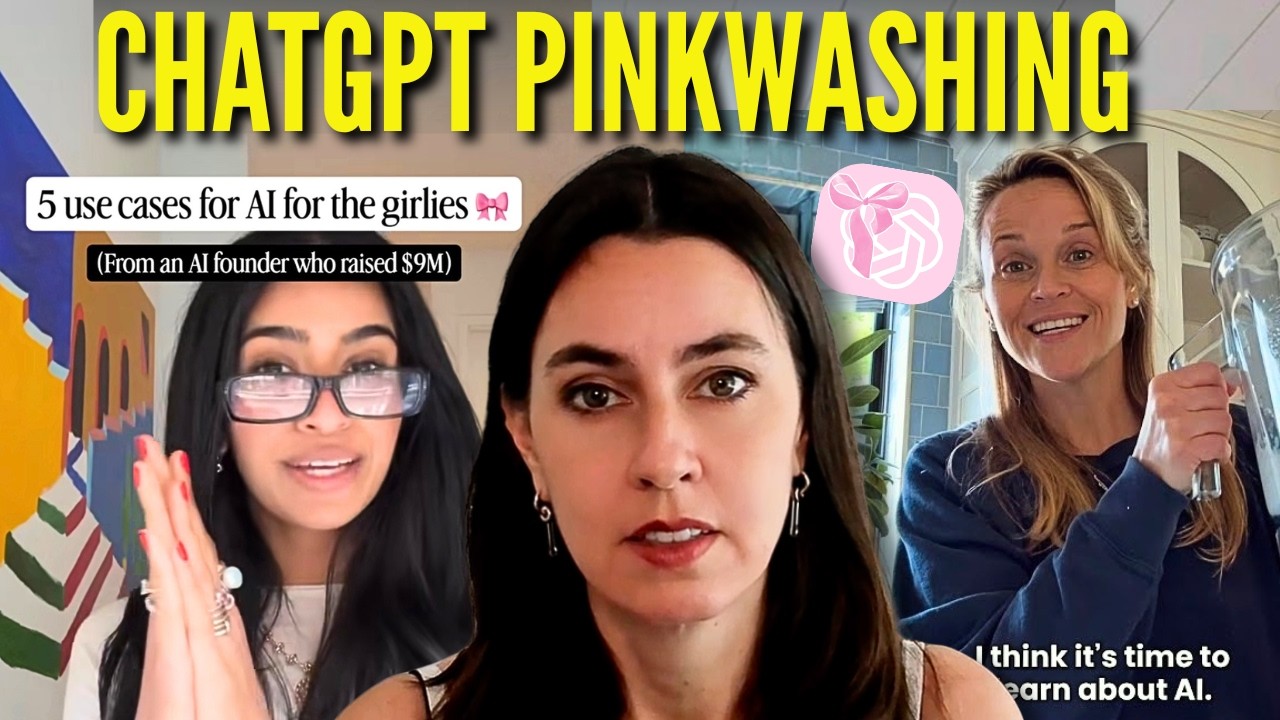
The video discusses the evolving public relations strategies of major AI companies like OpenAI, Anthropic, Google, and Meta, focusing on their recent efforts to rebrand AI technology to appeal more to women, particularly mothers and teenage girls. This shift aims to move the narrative away from concerns about AI’s role in job displacement and existential risks, instead portraying AI as a helpful, creative, and aesthetic tool that integrates smoothly into daily life. The goal is to position AI as a lifestyle accessory that enhances self-expression and convenience, thereby broadening its user base and softening public perception.
The conversation features Cat Tenbarge, author of Spitfire News, who highlights how this “pinkwashing” or “girlboss-ification” of AI is a calculated PR pivot designed to attract a valuable demographic: upwardly mobile white women. Both hosts acknowledge their own demographic status, which makes them prime targets for these marketing efforts. Despite the aggressive campaigns, Cat admits to rarely using AI products herself and identifies as somewhat skeptical or critical of AI, a sentiment shared by many women who have been slower to adopt these technologies compared to men.
Data supports this gender gap in AI adoption. Analytics from Similarweb reveal that ChatGPT’s early user base was approximately 65% male, and Microsoft’s LinkedIn Work Index shows men adopting AI tools at significantly higher rates than women. This disparity has prompted AI companies to tailor their messaging and product design to be more appealing and accessible to women, attempting to close the gender gap and expand their market share.
The discussion also touches on the broader implications of this PR strategy. By focusing on aesthetics, creativity, and lifestyle integration, AI companies are diverting attention from more critical issues such as the ethical concerns surrounding AI, its impact on labor markets, and its connections to military applications. This “girly pop era” of AI marketing serves as a distraction, making the technology seem less threatening and more user-friendly, which helps maintain public support and investment.
Overall, the video critiques the AI industry’s efforts to rebrand itself through gendered marketing tactics, emphasizing the need for a more nuanced understanding of AI’s societal impacts. It encourages viewers to look beyond the glossy, lifestyle-oriented portrayal of AI and consider the deeper consequences of its rapid development and deployment. The conversation underscores the importance of awareness and critical engagement with AI technology from the outset to avoid being left behind as it continues to evolve.