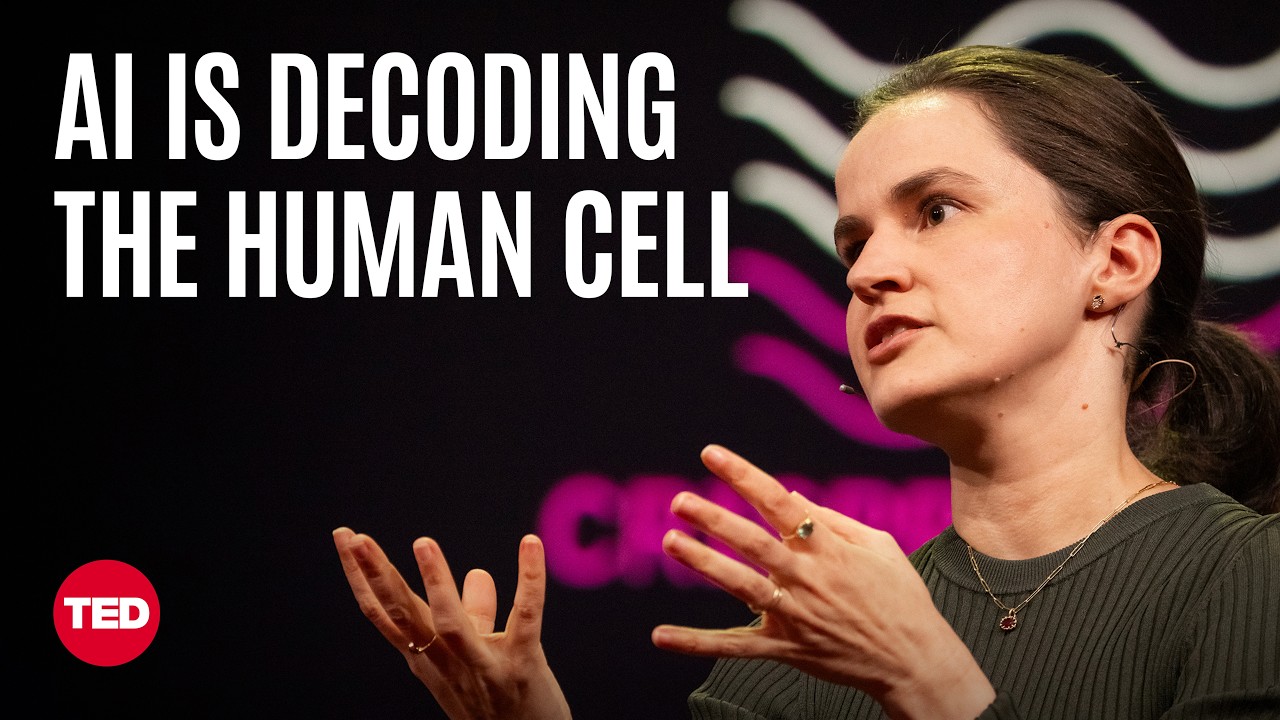
Silvana Konermann shares her journey into science, beginning with her fascination with biology as a teenager in Switzerland. Despite her parents not being scientists, she pursued her passion by convincing a teacher to let her work in a lab, leading to early successes in national and European science competitions. This early experience gave her the confidence to continue in science, eventually focusing on complex diseases like Alzheimer’s, which intrigued her due to the lack of understanding about how such diseases start and progress.
Konermann explains that complex diseases such as Alzheimer’s, heart disease, and many cancers are challenging because each patient has a unique combination of genetic and environmental risk factors. This complexity has made it difficult for medical science to develop effective therapies. However, recent advances in three key areas—measuring, changing, and understanding cells—offer new hope. Single-cell RNA sequencing allows scientists to measure gene expression in individual cells, CRISPR technology enables precise gene editing, and AI provides powerful tools to analyze and interpret the vast data generated.
She draws an analogy between AI’s success in understanding human language and its potential to decode the “language” of cells, which is RNA. Unlike human language, which humans created and understand, RNA language evolved naturally and is much more complex and opaque. By generating massive amounts of data through targeted gene perturbations and single-cell measurements, her team aims to build predictive models that can understand how cells change in response to genetic modifications, ultimately enabling the identification of interventions to reverse disease states.
Konermann’s ambitious plan involves conducting a billion such experiments over the next four years, using scalable techniques to manage this enormous volume of biological data. The goal is to create a universal virtual cell model that can generalize across different cell types and disease states, allowing researchers worldwide to predict how to shift diseased cells back to healthy states. She emphasizes that this tool will be openly available to the scientific community, fostering collaboration and accelerating biomedical research through initiatives like the “Virtual Cell Challenge.”
Addressing concerns about potential misuse, Konermann reassures that the technology is designed specifically for human cells and is unlikely to be used maliciously. She highlights the positive impact this approach could have on understanding and treating complex diseases, offering a fundamentally new, data-driven way to develop therapies. While acknowledging that breakthroughs may take a few years, she expresses optimism that this integration of AI, biology, and gene editing will transform medicine and provide hope for patients and families affected by these challenging diseases.