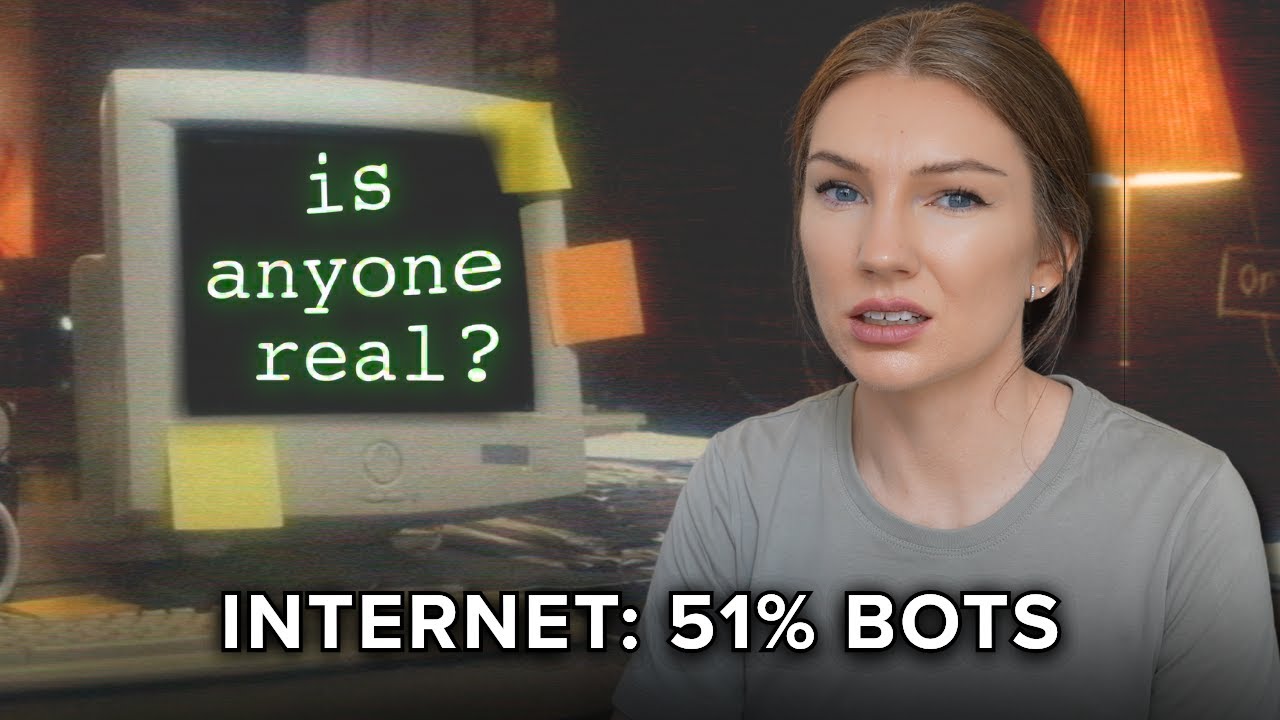
The video “The Internet is Dying: AI, Bots, and The End of Human Content” explores the decline of authentic human interaction and content on the internet, highlighting how the digital landscape has transformed into a controlled, artificial ecosystem dominated by bots and AI-generated material. Once a vibrant space of discovery and creativity, the internet has become a repetitive loop of a few major platforms where much of the content and interaction is no longer human. The “dead internet theory,” which originated from anonymous online forums, suggests that since around 2016, the internet has been overtaken by algorithms and bots designed to maximize ad revenue and manipulate users, effectively killing genuine human engagement.
Bots now constitute a significant portion of internet traffic, with estimates suggesting they make up half or more of all activity online. While some bots serve helpful roles, such as moderating content, the majority are malicious or deceptive, designed to manipulate opinions, scam users, and create false impressions of popularity and consensus. Platforms like Reddit, TikTok, and X (formerly Twitter) are heavily infiltrated by these bots, which interact with each other and with human users to create an endless cycle of artificial engagement. This bot invasion extends to social media comments, product recommendations, and even dating apps, where AI-generated profiles and messages blur the line between real and fake human interaction.
The video also delves into how major corporations and platforms have contributed to this decline by prioritizing algorithms that promote engagement over authenticity. Facebook’s early experiments with addictive games like Farmville evolved into sophisticated algorithms that exploit human emotions, especially anger, to keep users hooked. This model has been replicated across platforms, creating “walled gardens” where users are trapped in algorithmically curated feeds that prioritize sensational and divisive content. The internet has shrunk from a vast, diverse space into a handful of corporate-controlled sites that demand user data and serve homogenized content, further stifling genuine discovery and creativity.
Generative AI has accelerated the problem by flooding the internet with machine-created content, making it increasingly difficult to find original human work. Platforms like YouTube and TikTok are overwhelmed with AI-generated videos and voices, while AI bots scrape and repost content across sites without human oversight. Google’s introduction of AI-generated search summaries further centralizes control over information, often replacing diverse sources with a single AI-curated response that reduces traffic to original content creators. This cycle discourages human content creation, as creators receive less recognition and revenue, while AI systems feed on their work to generate more synthetic content.
The consequences of this shift are profound and troubling. The internet risks becoming a stagnant, monopolized space where knowledge and innovation decline due to the lack of fresh human input. The dominance of bots and AI-generated content fosters misinformation, manipulates public opinion, and erodes trust in online interactions. As some users embrace AI companions and others reject the artificial environment, society may fracture into those who accept the new digital reality and those who long for the authentic internet of the past. Ultimately, the video warns that without conscious effort to preserve human creativity and connection online, the internet as we know it may soon be lost forever.