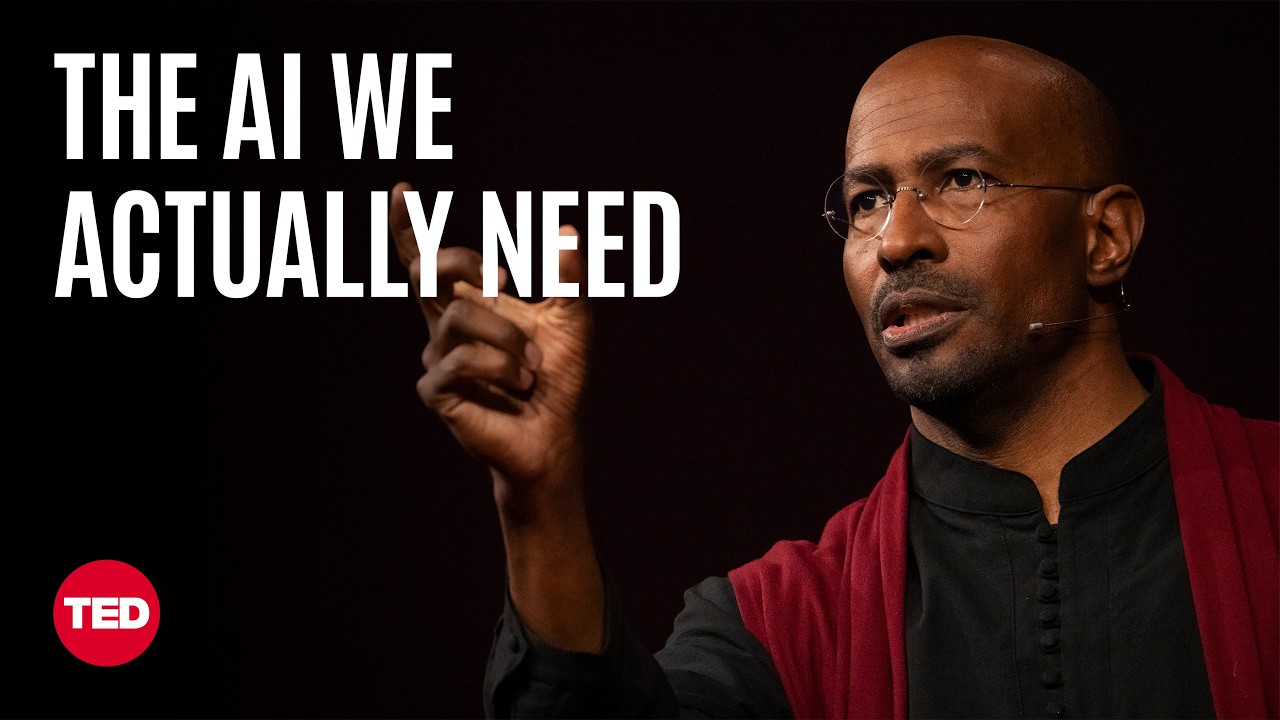
Van Jones warns that the rapid advancement of AI risks outpacing human wisdom, creating social divides unless guided by ancestral values and a new social contract that prioritizes inclusion and dignity. He calls for collaboration between tech leaders and grassroots communities to harness AI ethically and foster a hopeful, inclusive future that serves human flourishing.
In his TED talk, Van Jones expresses deep concern about the rapid advancement of AI and other technologies outpacing human wisdom and adaptation. He worries that while technology is evolving exponentially, human development remains linear, creating an “adaptation gap” that could lead to social unrest and widespread feelings of exclusion. Jones emphasizes the importance of integrating ancient and ancestral wisdom into the development and deployment of AI to ensure that the future remains human and civilized, rather than dominated by heartless machines.
Jones highlights the transformative nature of the new human civilization emerging with AI, biotech, longevity tech, and space exploration. He paints a vivid picture of how future generations might interact with AI in deeply personal ways, from forming emotional attachments to designing their descendants using biotech. Despite these exciting possibilities, he questions whether this future will truly serve human flourishing or result in a world where humans lose agency to technology.
Addressing the technology community, Jones calls for a new social contract between Big Tech and humanity. He critiques the empty promises of abundance from tech companies, pointing out that abundance without inclusion and participation feels like scarcity to many people. He warns that ignoring the needs and dignity of those left behind risks mass humiliation and social instability. Jones urges tech leaders to reconnect with ancestral wisdom and values to guide their immense power responsibly and ethically.
On the grassroots side, Jones acknowledges the challenges faced by marginalized communities and calls for a shift in tone and approach. He encourages grassroots activists to move away from divisive rhetoric and towards building alliances and fostering hope. Drawing inspiration from Dr. Martin Luther King Jr.'s vision of a hopeful future, Jones stresses the importance of multiplying friends rather than enemies to create a better tomorrow for all.
Finally, Jones envisions a collaborative future where technology experts and grassroots leaders work together to harness AI for social good. He cites examples of successful partnerships that use AI to support formerly incarcerated individuals, improve social services, and increase emotional intelligence in organizations. By combining technological innovation with ancestral intelligence and community wisdom, Jones believes we can build a future filled with hope, inclusion, and human dignity for generations to come.