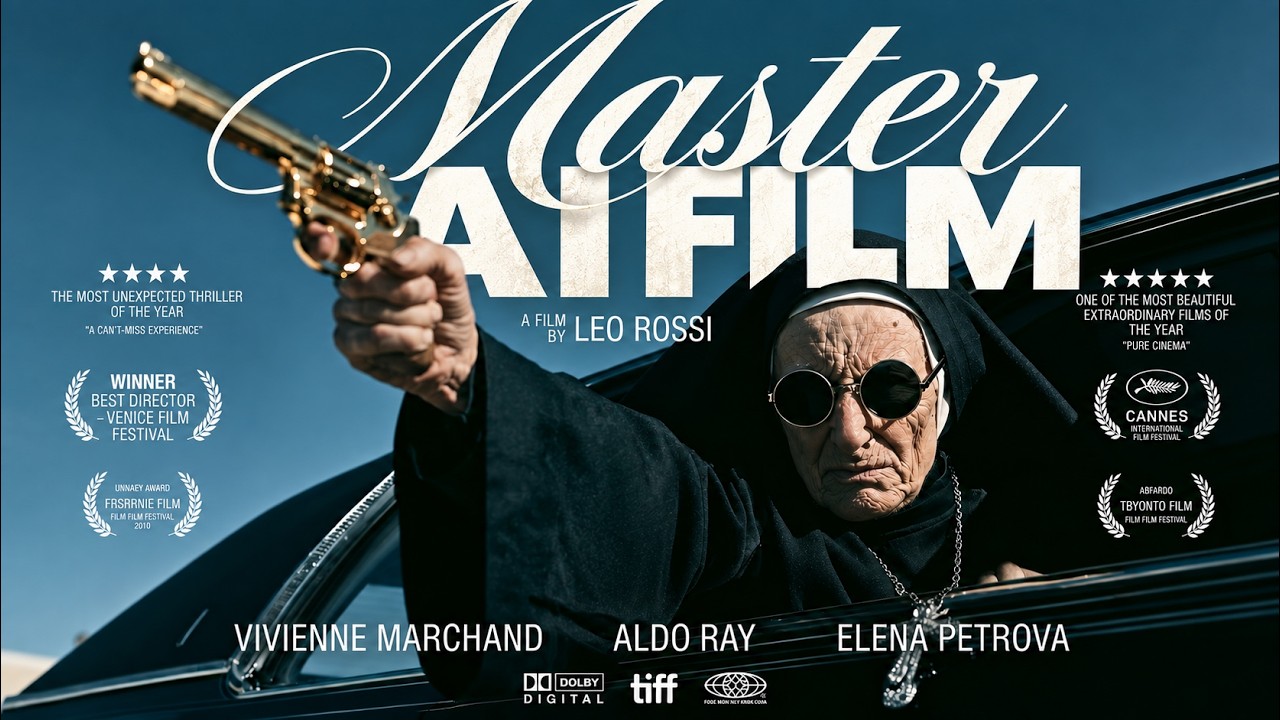
The video outlines five progressive levels of AI filmmaking, each offering increasing control, consistency, and creative possibilities. Level one, text-to-video, is the simplest method where a prompt generates a video clip quickly but lacks consistency and control, making it suitable only for initial ideation or quick sketches. Level two, image-to-video, improves on this by defining a character through detailed prompts and creating first and last frames to maintain character consistency within a single shot. This method enhances quality and control but still treats each shot as an isolated piece without continuity between shots.
Level three introduces grid prompting, where a 3x3 grid of nine images is used to create a sequence of shots in one generation. This approach allows for better storytelling continuity and longer sequences, maintaining character consistency across multiple shots. However, it still struggles with fine camera control and movement within each shot, requiring prompts to guide the action. Level four addresses these limitations by incorporating multimedia references such as videos, images, and audio to precisely control performance, camera movement, and timing. This level enables complex choreography and emotional synchronization with soundtracks but demands more setup time and resources.
The final level, agentic direction, leverages large language models (LLMs) and AI tools to automate much of the filmmaking process. Using platforms like Open Art’s director mode, filmmakers can input detailed prompts and receive guided assistance in generating storyboards, shots, and sequences. This level allows for dynamic interaction, fine-tuning, and integration of voiceovers, music, and captions, effectively acting as an intelligent assistant that orchestrates the entire production. It balances creative control with automation, making it possible to direct films rather than manually assembling each element.
Throughout the video, the presenter emphasizes the trade-offs between speed, control, cost, and complexity across the levels. While early levels offer quick and inexpensive outputs with limited control, higher levels provide greater precision and storytelling depth at the expense of increased complexity and cost. The video also highlights useful tools and platforms, such as Google Flow, Meta’s free image generator, and Seance 2.5, which support these workflows. The presenter encourages viewers to experiment with these methods and shares resources to help them follow along.
In conclusion, the video serves as a comprehensive roadmap for mastering AI filmmaking, guiding creators from simple text prompts to sophisticated agentic direction. It stresses the importance of understanding each level’s strengths and limitations to choose the best approach for different project needs. The presenter invites feedback and suggests watching a follow-up video focused on achieving highly realistic AI videos, aiming to help filmmakers harness AI’s full potential in storytelling.
Useful Links
- Open Art AI Filmmaking Platform — Central to the final level of AI filmmaking described in the video, enabling automated direction and integration of multimedia elements.