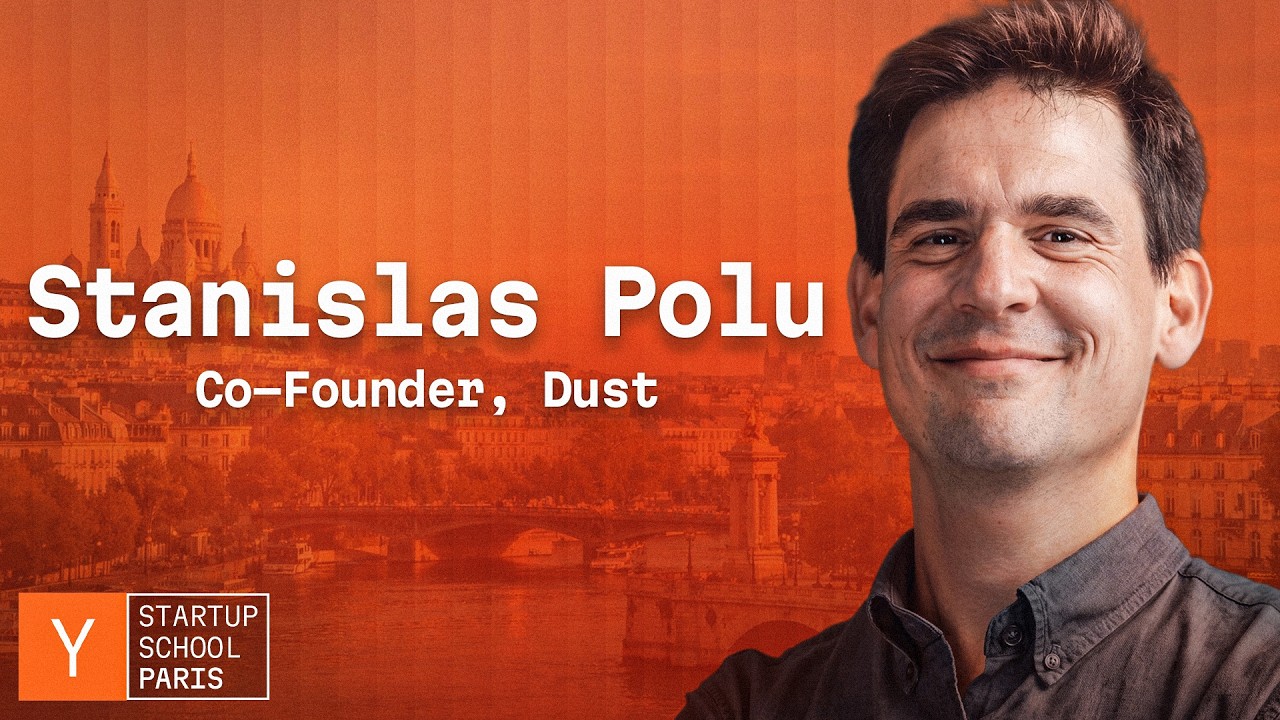
Stan Hulu, co-founder of Dust, discusses building a model-agnostic AI platform that integrates multiple large language models to transform workplace productivity, emphasizing flexibility, collaboration, and avoiding dependence on any single AI provider. He highlights the evolving AI landscape, strategic fundraising, and advises entrepreneurs to maintain clear vision and focus on sustainable growth amid rapid innovation and competitive pressures.
The discussion centers around Stan Hulu, co-founder of Dust, a model-agnostic AI platform focused on transforming the future of work through large language models (LLMs). Stan shares his journey from early days at Stripe to OpenAI, where he worked on LLMs before deciding to leave to build a product-focused company. He emphasizes the shift from research to product building, highlighting the excitement and challenges of applying AI to workplace productivity. Dust aims to leverage AI to fundamentally change how work is done, anticipating that in a few years, work will feel very different from today.
Stan reflects on the evolution of AI’s impact on work, noting that while the disruption was slower than initially expected, recent months have seen rapid changes, especially in developer workflows. He acknowledges that the anticipated plateau in AI capabilities has not yet occurred, and innovation continues at a fast pace. Dust’s approach is horizontal and model-agnostic, contrasting with the verticalized AI products favored by many. This strategy allows Dust to integrate multiple AI models dynamically, providing flexibility and resilience, which Stan compares to avoiding dependence on a single energy provider in a factory.
The conversation also touches on the competitive landscape dominated by giants like OpenAI and Anthropic. Stan describes the challenge and benefit of operating alongside these labs, as they educate the market and push the industry forward. However, Dust differentiates itself through collaboration-focused, multiplayer AI and its commitment to remaining model-agnostic. This approach allows Dust to adapt to the best available AI models over time, avoiding lock-in and fostering innovation.
Fundraising and company building are key themes, with Stan explaining Dust’s deliberate choice to raise capital conservatively at reasonable valuations, focusing on product-market fit before scaling. Despite the challenges of building a company from France rather than the US, Stan values the importance of national preference and sovereignty. He advises founders to be mindful of the trade-offs involved in fundraising and company location, emphasizing the importance of sustainable growth and thoughtful capital deployment.
Finally, Stan offers advice to aspiring entrepreneurs, stressing the importance of having a clear vision and purpose to sustain motivation through the inevitable difficulties of building a company. He highlights the need for defensible network effects in vertical AI products as intelligence becomes commoditized. On pricing, Dust is transitioning to credit-based models to maintain margins amid increasing AI usage. Stan remains optimistic about open-source AI’s role in balancing the market and encourages founders to focus on meaningful problems that keep them driven despite the challenges.