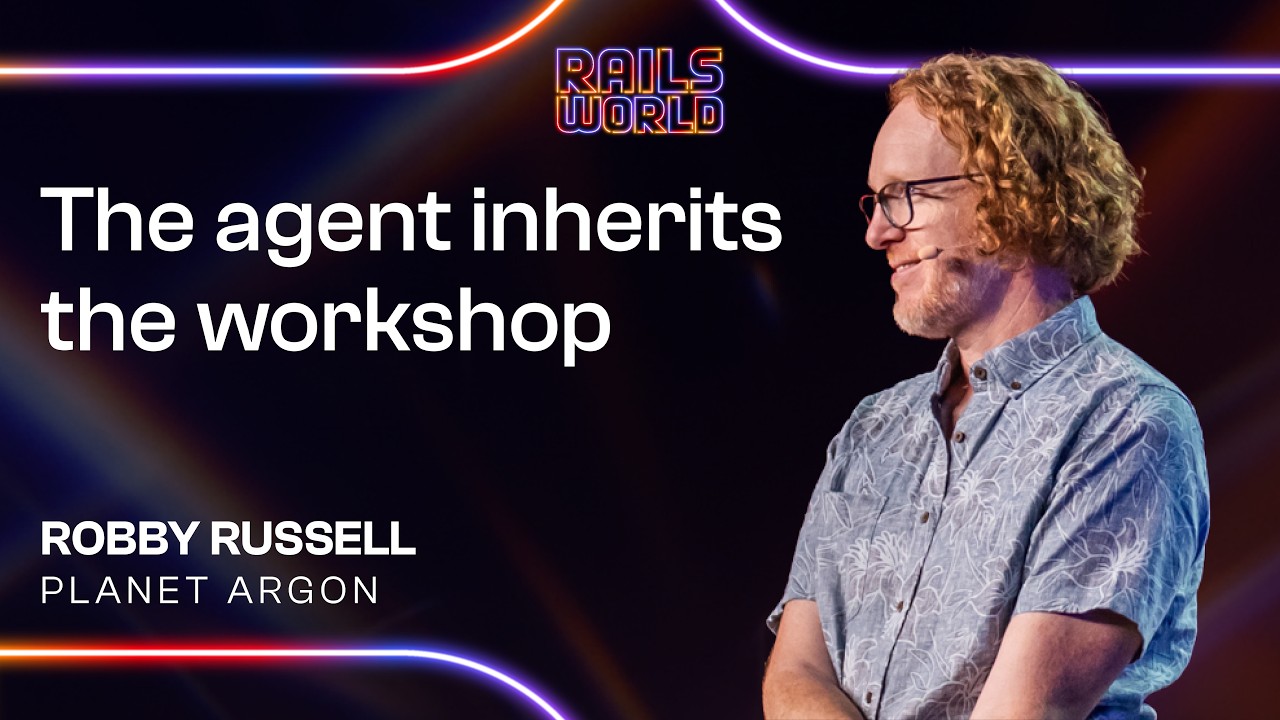
In this talk, Robby Russell discusses the challenges faced by engineers working on mature software applications, particularly those built with Ruby on Rails. He highlights a common scenario where multiple competing patterns and legacy code accumulate over time, creating confusion and friction for new team members. These patterns often originate from past experiments or decisions that were never fully resolved or standardized, leaving engineers uncertain about which approach to follow. This situation is exacerbated by the fact that most engineers are hired to ship features rather than to clean up or unify existing code, leading to a gradual buildup of technical debt and inconsistent practices.
Robby emphasizes that much of professional software development involves “mending” rather than “making”—that is, maintaining, improving, and extending existing systems rather than building new ones from scratch. He argues that tending to the system is not a distraction from the job but a substantial part of it. The Rails framework, with its conventions and shared structures, provides a helpful baseline or “workshop” that reduces complexity and aids understanding. However, every application builds its own local workshop with unique patterns and exceptions, which can obscure clarity and make onboarding difficult. This local complexity also poses challenges for AI agents designed to assist with coding, as they must navigate the same ambiguities and inconsistencies.
The talk introduces the concept of “wonder, unpack, tinker, and share” as a deliberate approach to understanding and improving legacy code. Engineers are encouraged to notice when something feels off, investigate its origins and current relevance, experiment carefully with changes, and then share their findings to help others avoid rediscovering the same issues. This process helps distinguish between intentional design decisions and outdated or accidental complexity. Robby stresses the importance of documenting and communicating these insights to improve the collective knowledge within a team and reduce future friction.
Robby also discusses the role of platform engineering teams and internal tooling in improving the developer experience by reducing friction, standardizing practices, and speeding up feedback loops. He highlights the need to make paths obvious, feedback fast and trustworthy, and mistakes cheaper to reverse, enabling safer experimentation and more efficient development. Removing obsolete choices and consolidating patterns are crucial steps in maintaining a healthy codebase. He warns against large, unauthorized refactors but encourages small, responsible improvements that benefit the team and future maintainers, including AI agents.
Ultimately, Robby argues that the most valuable engineers are not necessarily those who ship the most features but those who improve the environment in which others work. Like Q in the James Bond stories, these engineers build better tools, shorten feedback loops, and reduce the need for heroics. By focusing on stewardship—making the system easier to understand, safer to change, and more consistent—they create leverage that benefits the entire team and the software’s users. The talk concludes with a call to embrace curiosity, document knowledge, and invest in the ongoing care of software systems as a vital part of engineering work.
Useful Links