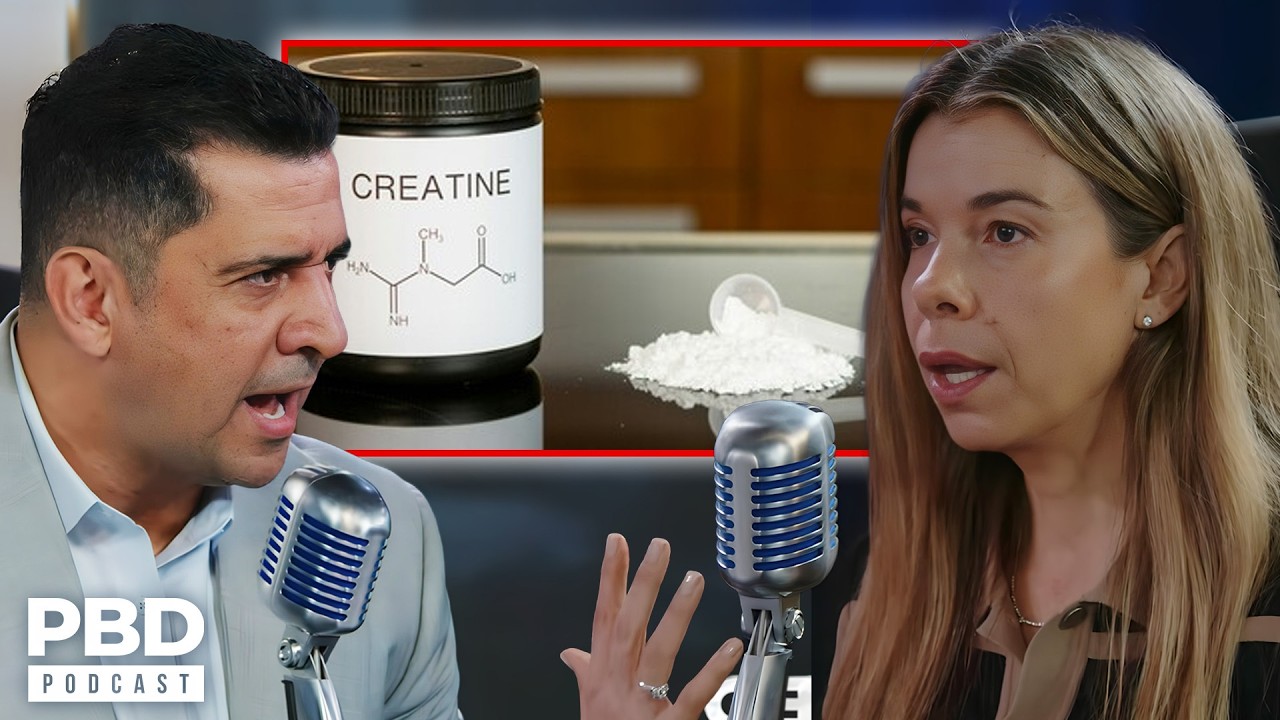
The video features a discussion about the resurgence of creatine supplementation, particularly its benefits beyond muscle building and into brain health. The longevity doctor explains that while creatine was once popular among bodybuilders in the 1990s, its use declined for years but is now making a comeback due to new research. The doctor shares her personal journey, noting that she became serious about resistance training in her mid-40s after learning about the importance of muscle mass for healthy aging. This led her to start supplementing with creatine, specifically creatine monohydrate, which is the most well-studied form.
Creatine works by being converted into creatine phosphate in the body, which is then stored in muscles and used as a major energy source during high-intensity or resistance training. Supplementing with creatine allows for faster energy production, enabling individuals to perform more repetitions and recover more quickly, ultimately leading to greater muscle and strength gains. The doctor emphasizes that creatine itself is not anabolic, but it enables users to do more work, which drives muscle adaptation. She references scientific literature and experts, noting that five grams per day is sufficient to saturate muscle tissue.
The conversation then shifts to the emerging research on creatine’s effects on the brain. While the body and brain can produce some creatine, dietary sources—primarily meat—are important, making vegetarians and vegans more likely to be deficient. Recent studies, particularly from Germany, show that taking ten grams of creatine daily can significantly increase creatine levels in certain brain regions, suggesting a spillover effect once muscle stores are saturated. This area of research is relatively new and exciting, as most previous studies focused solely on muscle benefits.
Creatine’s cognitive benefits appear most pronounced under stress, such as sleep deprivation, psychological stress, brain aging, or neurodegenerative diseases like Alzheimer’s. The doctor cites studies where sleep-deprived individuals who took 20–25 grams of creatine not only maintained but improved cognitive function compared to their baseline. Similar improvements have been observed in people with mild cognitive decline or early Alzheimer’s disease. The doctor personally takes ten grams daily, split into two doses, often mixing it with coffee, and increases the dose to twenty grams during periods of sleep deprivation or travel.
Finally, the discussion touches on practical aspects of creatine supplementation and its history in the fitness industry. The doctor advises against mixing creatine with juice due to the high sugar content and instead prefers coffee. She notes that while creatine can cause some water retention, it is generally safe and effective for both physical and cognitive performance. The conversation concludes with encouragement to experiment with creatine supplementation, especially for those who exercise regularly or are interested in supporting brain health as they age, while acknowledging that individual responses may vary and some benefits could be due to placebo effects.