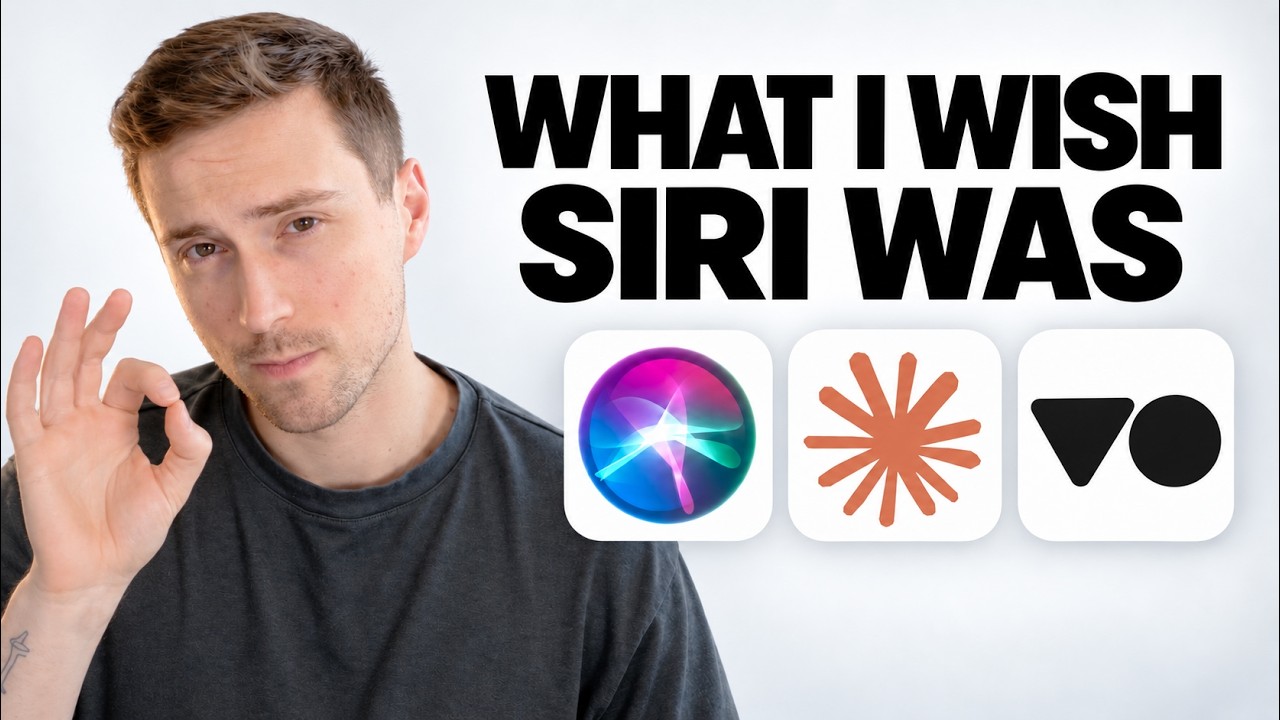
The video explores the current state and future potential of AI assistants on computers, focusing on a comparison between Apple’s new Siri, Claude (an AI similar to ChatGPT), and an app called VoiceOS. The creator highlights a common frustration with existing AI tools: the need for manual input like copying, pasting, or explaining content, which disrupts a seamless experience. The ideal AI assistant, as envisioned, would integrate deeply with the user’s computer environment, understanding everything on the screen, accessing apps, and acting as a unified system rather than separate tools. Apple’s new Siri aims to move in this direction with macOS 27, while Claude and VoiceOS approach the problem from different angles, offering varying degrees of integration and functionality.
One key feature discussed is the AI’s ability to see and interact with the user’s screen content. Siri now allows users to select parts of their screen to work with directly, which is a significant improvement. Claude requires either screenshots or enabling a “computer use” mode to access screen content, which is less convenient. VoiceOS also supports screen interaction and can highlight areas for AI to analyze, though it could improve by keeping visual markers persistent. When it comes to app integration, Siri excels within the Apple ecosystem but struggles with third-party apps unless developers create specific integrations. Claude offers broader app connectivity and can operate through computer use or browser extensions, while VoiceOS supports about 20 key apps with native integrations but lacks browser control.
Memory and personalization are another important aspect. Siri currently lacks persistent memory across sessions, limiting its ability to remember user preferences or past interactions. Claude and VoiceOS both feature sophisticated memory systems that retain information across chats, allowing for more personalized and context-aware assistance. Voice options are varied across all three, with Siri and VoiceOS offering multiple voice choices and dictation capabilities. VoiceOS stands out for its advanced dictation features, including summarizing and cleaning up dictated text, which enhances productivity and ease of use.
The video also differentiates between simple everyday tasks and more complex workflows. Siri is best suited for routine tasks like managing emails, reminders, and calendar events, especially within the Apple ecosystem. Claude shines in handling complex, multi-step tasks such as analyzing invoices or preparing meeting materials, thanks to its powerful AI models and ability to run scheduled or automated tasks. VoiceOS bridges these two by offering agentic capabilities on the computer, integrating with Claude and ChatGPT for complex tasks while maintaining a native feel and user control through action confirmations. However, VoiceOS still has room to grow, particularly in browser automation and expanding its app ecosystem.
In conclusion, the creator sees Siri as strong for basic, integrated Apple tasks but limited for advanced AI functions. Claude is powerful for complex, multi-step AI work but feels less integrated and more like a separate app. VoiceOS represents the ideal middle ground, combining native integration, agentic task handling, and collaboration with advanced AI models. The video suggests that no current system fully meets the vision of a seamless, intelligent AI assistant on the computer, and whoever achieves this first will lead the market. The creator encourages viewers to try VoiceOS and share their thoughts on what they want from AI on their computers.
Useful Links