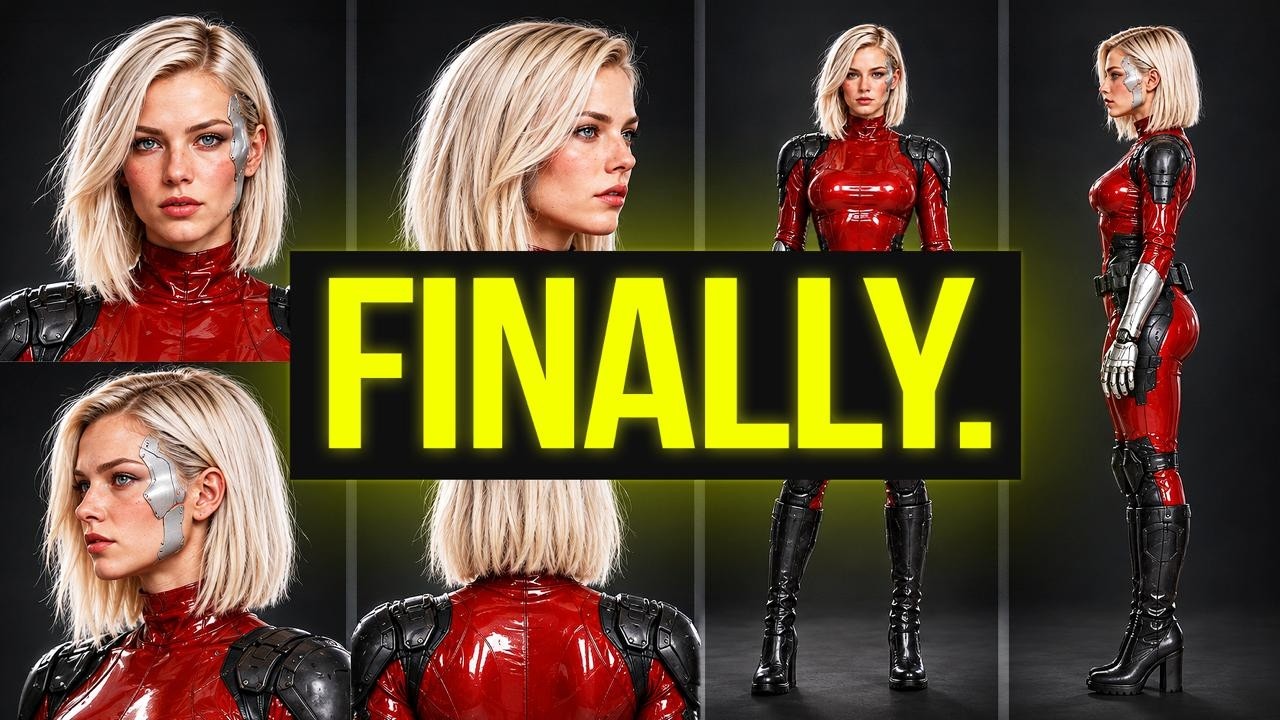
This video introduces a groundbreaking method for achieving perfect character consistency in AI-generated videos by using 360° video references instead of traditional single image references. The creator tested this approach across complex scenarios, including characters with facial tattoos, asymmetrical animal prints, and hybrid creatures, achieving superior results. The key advantage of using 360° video references is that AI models can better understand and replicate characters from all angles, reducing inconsistencies that typically arise when characters appear in multiple scenes or shots.
The process begins with defining the character using advanced image generation models like GPT image 2.5 Sunburst, followed by creating a split-frame start image showing both full body and face views. This image is then used as a reference to generate a 360° rotation video of the character with a locked-off static camera, ensuring no movement or zoom, which captures every detail from all angles. This video reference, combined with a character sheet, provides a comprehensive and detailed guide for the AI to maintain character consistency in subsequent scenes.
The video demonstrates the effectiveness of this method with various characters, including a cyborg woman, a pirate with elaborate costume details, and a creature with distinctive asymmetrical markings. The 360° video reference successfully preserves intricate features like tattoos, facial plates, and unique patterns, even in challenging cases. When compared to using just a single image or a character sheet alone, the combination of video and image references consistently produces the most accurate and detailed results.
Despite its advantages, the method has some limitations. The original 360° reference video must be highly accurate and consistent throughout the rotation to avoid breaking character continuity. Additionally, AI models can sometimes flip features from left to right unexpectedly, so explicit prompts are recommended to maintain side-specific details. While not perfect and occasionally requiring rerolls, this approach significantly reduces the number of iterations needed to achieve consistent character portrayal.
Finally, the video explores advanced applications such as placing multiple characters together in scenes and changing a character’s outfit while preserving their identity using the same 360° reference. It also compares different image and video models, recommending GPT image 2.5 for images and Seenons 2.5 or Kling 4 for videos, balancing quality and cost. Overall, this method offers a powerful new toolkit for creators seeking high fidelity and consistency in AI-generated character videos, with all prompts and resources provided for free.
Useful Links