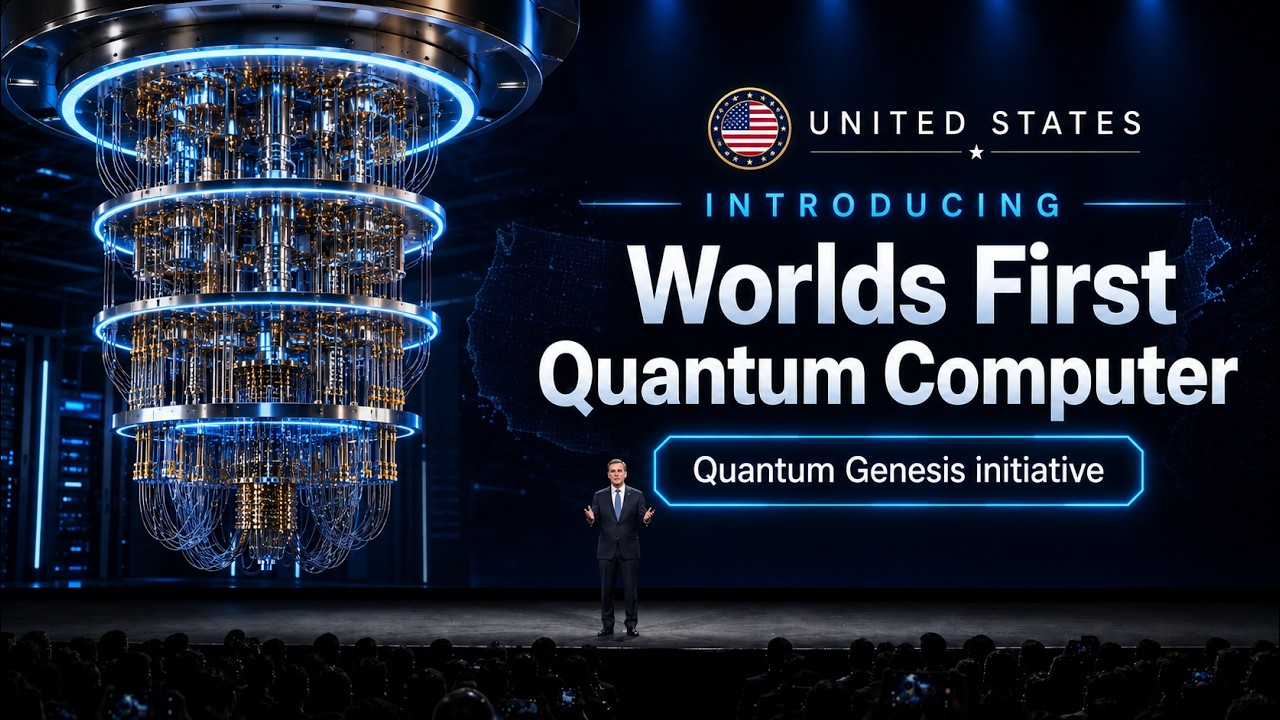
Recently, President Trump signed two significant executive orders signaling the start of a national effort to build a powerful quantum computer within the next five years. This quantum computer is not just any machine but one capable of performing real scientific calculations with fault tolerance—meaning it can detect and correct its own errors. Alongside this, the government mandated federal agencies to transition to new cryptographic standards by 2030-2031 to protect against the potential threats posed by quantum computing to current encryption methods. This dual approach highlights both the ambition to lead in quantum technology and the urgent need to defend against its disruptive capabilities.
Quantum computers differ fundamentally from classical computers by using quantum bits that can represent multiple states simultaneously, enabling them to solve certain complex problems exponentially faster than traditional machines. However, these machines are extremely fragile and prone to errors, and no one has yet built a stable, fault-tolerant quantum computer capable of solving practical problems. The government’s demand for a fault-tolerant, scientifically relevant quantum computer by 2028 is seen as a bold and challenging goal, with many experts believing it could take a decade or more to achieve.
The Department of Energy has launched the Quantum Genesis Initiative to spearhead this effort, coordinating with other government agencies, private companies, and universities. This whole-of-government approach is backed by substantial funding, including $2 billion in grants to quantum computing companies like IBM, with the government taking an active role in the industry. The initiative aims to deliver a working quantum computer to a DOE facility for real-world scientific use, marking a shift from experimental prototypes to practical, impactful machines.
The stakes of this race extend beyond scientific advancement to national security and economic power, with China identified as the primary competitor. A powerful quantum computer could break current encryption methods, threatening the security of everything from financial systems to government secrets. The concept of “harvest now, decrypt later” underscores the urgency, as adversaries could steal encrypted data now and decrypt it once quantum computers become available. This has driven the rapid push for post-quantum cryptography to safeguard critical infrastructure.
Finally, the announcement sparked significant investor interest, with quantum computing stocks surging due to the promise of government support and future demand. However, the timeline remains contentious, with experts divided on whether the 2028 deadline is achievable or overly ambitious. Regardless of the outcome, the race for quantum supremacy is officially underway, with clear milestones to watch in the coming years that will determine if this new era of computing can be realized on the government’s accelerated schedule.