Certainly! Here’s a five-paragraph summary of the video transcript:
The video begins with a thought experiment: if we trained a large language model (LLM) using all the written knowledge available up to 1633, it would reflect the dominant beliefs of that era. For example, when asked about Galileo’s heliocentric theory, the AI would likely reject it, siding with the overwhelming consensus that the Earth was the center of the solar system. This is because LLMs are designed to mirror the patterns and majority opinions found in their training data, not to independently seek out or verify truth.
The narrator emphasizes that LLMs do not search for truth; instead, they generate responses based on statistical patterns in their data. When an LLM provides a correct answer, it’s simply because that answer appeared more frequently in its training set. Truth, therefore, is a statistical byproduct rather than a goal. This limitation, highlighted by a recent Oxford paper, is not something that can be overcome by increasing computational power or adding more data.
To further illustrate this point, the video recounts the story of the Wright brothers, who achieved human flight despite the prevailing scientific consensus that it was impossible. Their breakthrough came not from following existing data, but from holding a belief that contradicted it, developing a theory, and then generating new evidence through experimentation. This process—belief preceding evidence and leading to new data—is described as “data belief asymmetry” and is the foundation of genuine innovation.
The video argues that LLMs are powerful tools for creative imitation, capable of recombining and summarizing existing knowledge with impressive fluency. However, their abilities are fundamentally limited to what already exists within their training data. They cannot originate new theories or pursue ideas that contradict the data they have been given, which is essential for true breakthroughs and paradigm shifts in knowledge.
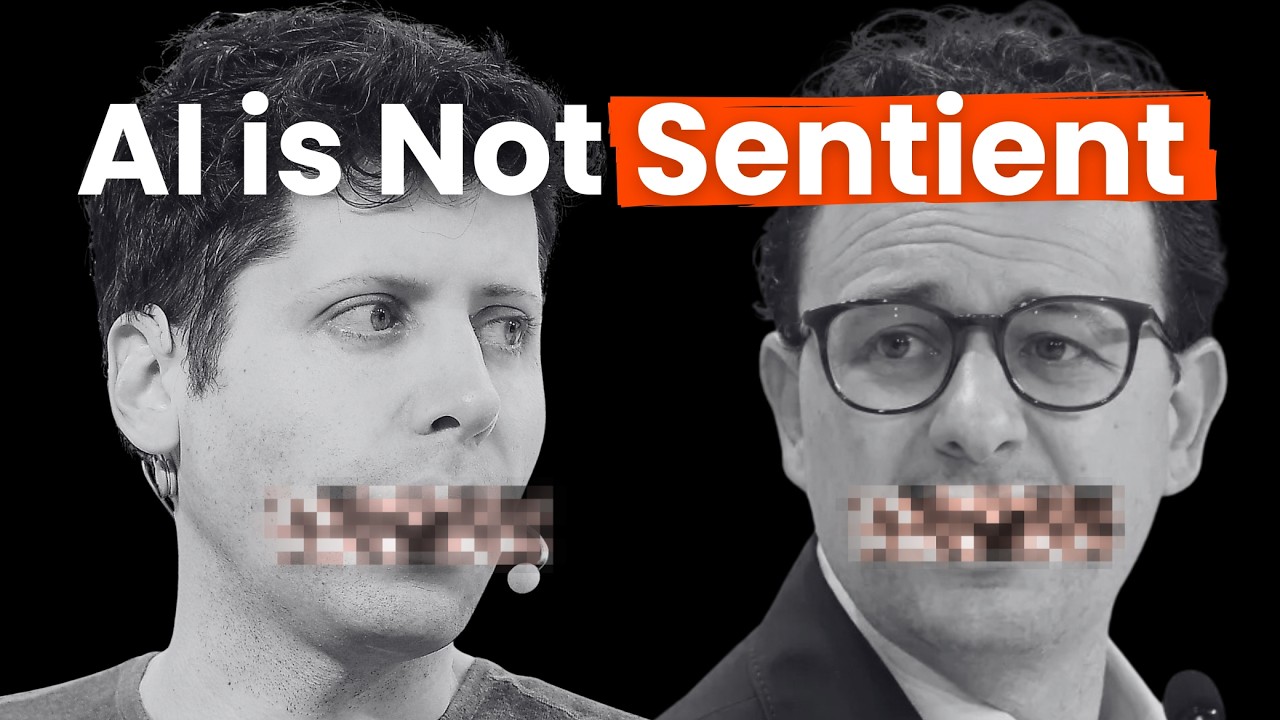
Finally, the narrator critiques recent statements from AI leaders suggesting that current LLMs might be smarter than humans or even sentient. The real issue, the video contends, is not about intelligence or consciousness, but whether these models can “be wrong in the right direction”—that is, hold and pursue beliefs that contradict existing data to create new knowledge. Until AI can do this, the most important discoveries will continue to come from humans willing to challenge the status quo and seek evidence beyond what is already known.