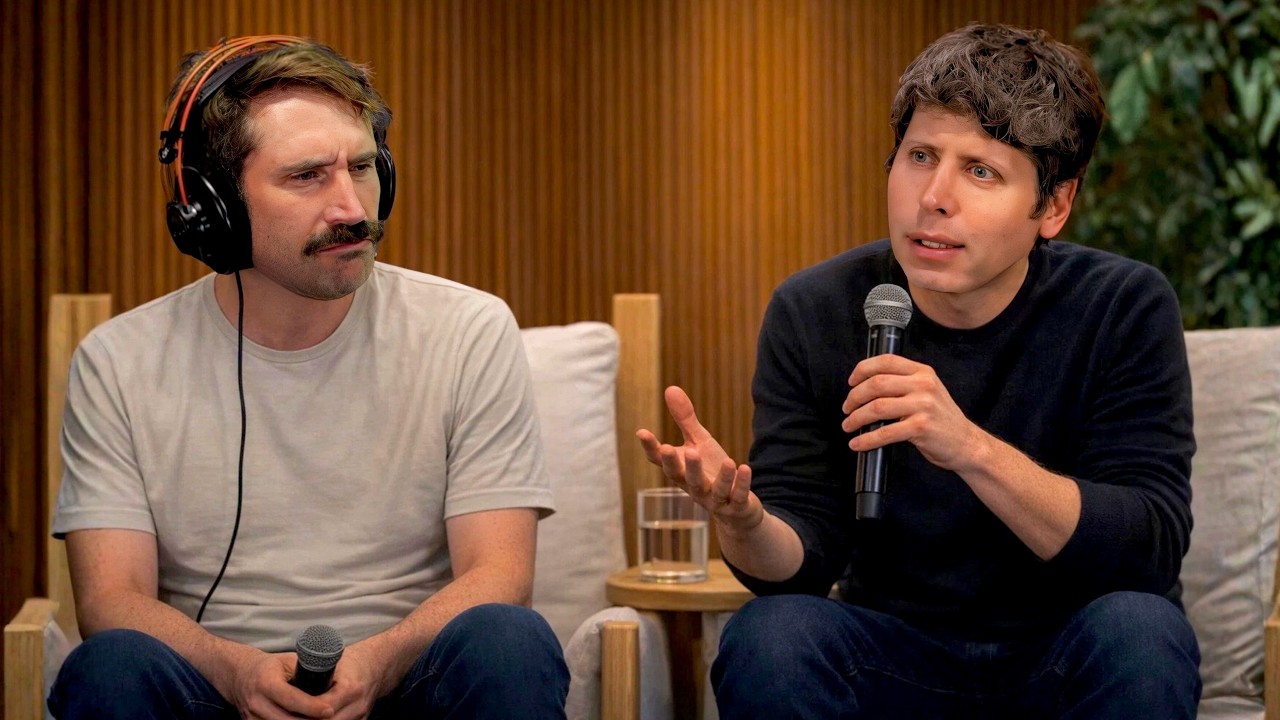
The video covers a recent OpenAI Town Hall, where CEO Sam Altman and other leaders fielded questions from developers about the future of AI, OpenAI’s roadmap, and the challenges ahead. The host found the event engaging, noting that the questions were thoughtful and the answers, particularly from Altman, were sometimes surprising or unsettling. The town hall lasted a little over an hour, and the host highlights several key moments and concerns raised during the discussion.
One of the main topics was the cost of AI models. A developer asked whether OpenAI would make its models more affordable, to which Altman responded with an ambitious prediction: by the end of 2027, OpenAI aims to deliver a model with 5.2 times the intelligence of GPT-4 at 100 times lower cost. The host points out that this aligns with Altman’s previous statements about AI costs dropping tenfold each year, but expresses skepticism about how such drastic reductions will be achieved.
Another significant question came from a well-known developer and YouTuber, who raised concerns about the risk of AI models becoming stagnant, always recommending the same technologies or solutions (like React for web development). Altman’s response was seen as somewhat evasive, and the host worries about the potential for AI-generated answers to become repetitive or influenced by advertising, which could limit innovation and diversity in software development.
The most striking part of the town hall, according to the host, was a question about security—specifically, biosecurity. Altman admitted that AI poses serious risks in areas like bioterrorism and cybersecurity, acknowledging that current strategies rely on restricting access and using classifiers to prevent misuse. He emphasized that while AI could help address these threats, it also creates new vulnerabilities, and society will need to develop resilience rather than relying solely on technological solutions. Altman suggested that if something goes catastrophically wrong with AI in the next few years, it will likely involve biosecurity.
The host finds Altman’s answer troubling, likening it to the historical trope of creating a problem and then selling the solution. He expresses concern that as AI becomes cheaper and more accessible, the risk of malicious use increases, and questions whether AI can truly be both the problem and the solution. The video ends on a somber note, with the host urging viewers to stay vigilant, keep learning, and be cautious about the potential dangers of rapidly advancing AI technology.