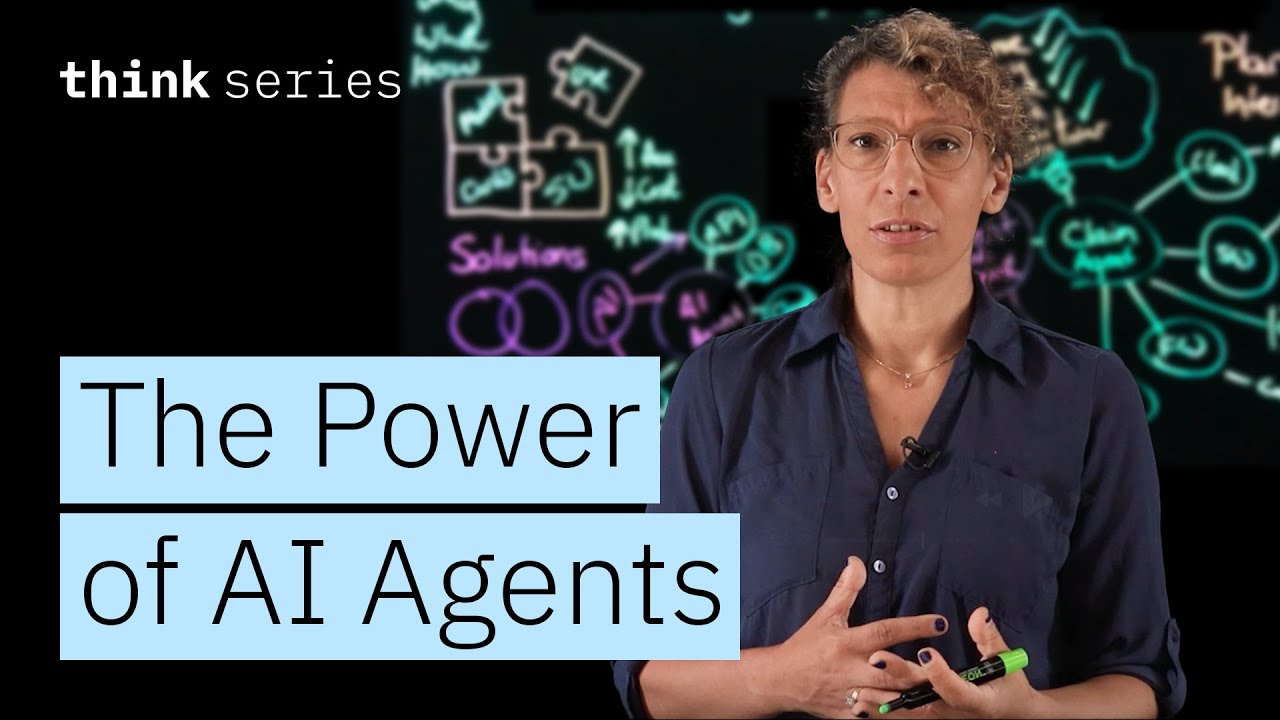
The video explores the transformative power of AI agents and agentic AI in modern AI ecosystems. Unlike traditional AI models that are reactive and predictive, AI agents are initiative-driven, goal-oriented, and context-aware. They maintain both short- and long-term memories, enabling them to learn, reflect, and adjust their behavior over time. These agents can plan and execute complex, multistep workflows autonomously, which is a significant advantage in integrating AI into infrastructure and overcoming the complexity of combining various AI models, software, and hardware components.
A key strength of AI agents lies in their ability to interact within a virtual environment or metaverse, which includes a wide range of resources such as APIs, customer applications, databases, cloud services, local software, and even firmware on AI accelerator cards. Moreover, AI agents can communicate and collaborate with other AI agents, delegating tasks and coordinating efforts to efficiently complete complex workflows. This interconnectedness allows AI agents to autonomously assemble the optimal combination of tools and models to solve problems, resulting in higher accuracy, reduced operational costs, and increased productivity for both the AI system and the human teams involved.
To illustrate the practical application of AI agents, the video presents a real-world example of a car insurance company modernizing its claim processing system. An AI claim agent is designed to handle the entire workflow, from parsing claim data and matching it with policy information to performing image processing, fraud detection, auditing, and client communication. Depending on the available resources in the ecosystem, the claim agent can dynamically decide where to offload specific tasks, such as using cloud-based NLP models for parsing, accelerator cards for policy matching, GPU banks for image processing, or specialized firmware for fraud detection.
The example further highlights the benefit of specialization by introducing a second AI agent focused on client interaction. Since the skills required to process claims differ significantly from those needed to communicate with clients, having a dedicated client interaction agent ensures more effective and tailored communication. This division of labor among AI agents mirrors human teamwork and enhances the overall efficiency and effectiveness of the AI-driven solution.
In conclusion, the video emphasizes that while terms like “metaverse” and “agentic AI” may initially seem complex or mysterious, breaking down these concepts into their core components reveals how AI agents work together to create holistic, real-world solutions. Understanding this framework not only demystifies the technology but also inspires new possibilities for leveraging AI agents to solve complex problems across various industries.