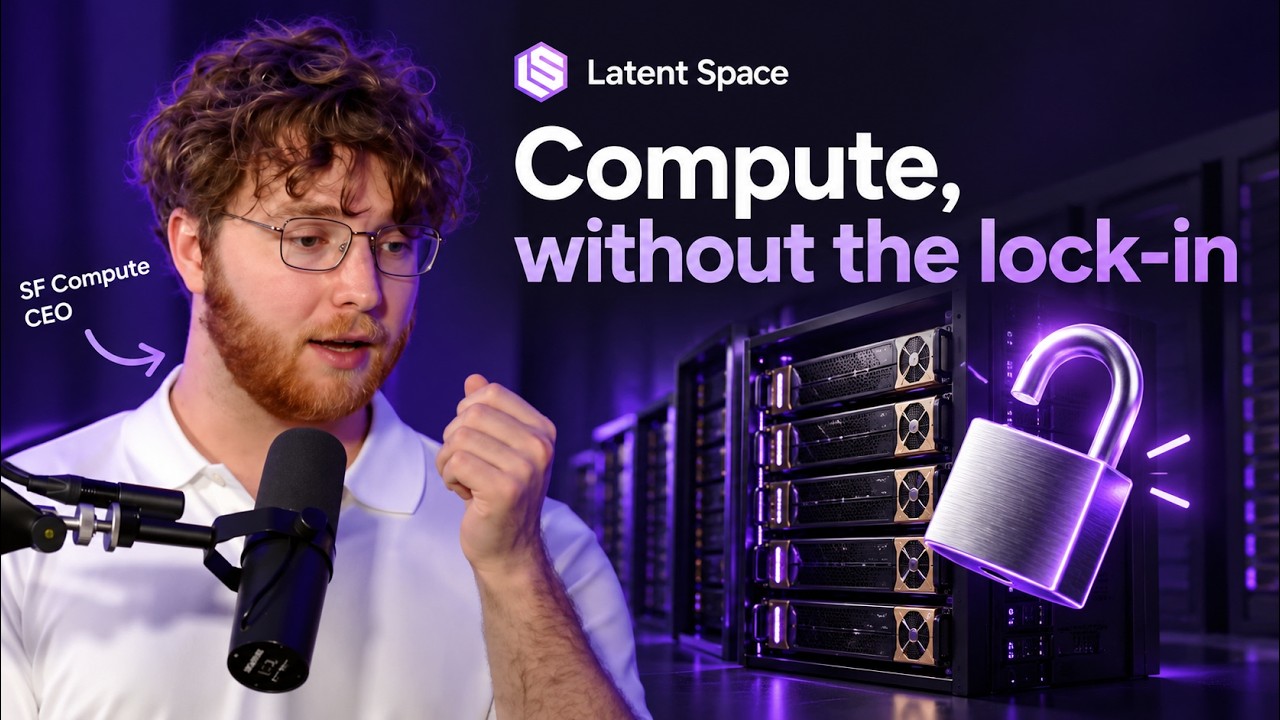
In this insightful discussion, Evan Conrad of SF Compute delves into the emerging market of programmable data centers and compute trading. SF Compute has evolved from simply subleasing clusters to building a comprehensive physical settlement platform akin to operating a cloud, but without owning the hardware. This approach ensures reliability and transparency in delivering compute capacity, drawing parallels to physical settlement in commodity markets like oil and power. The company focuses on addressing the real constraints of compute resources, such as interruption tolerance and storage locality, which are critical for creating a functional and liquid compute marketplace.
The compute market today is still nascent, with only a small fraction of capacity actively traded on order books, but liquidity within that segment is high. SF Compute’s platform allows buyers and sellers to specify detailed constraints and preferences, reflecting the heterogeneous nature of compute resources—different GPU generations, performance characteristics, and storage configurations. This complexity prevents simple standardization akin to traditional commodities, so SF Compute’s order book supports multi-dimensional queries to match supply and demand effectively, albeit with wider bid-ask spreads due to less concentrated liquidity.
A key challenge highlighted is the need for physical settlement before financialization can mature. Evan emphasizes that cash-settled derivatives or futures markets without a robust underlying physical market risk manipulation and basis risk, drawing analogies to historical financial crises and the pitfalls of trading derivatives on non-existent or illiquid assets. SF Compute’s mission is to build this foundational physical settlement infrastructure, ensuring that compute trading is grounded in actual, deliverable capacity, which in turn supports a healthy ecosystem including insurance, lending, and analytics players.
Technically, SF Compute operates by partnering with data center owners worldwide, transforming their facilities into programmable supercomputing clouds without owning the hardware themselves. This independence is crucial to maintain neutrality and liquidity in the market, as major players like Nvidia or hyperscalers have conflicting incentives that prevent them from operating such a marketplace. SF Compute manages everything from supply chain logistics to cluster architecture and backplane management, effectively virtualizing the data center and making it programmable and tradable, akin to how cloud computing revolutionized IT infrastructure.
Looking ahead, SF Compute is actively expanding its capacity and features, including enabling customers to dynamically subdivide InfiniBand fabrics to scale clusters efficiently. The company invites GPU cluster owners to partner with them, offering to manage the supercomputing layer and provide liquidity by reselling capacity if needed, thus mitigating financial risks. This vision positions SF Compute as a critical enabler in the sovereign and global AI compute ecosystem, fostering a transparent, liquid, and programmable compute market that could transform how AI infrastructure is financed and utilized worldwide.
Useful Links