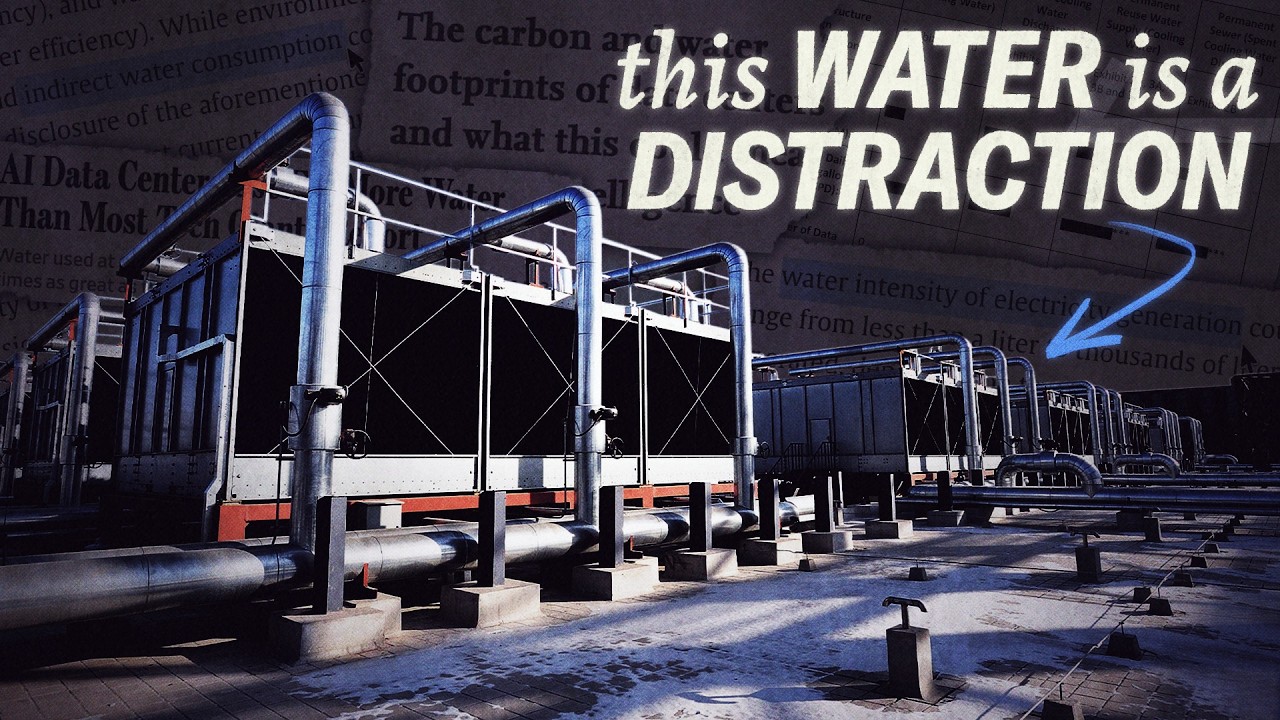
The video explores the escalating conflict over water usage in the American West, intensified by the rapid construction of data centers in drought-prone areas. While tech companies like Meta, Oracle, and OpenAI claim their water consumption is minimal—comparable to that of a single restaurant—the reality is far more complex. Local farmers, such as Roberto Roque, express deep concern that the water demands of these data centers threaten agriculture, a vital source of food and livelihood. Despite promises of minimal impact, transparency around actual water usage remains elusive, with companies often withholding or obscuring data.
In regions like El Paso, Texas, and southern New Mexico, where major data center projects like Project Jupiter are underway, residents and community organizers report wells drying up and a lack of clear information from both tech firms and local officials. Although data centers use water on-site primarily for cooling, the larger water footprint comes indirectly from the electricity generation needed to power these facilities—a factor rarely disclosed by companies. This hidden water consumption significantly amplifies the environmental impact, raising alarms among locals who fear the long-term sustainability of their water resources.
Local governments and water authorities often downplay the concerns, with officials like El Paso Water’s CEO asserting that data centers add only a small fraction to overall water use. However, residents face rising water rates and infrastructure costs to support these new demands, effectively subsidizing the tech industry’s growth. Conflicts of interest also emerge, as some local board members involved in water management have financial ties to the data centers, further complicating accountability and trust within the community.
Efforts to obtain accurate water usage data are frequently met with resistance, including legal battles, nondisclosure agreements, and vague or redacted information. Researchers highlight that the indirect water consumption associated with powering data centers can be ten to twenty-four times greater than on-site use, a figure that tech companies rarely report. This lack of transparency hinders informed decision-making and fuels public frustration, prompting calls for stricter regulations and moratoriums on large projects until comprehensive water impact assessments are mandated.
Despite these challenges, community activists remain determined to raise awareness and push back against unchecked data center expansion. They argue that economic benefits should not come at the expense of essential natural resources and local livelihoods. With data centers becoming a significant political issue in the region, residents hope that increased public scrutiny and legislative action will lead to more sustainable water management practices and greater corporate accountability in the face of the AI industry’s rapid growth.