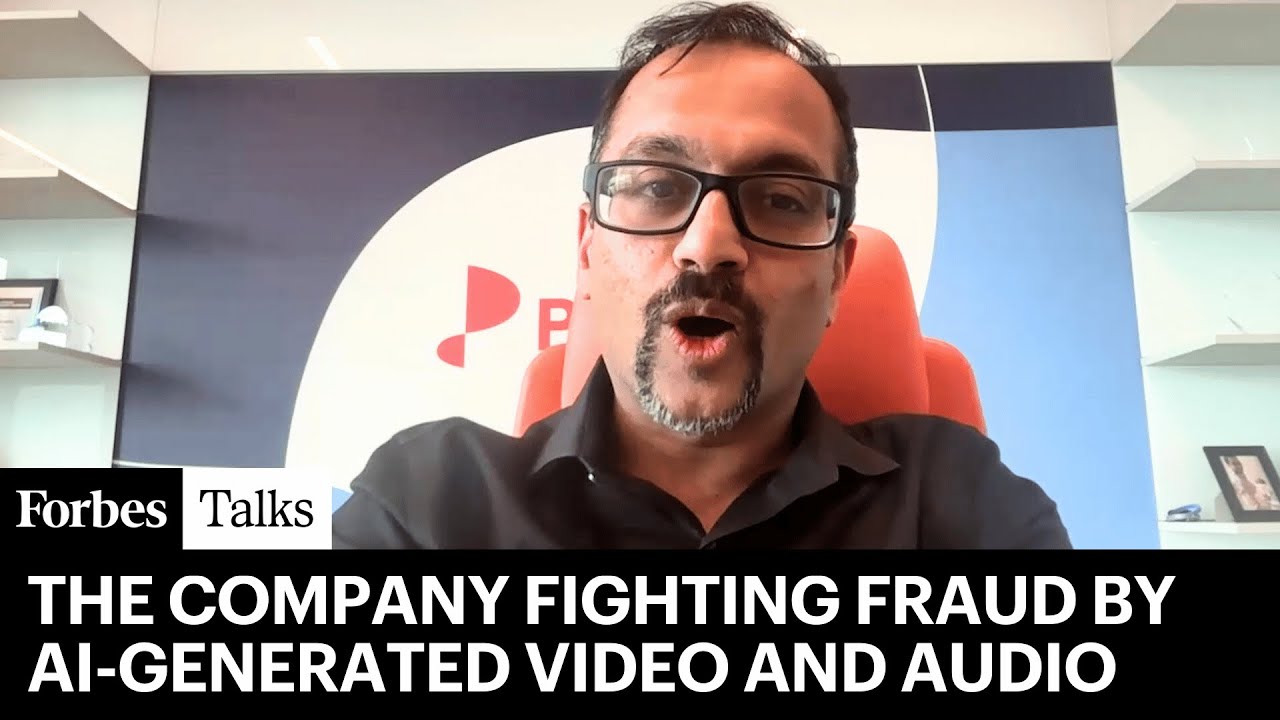
In this insightful interview, Katherine Schwab from Forbes speaks with Vijay Balisubmanian, CEO and co-founder of Pindrop, a company specializing in voice authentication and AI deep fake detection. Pindrop initially focused on verifying the identity of callers in sectors like banking, insurance, and healthcare by analyzing voice, device, and behavior to streamline security processes. However, as AI-generated voice cloning technology advanced, the company expanded its mission to also determine whether the entity on the other end of a call is human or machine, addressing the growing threat of AI-driven fraud.
Vijay explains that the challenge of detecting AI-generated voices has escalated dramatically over the past eight years. Early voice cloning required extensive audio samples, but now only a few seconds of speech are enough to create convincing deep fakes. This technological leap has led to a surge in fraudulent activities, with Pindrop observing a 1300% increase in deep fake attacks, from one per month to seven per day per customer. Fraudsters are increasingly using AI bots that operate 24/7, exhibiting sophisticated behaviors such as empathy to deceive call center agents and victims alike.
The detection technology Pindrop employs relies on analyzing subtle anomalies in speech patterns that are difficult for AI to replicate perfectly. By examining both static audio frames and temporal changes, the system identifies inconsistencies in how sounds are produced, which are unique to each voice cloning engine. This approach allows Pindrop to achieve over 99% accuracy in detecting deep fakes with minimal false positives, enabling them to process billions of calls and prevent significant fraud losses at scale.
Beyond fraud in financial transactions, Vijay highlights emerging threats such as fake job applicants using AI-generated voices and videos, with a notable percentage originating from hostile actors like North Korea. The rise of deep fakes also impacts other areas including commerce, media, and senior citizen scams, where fraudsters use hyper-localized and scalable attacks to exploit victims. Pindrop’s vision is to become the leading company that can distinguish real from fake in any real-time communication, whether phone calls, video meetings, or other interactive platforms, thereby protecting organizations and individuals from AI-enabled deception.
Looking ahead, Vijay envisions a future where security systems can not only verify human identity but also authenticate authorized AI bots acting on a person’s behalf, distinguishing them from malicious actors. This layered approach will be essential as AI continues to blur the lines between humans and machines. Pindrop aims to lead this evolving security landscape by providing real-time detection and verification tools that safeguard trust in digital interactions, ensuring that users can confidently engage in transactions and communications without fear of deep fake fraud.