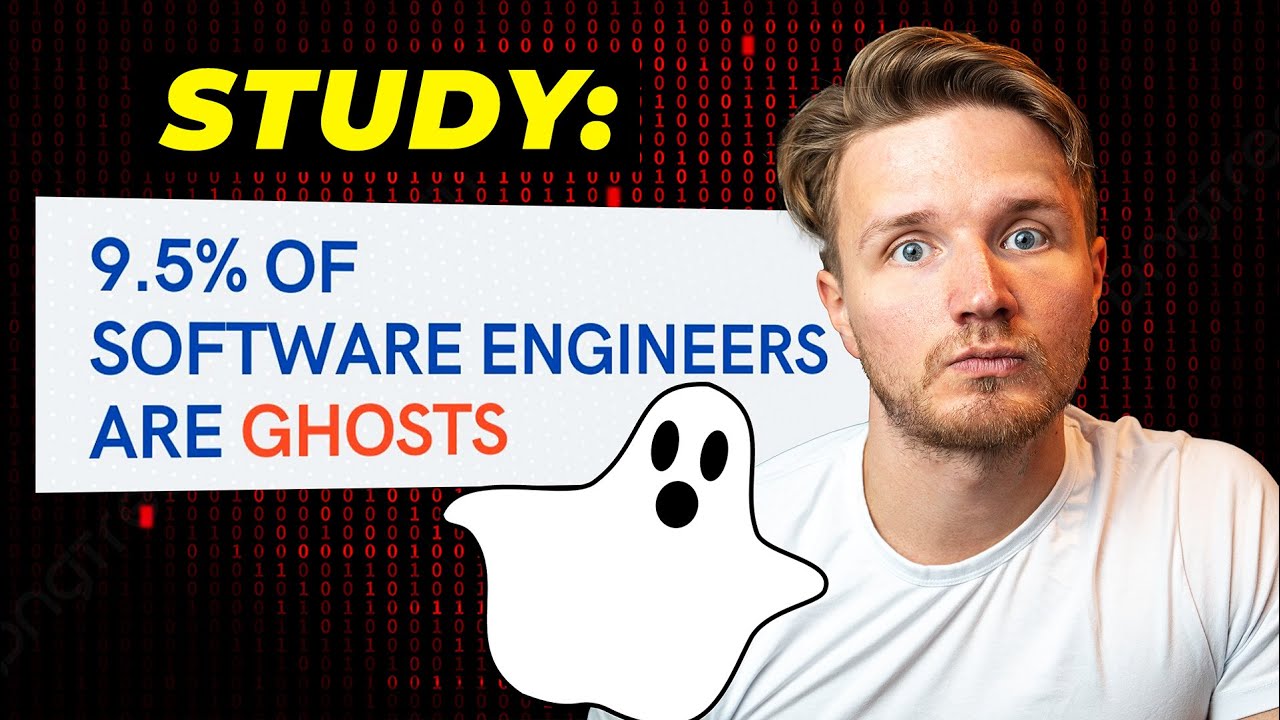
The video discusses a study revealing that 99.5% of software engineers contribute minimally to their work, with about 10% classified as “ghost engineers” who get paid without significant output, particularly in remote settings. The presenter shares personal experiences and critiques the study’s reliance on Git commits as a productivity measure, while offering advice on how to navigate a career in engineering without falling into the trap of underperformance.
The video discusses a study conducted by a Stanford researcher on software engineering productivity, revealing that a staggering 99.5% of software engineers do very little work. The study analyzed data from over 50,000 engineers across various companies, identifying that around 10% of engineers are classified as “ghost engineers,” who essentially get paid without contributing significantly to their jobs. The presenter aims to explore the findings of this study, share personal experiences as a software engineer, and discuss how one might become a ghost engineer if that is their goal.
The research methodology involved analyzing source code from private Git repositories and simulating evaluations by experts on each commit. The study found that remote engineers tend to perform worse than their in-office counterparts, with 14% of remote engineers doing almost no work compared to 9% in hybrid roles and 6% in office settings. The presenter reflects on their own experience, noting that remote work often allows for less oversight, making it easier for engineers to underperform without being detected.
The video highlights that while the average productivity of office-based engineers is higher, remote work can yield a wider range of performance levels, including highly productive engineers. The presenter notes that many engineers working remotely can manage multiple jobs due to the relatively low workload. Anecdotal evidence from industry professionals supports the idea that some engineers make minimal contributions, with some only making a few code changes per month.
The presenter also critiques the study’s reliance on Git commits as a measure of productivity, arguing that this metric may not accurately reflect the work done by engineers. Many tasks, such as problem-solving and documentation, may not result in frequent commits but are still valuable contributions. The presenter shares their own experience of occasionally exaggerating the time taken for tasks while working remotely, emphasizing that this behavior is not advisable for those looking to build a long-term career in engineering.
In conclusion, the video offers a guide on how to become a ghost engineer, emphasizing the importance of being skilled in coding and building trust within a company. The presenter advises against slacking off, especially for junior engineers, and suggests that working remotely can facilitate this lifestyle. However, they caution that maintaining a good reputation and completing assigned tasks is crucial for long-term success. The video ends with a recommendation to watch another video that delves into the future of remote work in the tech industry.