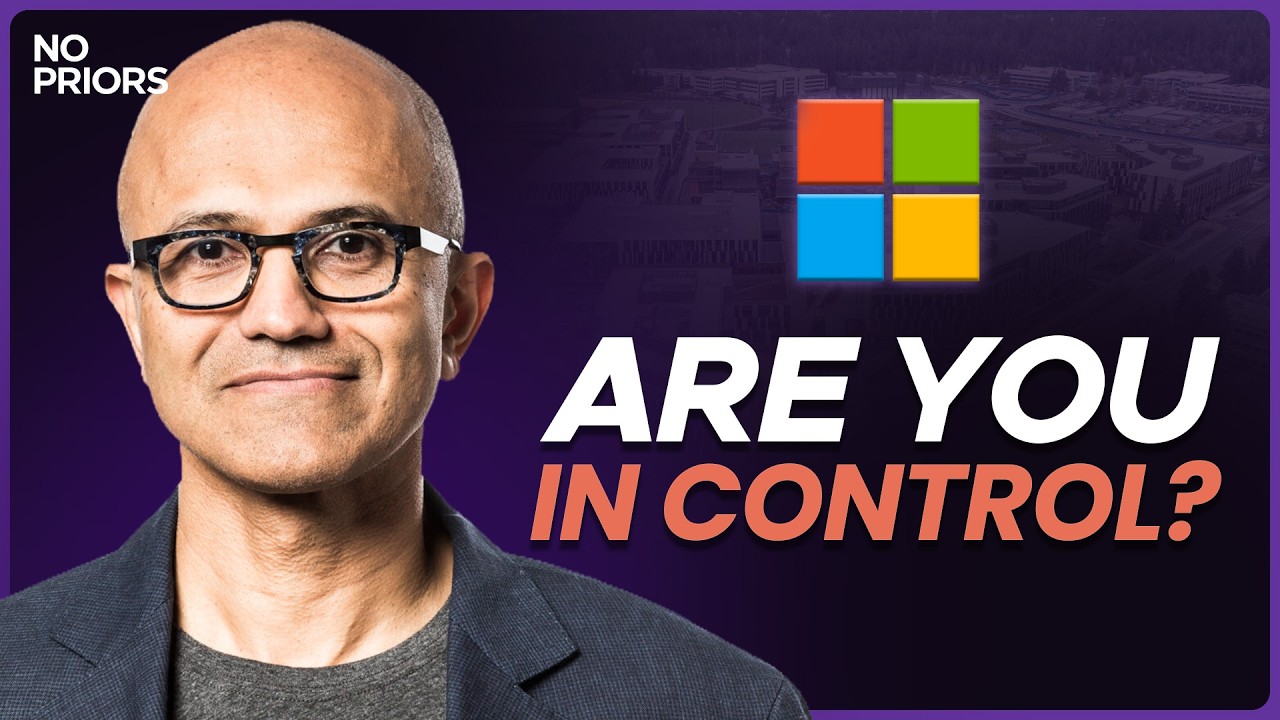
Microsoft CEO Satya Nadella discusses the transformative role of AI in reshaping technology, business models, and workforce dynamics, emphasizing the rise of full-stack builders and hyper-leveraged generalists who harness AI to drive innovation and productivity. He also highlights the importance of tailored AI solutions, flexible pricing models, and inclusive societal participation to ensure technology delivers tangible benefits across sectors like healthcare and education.
In this insightful conversation with Microsoft CEO Satya Nadella, the focus is on the transformative impact of AI and the evolving role of technology in society and business. Nadella emphasizes the importance of delivering tangible benefits through technology, especially given its critical role in the economy. He highlights Microsoft’s rapid expansion of Azure capacity and the shift towards building agentic systems that automate complex tasks, illustrating a new paradigm in managing large-scale infrastructure. This shift reflects a broader trend where companies must reconceptualize their work to leverage AI effectively, moving from manual operations to meta work powered by intelligent agents.
Nadella discusses Microsoft’s AI strategy, particularly the development of the MAI models, which prioritize clean data lineage and the ability for companies to create specialized AI solutions tailored to their needs. He underscores the significance of private evaluation metrics unique to each enterprise, which serve as a key intellectual property asset. This approach allows organizations to continuously improve their AI capabilities by “hill climbing” on top of foundational models, ensuring they maintain control and competitive advantage. The conversation also touches on the complexity of ecosystem strategies, where Microsoft aims to provide multimodal harnesses that integrate models, tools, and rich context to optimize AI-driven workflows.
The dialogue explores the evolving nature of software development and engineering roles in the AI era. Nadella envisions a future where generalist roles gain prominence due to their ability to leverage AI agents across diverse tasks, complemented by specialists in infrastructure and security. He highlights the rise of “full-stack builders” who combine design, product management, and engineering skills to create more integrated solutions. This evolution reflects a broader trend towards increased personal and organizational agency, where AI amplifies human capabilities and enables new forms of creativity and productivity.
On the business model front, Nadella anticipates a shift from traditional per-user subscription pricing to more flexible models that include consumption-based and outcome-based pricing. He acknowledges the challenges enterprises face in balancing the excitement of building AI-driven applications with the practicalities of maintenance and integration. The discussion also addresses the durability of SaaS solutions in an AI-driven world, suggesting that successful vendors will be those who offer flexibility, deliver real value, and adapt to new business models that blend internal development with external software solutions.
Finally, Nadella reflects on the societal impact of AI, stressing the need for inclusive participation in the new economy and the importance of earning public trust through demonstrable benefits. He points to sectors like healthcare and education as areas ripe for transformation, with education requiring a fundamental rethink of pedagogy and credentialing to align with the changing landscape. Nadella envisions the emergence of new educational models and startups that can guide individuals through curricula that lead to economic opportunity, marking a hopeful and ambitious note for the future of technology and society.