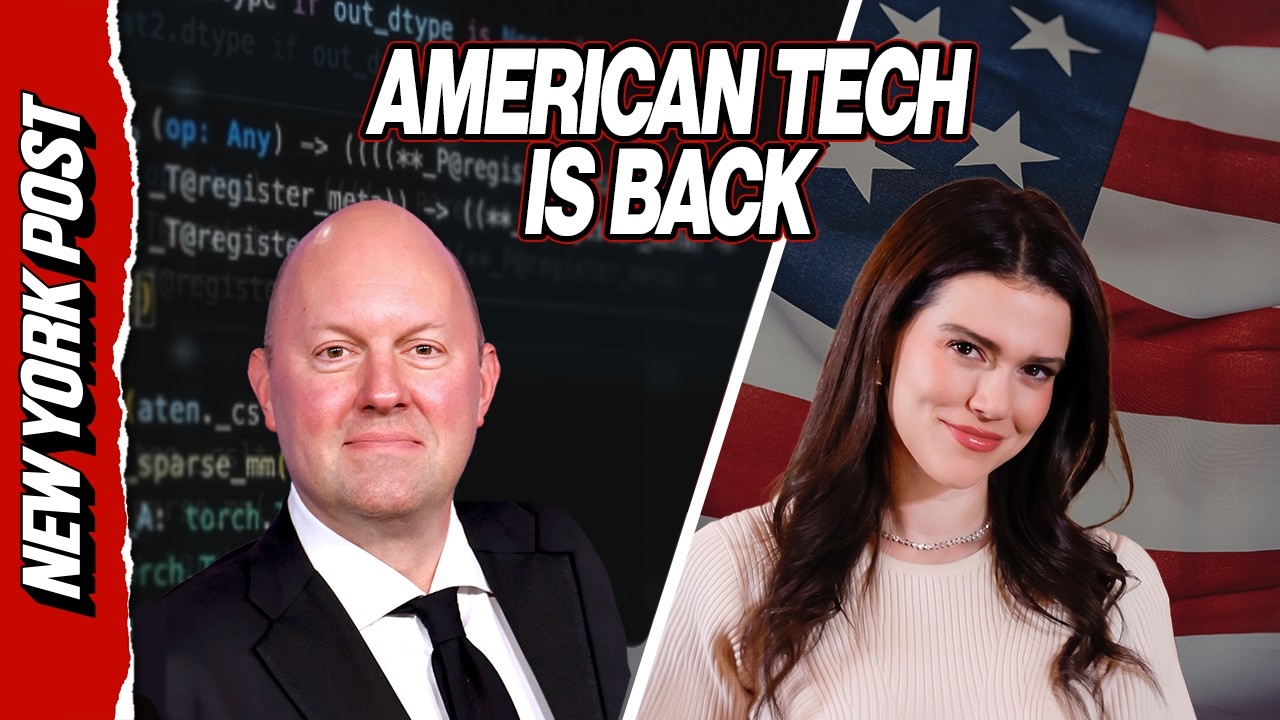
Marc Andreessen, a prominent Silicon Valley investor and co-founder of Andreessen Horowitz, offers a deeply optimistic perspective on AI and America’s future as the nation approaches its 250th anniversary. He challenges the prevalent doom-and-gloom narratives surrounding AI, attributing much of the negativity to a cultural bias among intellectuals who often equate pessimism with sophistication. Andreessen highlights historical parallels, such as J. Robert Oppenheimer’s post-atomic bomb regrets, to illustrate how creators of transformative technologies sometimes adopt a pessimistic stance, even when their innovations have had overwhelmingly positive impacts.
Andreessen emphasizes the transformative potential of AI across various sectors, particularly education, where AI acts as a personalized, patient tutor accessible to billions worldwide. He describes how AI can tailor explanations to different comprehension levels, making complex subjects like quantum physics accessible to learners of all ages. This AI-driven educational revolution complements rather than replaces human teachers, enhancing learning efficiency and accessibility. Similar AI integration is anticipated in medicine and law, where AI tools can augment professionals by providing up-to-date knowledge and improving decision-making.
On manufacturing and production, Andreessen is confident that America retains the capability to produce anything it currently outsources, attributing past offshoring to policy choices rather than skill deficits. He sees a political and policy-driven opportunity to revitalize American manufacturing, contingent on supportive government actions. In transportation, he foresees widespread adoption of autonomous vehicles, drones, and advanced robotics within the next decade, revolutionizing mobility and safety. He also highlights emerging technologies like robotic exoskeletons that promise to dramatically improve quality of life for people with disabilities.
Andreessen discusses the evolving political and cultural landscape in Silicon Valley, noting a resurgence of patriotism after a period of anti-government sentiment catalyzed by events like the Iraq War. He credits recent geopolitical developments, such as the Russian invasion of Ukraine, with uniting diverse political groups around defense and technological innovation. He advocates for leveraging technology to protect service members and law enforcement personnel, emphasizing autonomy and AI as tools to reduce human risk in dangerous situations. Despite challenges, he remains optimistic about America’s unique combination of culture, rule of law, human capital, and entrepreneurial spirit driving technological leadership.
Finally, Andreessen reflects on his role as both an investor and a vocal advocate for American ideals and free markets amid growing anti-tech sentiment. He stresses the importance of tech leaders taking responsibility for explaining their work and its benefits to the public. While acknowledging regulatory and political hurdles, he praises the current administration’s supportive stance on AI innovation compared to previous efforts to stifle startups. Andreessen remains confident in the rapid pace of AI advancements and the enduring strength of American venture capital, though he recognizes the heavy responsibility that comes with developing technologies that intimately impact people’s lives.