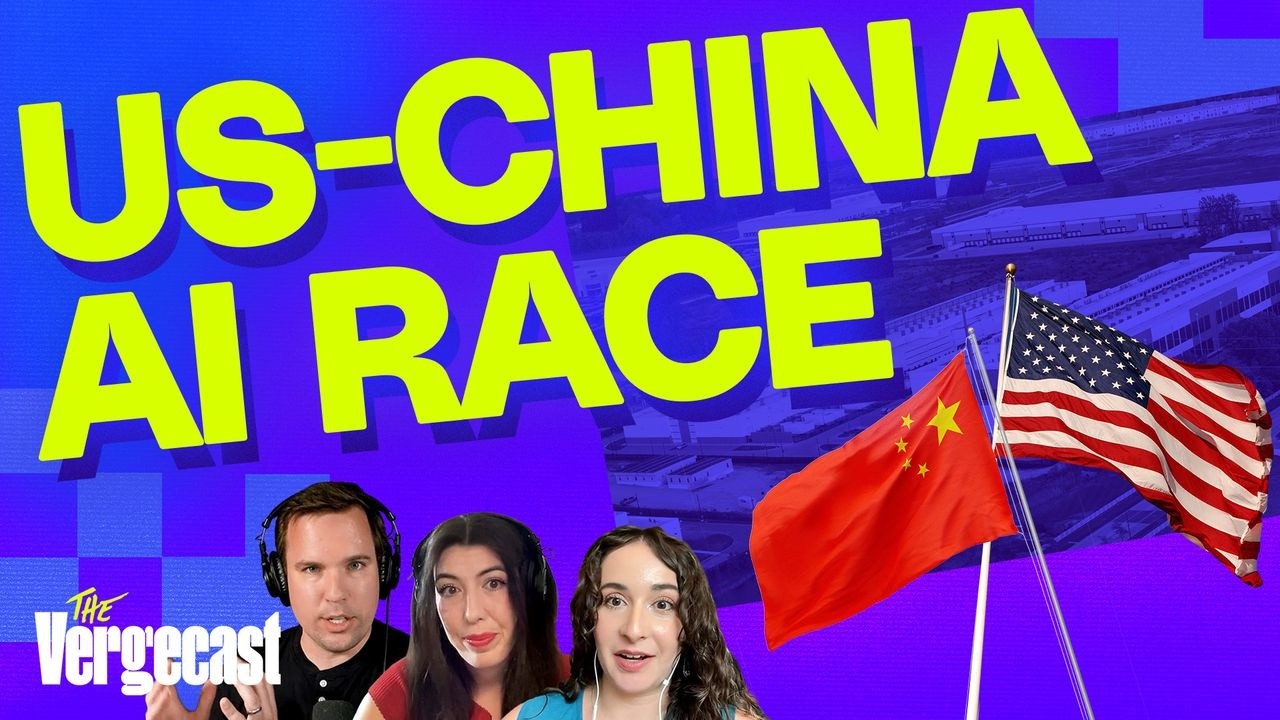
The Vergecast episode discusses the intensifying AI race between the United States and China, highlighting how Silicon Valley has traditionally led with companies like Google, OpenAI, and Anthropic driving innovation. However, recent developments show China rapidly catching up, exemplified by firms like Deepseek, Moonshot, and Alibaba producing competitive, efficient, and cost-effective AI models. This competition is not only a technological battle but also a significant political and policy issue, raising questions about the implications if China surpasses the US in AI capabilities.
A key technical concern in this race is the practice of “distillation,” where smaller or newer AI models learn from larger, more advanced ones by extracting knowledge through massive interactions. This method allows companies, including some Chinese firms, to quickly improve their models without the extensive resources typically required. Distillation has sparked legal disputes and regulatory challenges, as US companies like Anthropic accuse Chinese competitors of using their models illicitly to accelerate development, complicating efforts to maintain a technological edge.
Politically, the US government remains deeply invested in maintaining AI supremacy over China, viewing it as critical to national security, economic strength, and global influence. While export controls on advanced chips have been a traditional strategy to slow China’s progress, the emergence of efficient Chinese models that require less cutting-edge hardware has challenged this approach. The dynamic between US policymakers and AI companies is complex, with tech firms pushing for regulatory flexibility to innovate rapidly and outpace China, while also calling for oversight to manage risks responsibly.
The discussion also touches on the broader geopolitical and economic stakes if China were to lead in AI technology. Such a scenario could shift global power balances, influence surveillance and privacy norms, and affect which AI systems are integrated into critical infrastructure worldwide. The analogy to past tech battles, like the controversy over Huawei and TikTok, underscores concerns about dependency on Chinese technology and the potential consequences for US competitiveness and security.
Finally, the episode highlights the chaotic and uncertain nature of the current AI landscape, marked by rapid innovation, regulatory ambiguity, and political maneuvering. Both US AI companies and the government are navigating fears of losing the lead to China while managing internal challenges and public scrutiny. Despite the turbulence, there is a recognition among leading AI labs of the need for coordinated regulation and collaboration to ensure responsible development and maintain a competitive edge in this high-stakes global race.