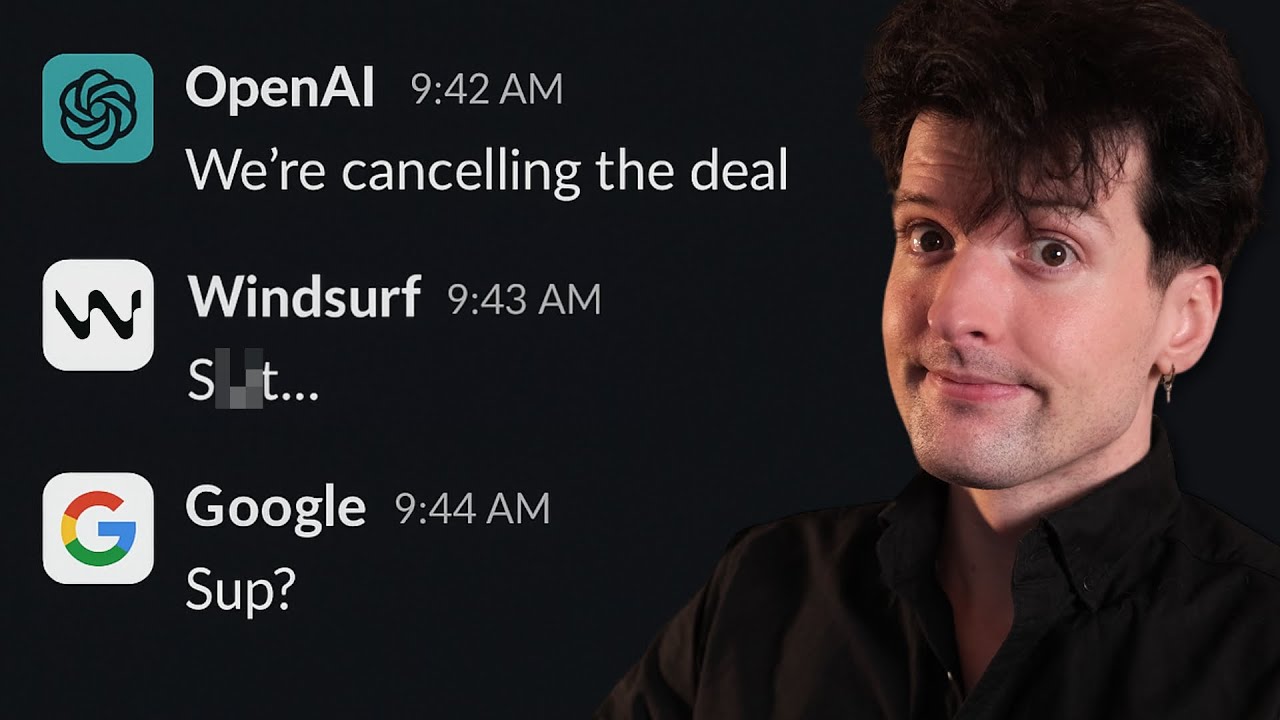
The video discusses the complex and chaotic situation surrounding Windsurf, a $3 billion VS Code fork startup that was on the verge of being acquired by OpenAI. The acquisition ultimately fell through due to complications arising from OpenAI’s existing deal with Microsoft, which grants Microsoft rights to all OpenAI-developed IP until AGI is achieved. This meant that if OpenAI acquired Windsurf, Microsoft would gain access to Windsurf’s IP, including its novel technology, effectively making the acquisition less valuable to OpenAI. As a result, the deal collapsed, leaving Windsurf’s founders, employees, and investors in a difficult position, expecting a lucrative exit that never materialized.
The video then delves into the broader context of the AI industry, highlighting the intense competition among major players like Meta, OpenAI, Google, and Anthropic to attract top AI talent. It explains how companies are engaging in aggressive “poaching” strategies, offering massive financial incentives to lure researchers and founders. The example of Meta’s $14 billion investment for a 49% stake in Scale AI is used to illustrate how partial acquisitions can allow founders and employees to cash out some equity while the company remains independent. This context helps explain the financial and strategic pressures that Windsurf faced amid the rapidly evolving AI landscape.
Following the failed OpenAI acquisition, Google stepped in with a different approach: instead of acquiring Windsurf outright, Google hired Windsurf’s CEO and some key team members while securing a non-exclusive license to Windsurf’s technology. This arrangement allows Google to leverage Windsurf’s IP and talent to bolster its developer tooling efforts without triggering antitrust concerns or paying the full $3 billion valuation. Meanwhile, Windsurf continues to operate independently, focusing on enterprise customers under new leadership, with Jeff Wang appointed as interim CEO. This split reflects a strategic division where Google targets the developer market segment that Windsurf was aiming for, while Windsurf pivots to serve enterprise clients.
The video also explores Windsurf’s market positioning challenges, noting that the company was caught between serving beginner developers and highly specialized enterprise users. Windsurf initially focused on enterprise tools but faced competition from companies like Cursor, which dominated the middle ground of developer experience. The split deal with Google allows Windsurf to concentrate on its profitable enterprise niche, while Google takes over the more competitive developer tooling space. This realignment is seen as a pragmatic move given Windsurf’s struggles to grow and compete effectively across the entire developer spectrum.
In conclusion, the Windsurf saga highlights the complexities of AI startup acquisitions in a highly competitive and rapidly changing market. The failed OpenAI deal, driven by IP and partnership constraints, led to a unique licensing and talent acquisition arrangement with Google that preserves value for investors and employees while reshaping Windsurf’s business focus. The video emphasizes the importance of developer sentiment and tooling in the AI race, illustrating how major companies are maneuvering strategically to win this critical segment. Despite the chaos, the outcome provides a pathway for Windsurf’s continued operation and Google’s strengthened position in AI developer tools.