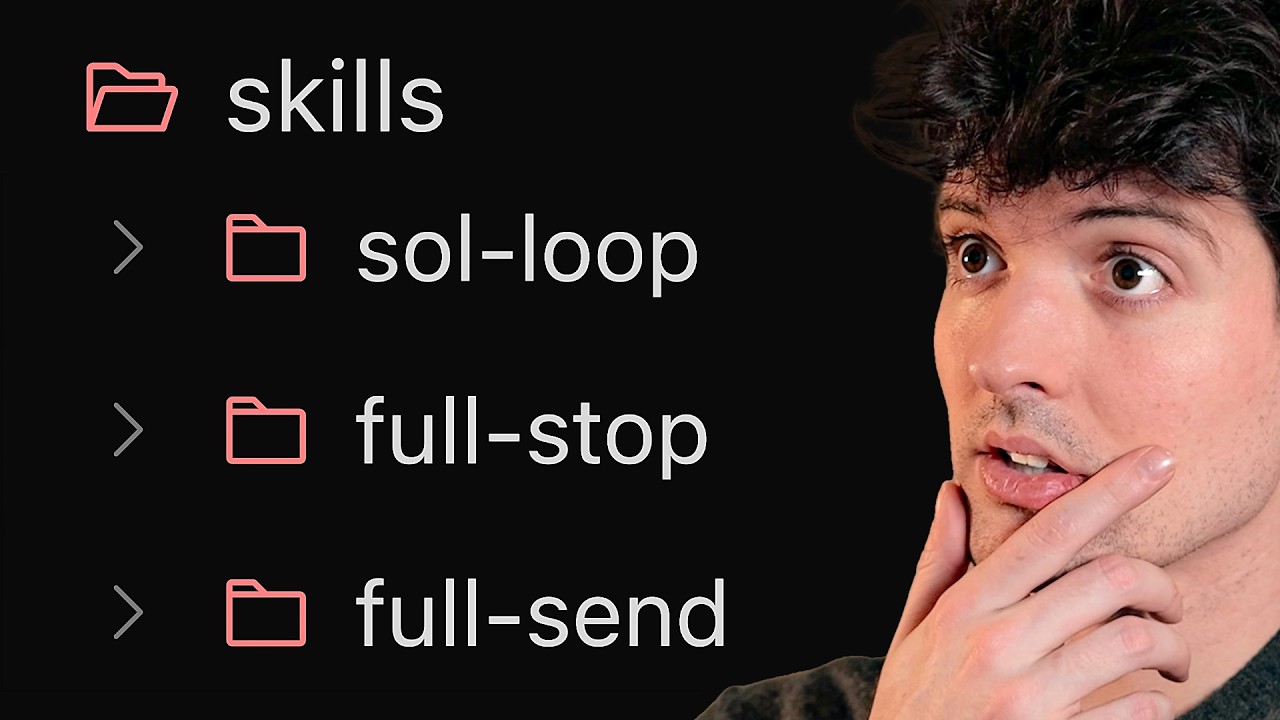
The creator shares how three structured skills—Sole Loop, Full Send, and Full Stop—have transformed their software development by enabling precise, autonomous, and efficient AI-assisted code review and merging within their T3 Code environment. These skills, supported by coordinated AI agents and rigorous verification processes, reduce cognitive load, improve code quality, and maintain human oversight on critical decisions, with plans to release them as part of the T-Stack project alongside an educational course.
In this video, the creator reflects on how three specific skills—Sole Loop, Full Send, and Full Stop—have significantly transformed their software development workflow. These skills originated from recurring behaviors they noticed in their work and have since been formalized into structured processes that enhance code quality and efficiency. The creator emphasizes that these skills are not about clever hacks but practical, repeatable behaviors that improve how code is reviewed, verified, and merged, particularly within their T3 Code environment, which manages multiple machines and development threads.
The Sole Loop skill focuses on iterative code review using AI agents like GPT-4 Sol, aiming to make minimal, precise changes that meet the intended goals without scope creep. This skill helps prevent endless review loops by setting clear boundaries on rounds of review and encouraging pushback when necessary. The creator highlights how this skill improves the quality of pull requests (PRs) before they reach human reviewers, reducing the likelihood of issues slipping through and speeding up the overall review process.
Full Send is designed to enable autonomous completion of tasks from the current state to a merged PR without requiring constant human oversight. It incorporates rigorous verification steps, including running tests and reproducing failures, to ensure changes are safe and effective before merging. This skill allows the creator to trust the AI agents to handle the bulk of the work, freeing them from having to revisit threads repeatedly. The workflow also includes mechanisms for the AI to ask for human input only when absolutely necessary, maintaining a balance between autonomy and control.
Full Stop complements Full Send by handling more complex or risky changes where the creator wants the AI to manage everything except the final merge. It ensures thorough verification and interaction with other agents and reviewers but waits for explicit human approval before merging. This skill has become the creator’s most frequently used, allowing them to delegate significant responsibility to AI agents while maintaining oversight on critical decisions. Additionally, the Takeover skill helps manage contributions from others by taking over PRs, ensuring credit is preserved while improving and finalizing the work.
Throughout the video, the creator discusses the technical setup that supports these skills, including the use of T3 Code’s orchestration features to coordinate multiple AI agents and the importance of flexible skill invocation methods. They also touch on the broader philosophy of building workflows that leverage AI to reduce cognitive load, increase efficiency, and maintain high-quality outputs. Finally, the creator announces plans to release these tools as part of a new project called T-Stack and promotes an upcoming course focused on using AI effectively in real-world software development.
Useful Links