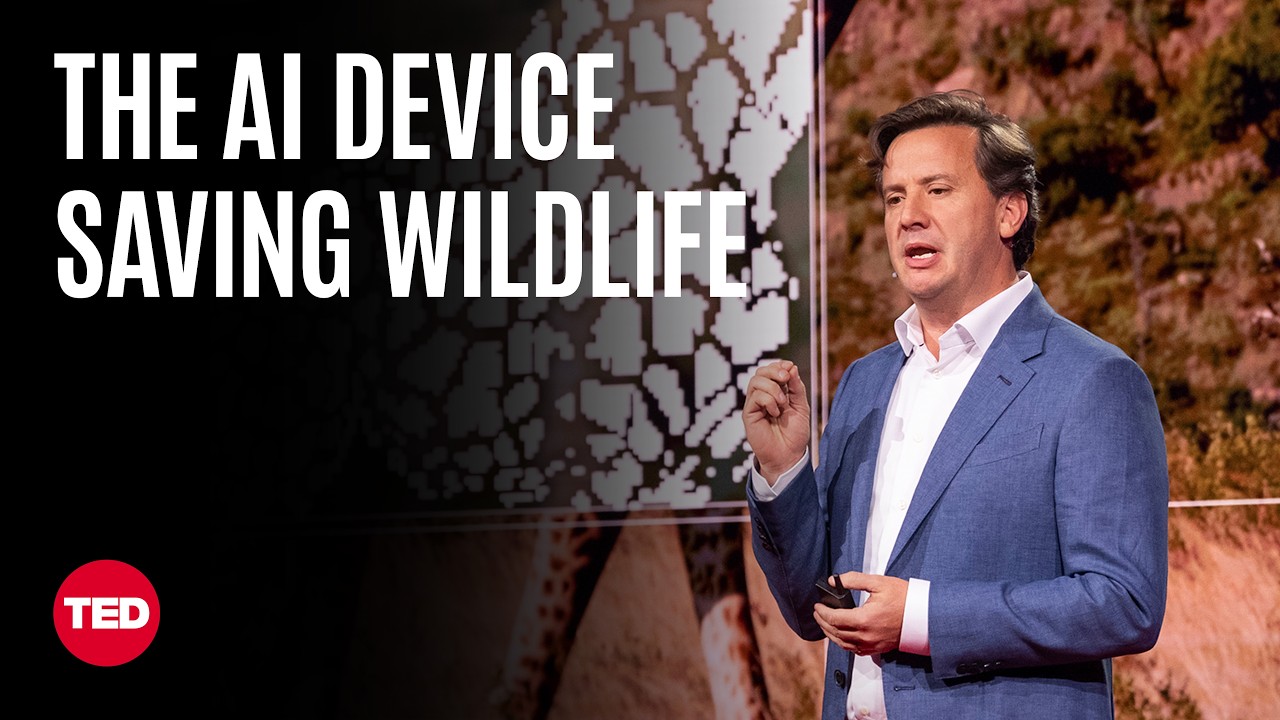
In this TED talk, Juan M. Lavista Ferres introduces Andrés Rojas, a dedicated conservationist who regularly hikes deep into the Colombian rainforest to maintain critical conservation technology like camera traps and bioacoustic devices. These devices are essential for collecting data on wildlife, but the process is arduous and slow, requiring physical presence to replace batteries and retrieve data. Despite advances in technology in other areas of life, conservationists still face significant challenges in gathering timely and actionable data to protect endangered species.
Juan highlights the limitations of current conservation methods, noting that while AI models exist to analyze biodiversity data, the overall process remains inefficient due to the logistical difficulties of data collection. To address this, his team developed SPARROW (Solar-Powered Acoustic Remote Recording Observation Watch), a network of solar-powered devices that process data on-site using low-voltage GPUs and transmit results via low-orbit satellites. This innovation allows conservationists to access real-time data remotely, eliminating the need for frequent, exhausting field visits.
A key feature of SPARROW is its simplicity and accessibility. The system is open source and built from off-the-shelf components, making it easy to assemble and deploy by a wide range of users, from scientists to park rangers. Despite its simplicity, SPARROW is powerful: it uses AI to automatically identify animals in camera trap images, significantly reducing the time spent reviewing thousands of irrelevant photos. Moreover, it can re-identify individual animals by their unique patterns, which is crucial for monitoring survival rates and population sizes.
Beyond visual data, SPARROW also excels in acoustic monitoring. It can isolate and classify animal sounds, providing a richer understanding of ecosystem health. This capability is especially valuable for experts like Paula Caycedo, who traditionally spend hundreds of hours manually analyzing audio recordings. With SPARROW, they can train the system to focus on specific species or calls, saving time and improving conservation efforts. Additionally, SPARROW can detect early signs of wildfires and send alerts, enabling faster responses that can prevent large-scale destruction.
Juan concludes by emphasizing the urgent need to accelerate conservation efforts through better technology. By reducing the time from data collection to analysis from months to days, SPARROW can make a critical difference in the survival of endangered species. He dedicates his talk to the unsung heroes of conservation, urging the global community to support them with innovative tools. SPARROW represents a transformative step toward protecting biodiversity more effectively and efficiently worldwide.