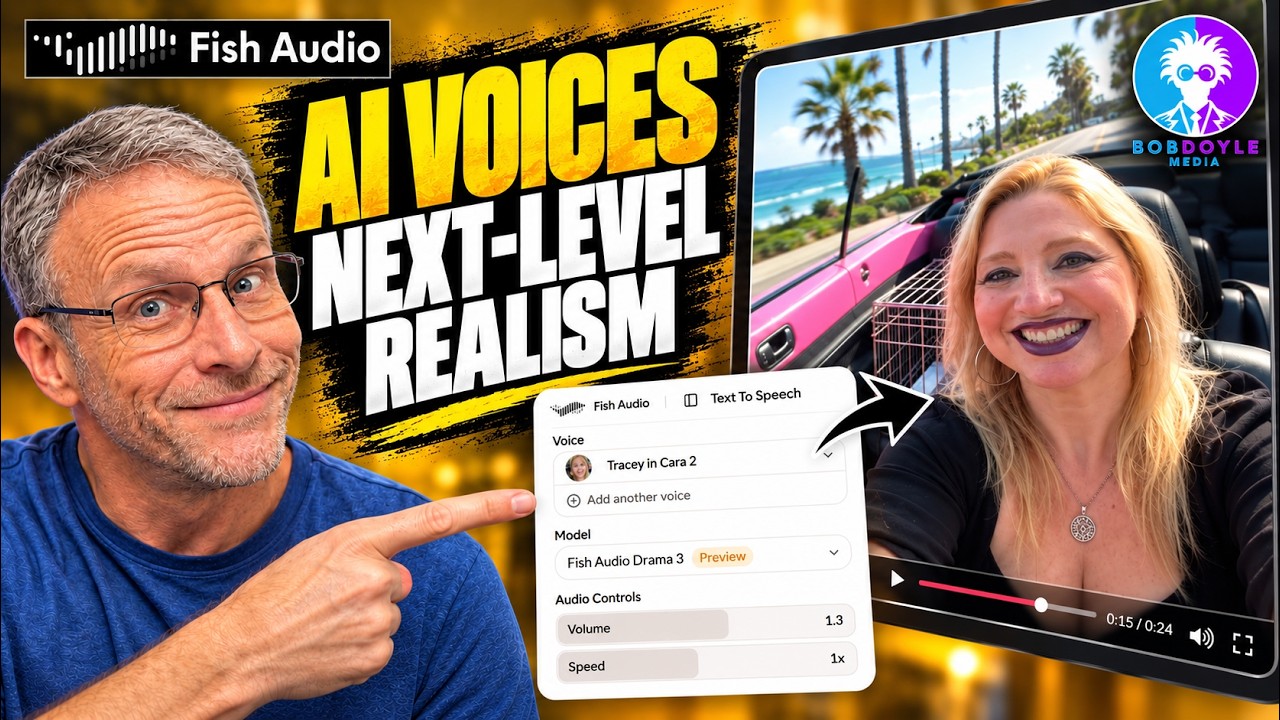
The video highlights the Fish Audio platform as a leading tool for speech synthesis and voice cloning, praised for its natural-sounding voices and extensive library. The creator emphasizes the importance of realistic voice applications, such as making AI influencers sound authentic in their environments rather than overly polished or announcer-like. Fish Audio continually improves its models, recently introducing the Drama 3 model, which enhances emotional expression by allowing users to add nuanced emotional tags and acting techniques, such as sighs or specific tones, directly within the text input.
A significant update to Fish Audio is the integration of video and graphics models, enabling users to create synchronized videos with realistic lip-syncing directly from the platform. This addition addresses previous limitations where users could generate audio but had limited creative options for video production. The platform now offers various models for lip-syncing static images or existing videos, with features that allow detailed prompts to improve animation accuracy and emotional expression, making the AI voices feel more lifelike and contextually appropriate.
The video demonstrates several examples of Fish Audio’s capabilities, including different voices with emotional tags applied automatically or manually for emphasis and tone. The creator showcases how these voices can be paired with images or animations using models like HeyGen Avatar 4, Creative AI Aurora Avatar, Sea Dance 2.5, and MiniMax H3 Max. These models vary in rendering speed and animation detail, with some offering near real-time video generation. The examples include characters ranging from a frustrated manager to an underwater creature and a whimsical madman, illustrating the platform’s versatility in storytelling and character creation.
One notable feature discussed is how certain video models reprocess the original audio to better fit the visual environment, enhancing the naturalness of the voice in context. For instance, emotional clips such as a breakup scene are improved by models like Sea Dance 2.5, which add subtle nuances to the voice to match the scene’s mood. The video also compares different video models’ outputs, highlighting their strengths and limitations in lip-sync accuracy and animation realism, while consistently praising Fish Audio’s voice quality as a key factor in making AI-generated content feel authentic.
In conclusion, the creator strongly recommends Fish Audio for anyone needing convincing AI voiceovers, especially for video projects requiring realistic dialogue and emotional depth. The platform’s new Drama 3 model and integrated video tools offer powerful options for content creators to produce engaging, lifelike AI characters and influencers. The video encourages viewers to explore Fish Audio’s features, including voice cloning and emotional tagging, and suggests subscribing to the channel for ongoing updates and discussions about innovative AI voice and video technologies.
Useful Links