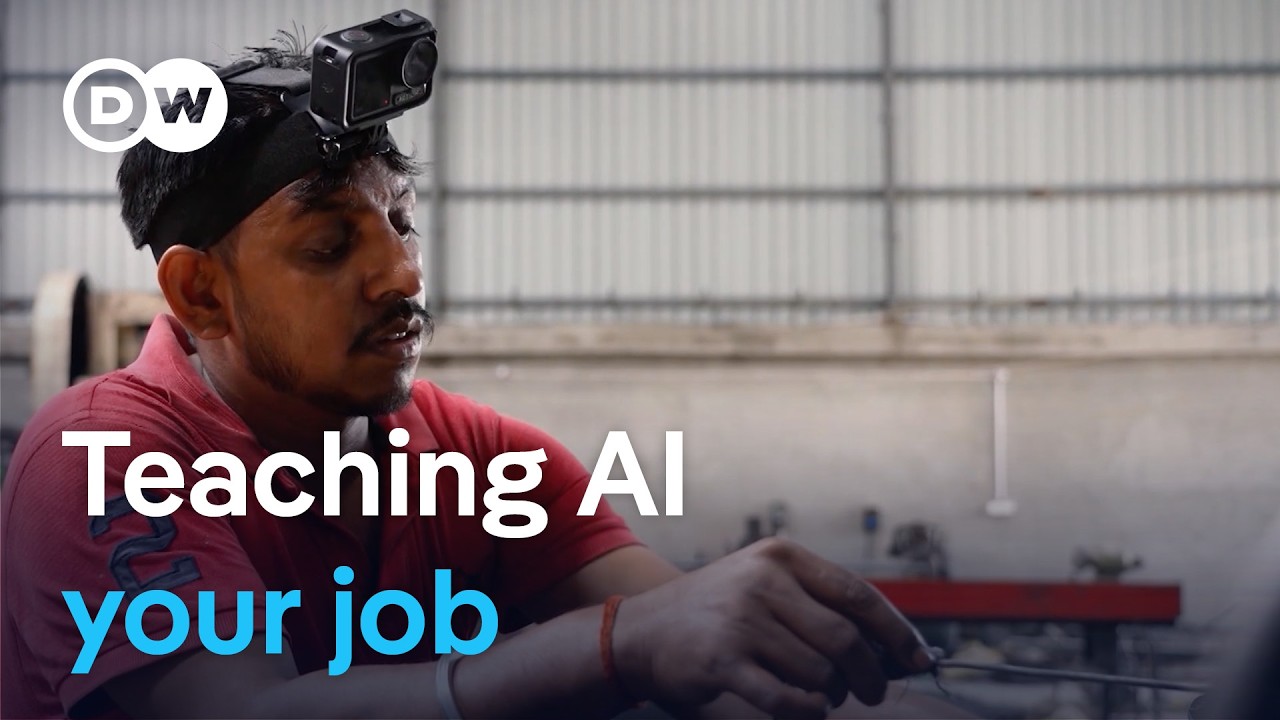
Indian factory workers in Punjab are being recorded to train AI systems that may replace their jobs, raising fears of surveillance and job loss amid minimal compensation. Experts highlight the ethical concerns and lack of regulations in India to protect these workers, urging the need for policies that balance AI innovation with workers’ rights and fair treatment.
The video report focuses on Indian factory workers, particularly in Punjab, who are wearing cameras to record their every move as they perform tasks. These recordings are used to train artificial intelligence systems and humanoid robots that could potentially replace their jobs. Workers like Ravi Kumar express anxiety and fear about the surveillance and the possibility of job losses, despite receiving a small bonus for wearing the cameras. The factory owner, Rahul Jaswani, views the AI technology as a means to increase productivity, reduce errors, and boost profitability, showing little concern for the workers’ fears.
The footage collected from these workers is processed by companies like Labeler AI, which tag and analyze every action to create training data for AI developers, primarily in the United States. The demand for such data is rapidly growing, with estimates suggesting the humanoid robot market could be worth $5 trillion by 2050. India has become a key location for gathering this data due to the vast number of labor hours available, but this scale of data collection raises significant ethical and economic concerns.
Labor economist Avinash Kumar highlights the exploitation faced by workers, who are essentially converting their skills into valuable data without fair compensation. He also points out the invasive surveillance regime imposed on workers, with no clear legal framework governing the use of workplace recordings for AI training. This lack of regulation leaves workers vulnerable to exploitation and surveillance without adequate protections or transparency.
Technology lawyer Mishi Choudhary emphasizes the imbalance in the distribution of benefits from AI training data, where factory owners and data companies profit while workers receive minimal compensation. She also raises concerns about consent, noting that workers often cannot freely refuse to participate due to power dynamics in the workplace. Furthermore, she stresses the absence of policies addressing the transition for workers displaced by automation, with little public discourse in India about how to support those affected.
The broader context reveals that while India is eager to embrace AI innovation, it lacks comprehensive regulations to protect workers from the negative impacts of automation and surveillance. Unlike the European Union, which is actively working on AI regulations, India currently relies on existing laws that do not adequately address the challenges posed by AI in the workplace. The report concludes by underscoring the urgent need for policies that balance innovation with workers’ rights and fair treatment in the rapidly evolving AI-driven economy.