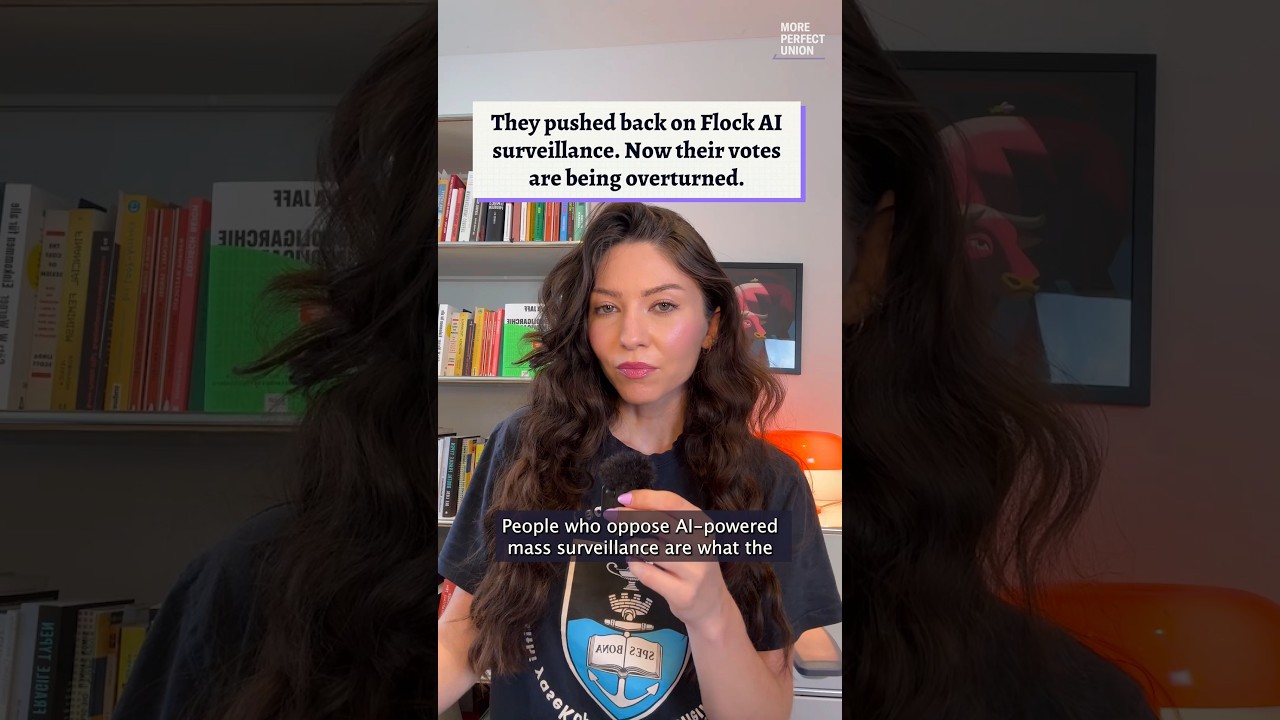
The video highlights how Flock AI, a major surveillance company, faces significant public opposition for its mass license plate scanning, yet local governments often override community votes to end contracts, undermining democratic decisions. It also critiques Flock’s CEO for dismissing legitimate dissent as “terrorism,” exposing tensions between corporate surveillance interests and residents’ rights to privacy and transparency.
The video discusses the controversy surrounding Flock AI, a $7.5 billion mass surveillance company that operates in over 5,000 communities and processes more than 20 billion vehicle license plate scans monthly. Flock secures many of its local government contracts without public input, leading to significant opposition from communities concerned about privacy and surveillance. Garrett Langley, the CEO of Flock, controversially labels organized opposition to the company as “terrorism,” framing resistance as chaos rather than legitimate democratic dissent.
Despite Langley’s claims that Flock’s presence is a result of democratic processes and that no one is being forced to accept their surveillance technology, the reality on the ground tells a different story. Several towns have voted to end their partnerships with Flock, reflecting public opposition to the surveillance cameras. However, even after these votes, the cameras remain operational, and local governments have taken steps to reverse their decisions, undermining the democratic will of their constituents.
A notable example is Cleveland, where the Public Safety Commission voted overwhelmingly not to renew the contract with Flock following massive public opposition. Yet, despite this clear decision, key city officials including the city council president, mayor, and police chief pushed for a revote. This revote has advanced the contract renewal despite continued public resistance, leaving residents frustrated and feeling ignored by their elected representatives.
The situation in Cleveland highlights a broader issue of transparency and accountability in local governance when it comes to surveillance contracts. Residents who actively participated in the democratic process to voice their opposition now face the reality that their victory was short-lived. The cameras remain active, and the timeline for further council votes leaves little opportunity for effective community pushback, eroding trust in the democratic process.
In summary, the video exposes the tension between corporate surveillance interests and community rights, illustrating how public opposition to AI-powered mass surveillance is being dismissed or overridden. It questions the sincerity of claims that these surveillance measures are democratically endorsed, especially when elected officials reverse decisions and maintain surveillance operations despite clear public disapproval. The CEO’s labeling of dissenters as terrorists further inflames the debate, underscoring the contentious nature of mass surveillance in modern society.