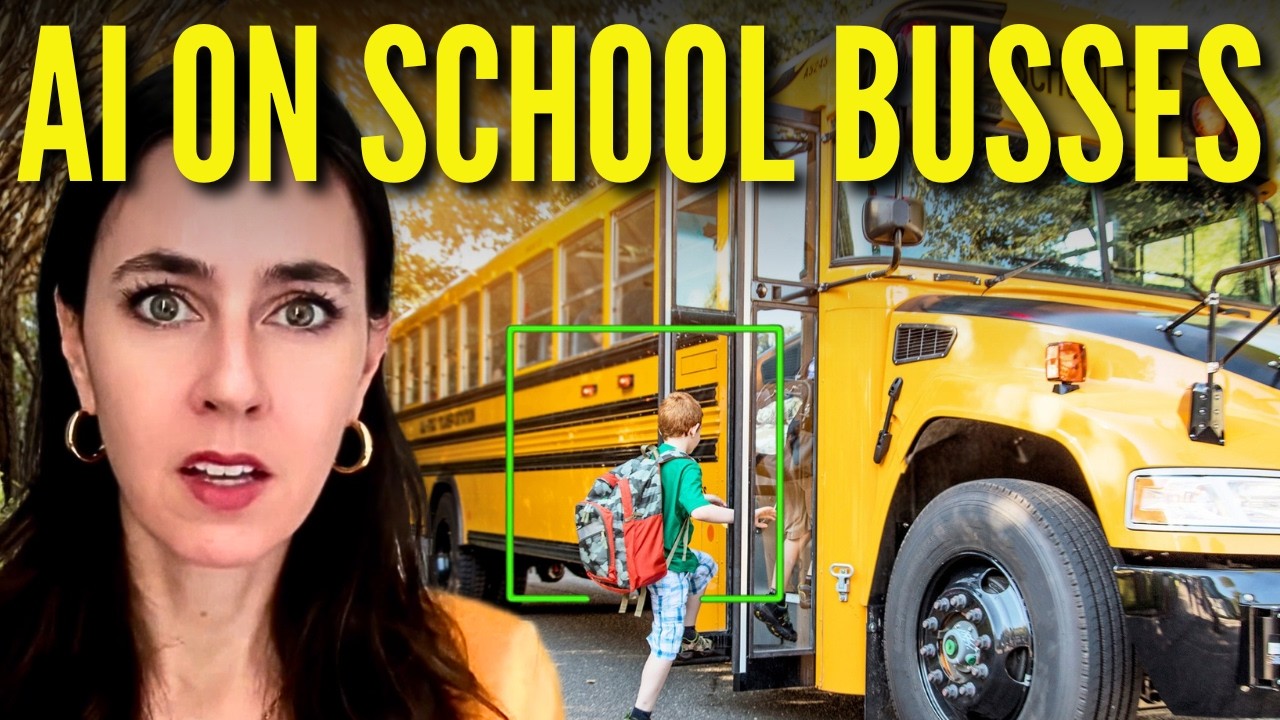
The video discusses the growing use of AI-powered surveillance cameras on school buses across the United States, focusing on concerns raised by Kent Myrtle, a school bus driver in Wichita. Kent highlights how these AI cameras, installed by the company Samsara, monitor both drivers and students by recording and analyzing footage in real-time. While the stated purpose is to enhance safety by detecting driver drowsiness or inattention and documenting incidents, the technology also raises significant privacy issues, especially regarding the surveillance of children without parental consent.
Kent shares his personal experience of discovering the AI cameras being installed without prior notice and the lack of transparency from his employer, First Student, a national bus contractor. He recounts raising concerns during a mandatory safety meeting about the privacy implications and data security, only to be abruptly asked to leave the room by management. Despite this, other bus drivers showed support for his stance, indicating a shared unease about the invasive monitoring and its impact on their work environment and interactions with children.
The conversation also touches on broader issues of workplace surveillance, noting that similar AI monitoring systems are increasingly common in various industries, including trucking, retail, and even garbage collection. Kent expresses discouragement about the pervasive nature of such surveillance and its potential to undermine worker autonomy and privacy. The discussion extends to the psychological effects on children who grow up under constant observation, which may hinder their development and sense of safety.
The video further explores the legal and ethical concerns surrounding the collection and use of biometric data by companies like Samsara, referencing a significant lawsuit in Illinois where the company settled over unauthorized facial recognition data collection. Kent emphasizes the lack of consent and public input in deploying these systems, urging parents, educators, and workers to demand transparency, privacy protections, and the right to consent. He advocates for solidarity among workers and collaboration with parents and school staff to address these invasive technologies.
Finally, the video highlights the broader trend of increasing surveillance in schools, including AI-enabled digital hall passes and monitoring of students’ movements, which contribute to a culture of constant oversight. The host and Kent express alarm at how these technologies erode privacy and create oppressive environments for both children and workers. They call for greater awareness and resistance to ensure that safety measures do not come at the cost of fundamental rights and freedoms.