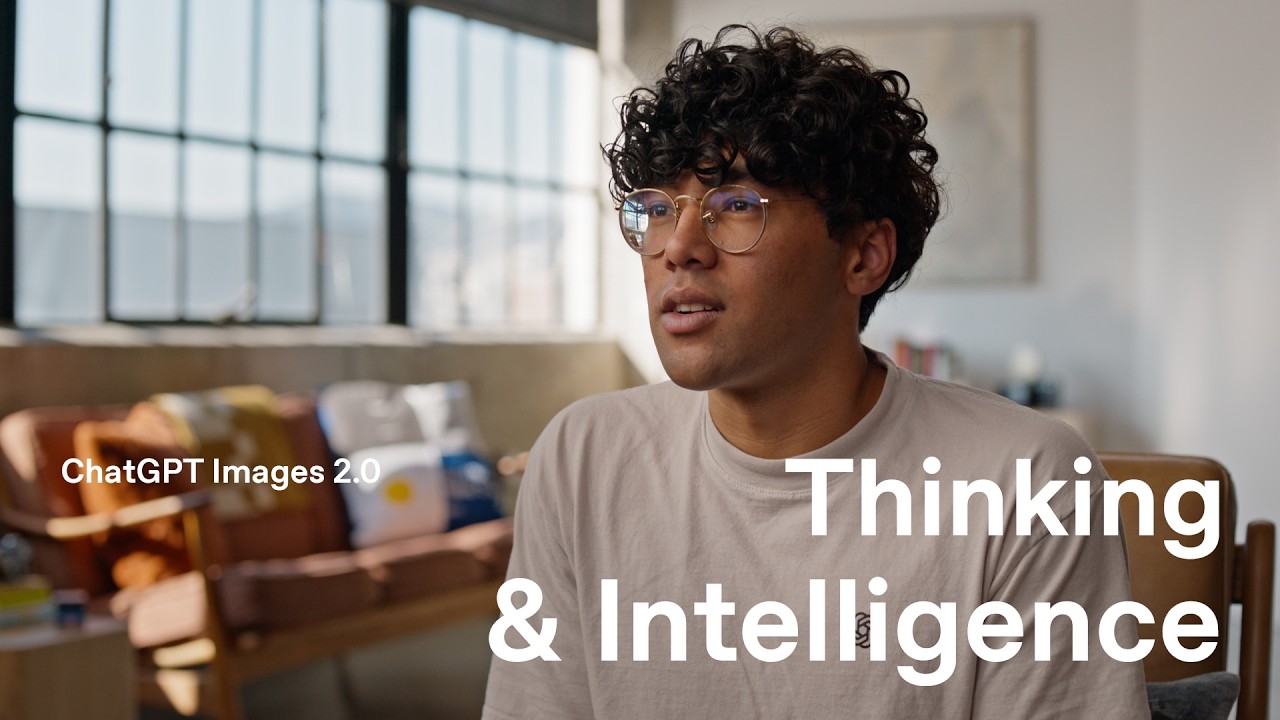
The video introduces the enhanced capabilities of OpenAI’s new image model, Image 2.0, which now features “thinking” enabled. This allows the model to research, gather information, find references, and synthesize these elements into coherent and informative outputs. Ian, a researcher from the OpenAI imaging team, explains that unlike previous versions, Image 2.0 can perform complex tasks by first conducting research and then generating multiple consistent outputs that tell a comprehensive story.
The first example demonstrated is the creation of a product advertisement for recent OpenAI merchandise. By selecting the thinking model and instructing it to generate an ad featuring the rarest merch items along with price estimates, the model successfully compiled images of various merch drops. It analyzed multiple sources to estimate resale values and created a visually appealing mockup ad with accurate branding and fonts, showcasing its ability to combine research with creative design.
Next, Ian highlights Image 2.0’s extensive world knowledge and its ability to summarize complex information. The model was tasked with creating a series of college-level infographic pages on Newton’s major mathematical and scientific contributions. The output consisted of multiple consistent pages that resembled textbook content, complete with clear text and relevant figures. This example illustrates the model’s potential as a valuable tool for educators to generate teaching materials such as notes, slides, or textbook-like summaries.
The final example focuses on the model’s usefulness for professional and productive work. Ian imagines a strategist researching social media photo aesthetics and trends over three decades (2006, 2016, and 2026). The model synthesized findings into separate pages, analyzing articles and images to understand evolving aesthetics and vibes. This open-ended task demonstrated Image 2.0’s ability to handle complex, nuanced research and present it in a structured, insightful manner.
Overall, the video emphasizes that Image 2.0 is more than just an image generation tool; it acts as an intelligent partner capable of deep thinking and extended reasoning. It can spend time researching and synthesizing information to produce high-quality, informative, and visually consistent outputs. This advancement opens up new possibilities across creative, educational, and professional domains, making the model a versatile and powerful assistant.