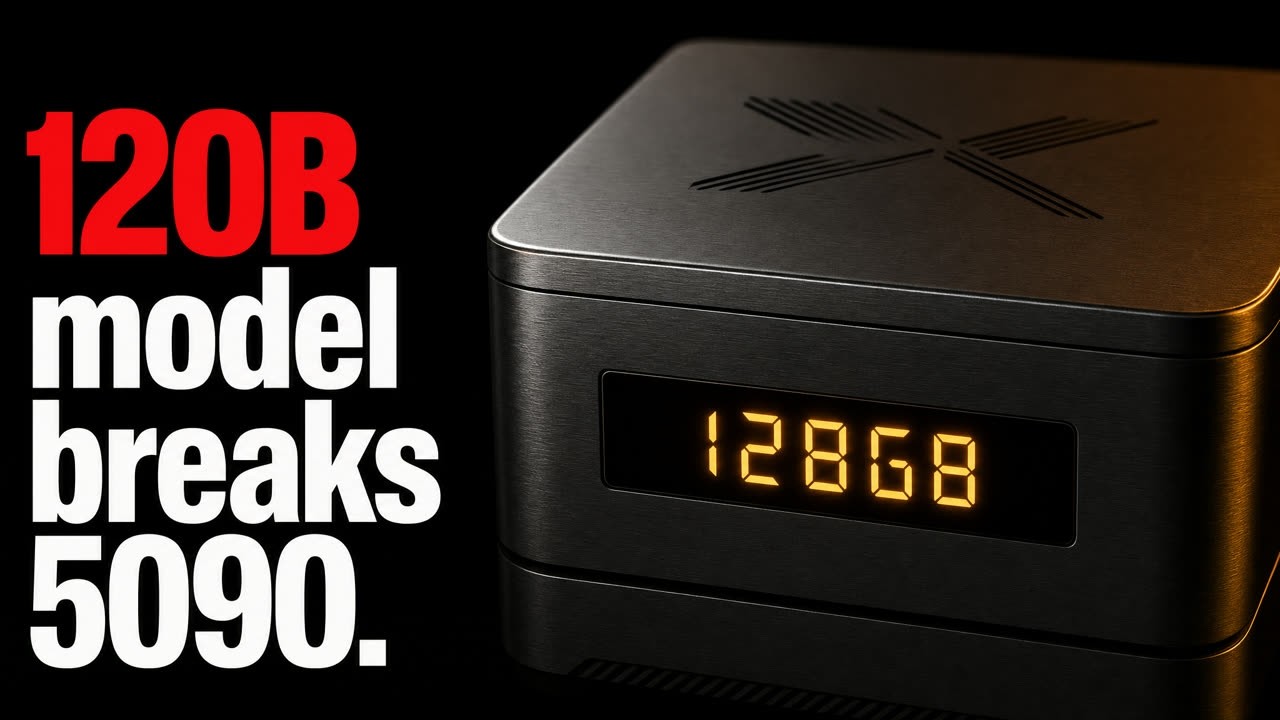
The GMKtec EVO X2 is a 128GB mini PC capable of loading large AI models that even the high-end RTX 5090 graphics card cannot handle due to its limited 32GB video memory. While the EVO X2 offers a massive shared memory pool without a discrete GPU, allowing it to hold models requiring around 45GB of memory, this capacity advantage does not translate into faster performance. The key distinction lies between memory capacity, which determines if a model can load, and memory bandwidth, which dictates how quickly the model can generate responses. The EVO X2’s large but slower LPDDR5X memory contrasts with the RTX 5090’s smaller but extremely fast dedicated video memory.
The EVO X2 uses an AMD Ryzen AI Max+ 395 chip with an unusually large integrated GPU sharing the system’s LPDDR5X memory pool, enabling the entire 128GB to be accessible for AI models without partitioning. This design differs from traditional GPUs, where video memory is isolated and limited. However, despite this architectural advantage in capacity, the EVO X2’s slower memory bandwidth results in sluggish AI response times, making it impractical for interactive use with dense models. Community benchmarks confirm the capacity claims but also highlight the performance trade-offs.
In contrast, the RTX 5090 excels in speed for models that fit within its 32GB memory, delivering over 100 tokens per second, which feels instantaneous to users. When models exceed this memory, the card resorts to slower system RAM, causing performance to plummet to the teens in tokens per second. This bottleneck is due to memory bandwidth limitations rather than raw compute power. The fundamental trade-off is between the EVO X2’s large but slow memory pool and the RTX 5090’s small but fast memory, with each suited to different types of AI models.
Apple’s Mac Studio with Ultra chips offers a hybrid solution, combining large unified memory pools (up to 512GB) with very high bandwidth (1.2TB/s), enabling both capacity and speed. However, this comes at a steep price starting at $5,499 and increasing significantly with more memory. Additionally, NVIDIA’s hardware provides higher raw compute power, allowing faster initial processing of prompts, while Apple’s solution excels in sustained output speed due to superior memory bandwidth. The choice between these machines depends heavily on the user’s specific AI workload and budget.
Ultimately, the decision to buy a mini PC like the EVO X2 or a high-end GPU hinges on the AI model’s characteristics. Dense models that require loading all parameters for each word benefit from fast, dedicated GPU memory, making graphics cards the preferred choice for most users. Sparse models, which activate only a subset of parameters per word, require large memory capacity and thus suit machines like the EVO X2. For models too large or dense to run efficiently on consumer hardware, cloud-based solutions remain the practical option. The key takeaway is to select hardware based on the model’s memory needs and usage pattern rather than raw specs alone.