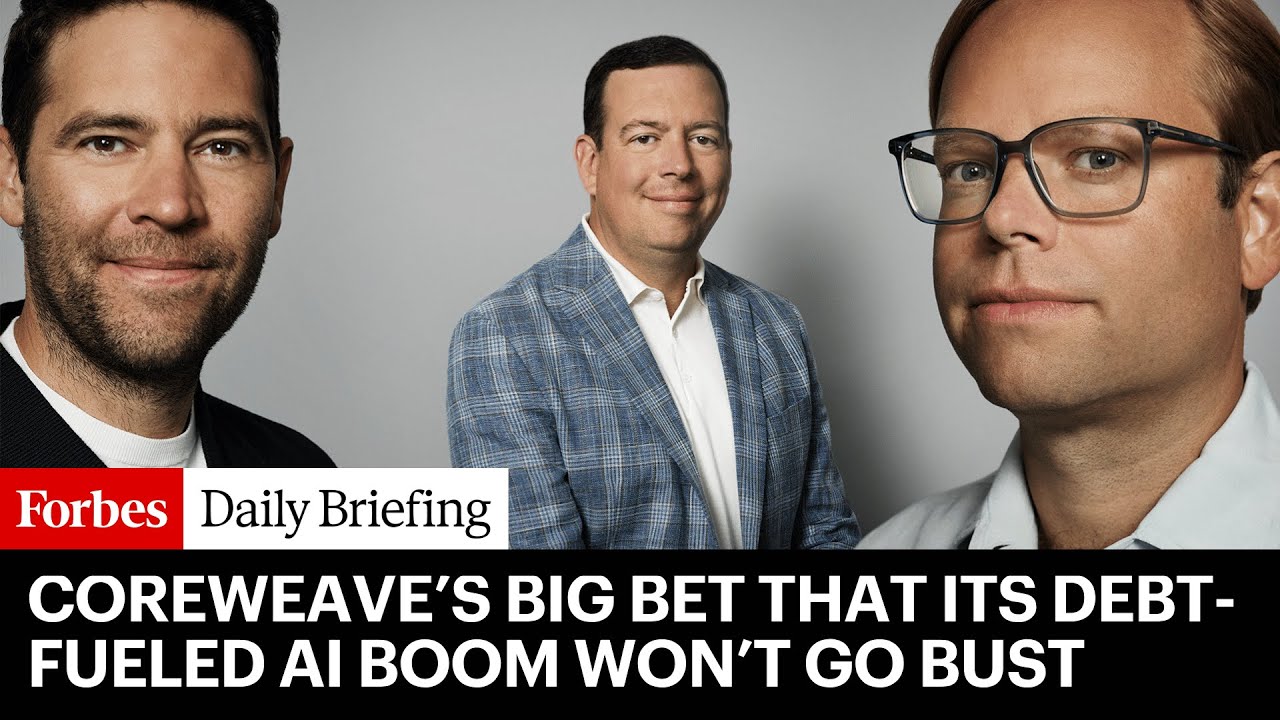
CoreWeave, an AI-focused cloud computing company, has made a bold $29 billion bet on its debt-fueled growth to compete with tech giants like Amazon and Google. Founded by CEO Michael Intrader, CoreWeave started in 2017 by utilizing NVIDIA GPUs initially for cryptocurrency mining but has since pivoted to become a major provider of GPU computing power essential for artificial intelligence applications. Today, the company operates 33 data centers with around 250,000 GPUs, serving high-profile clients such as Microsoft OpenAI, Meta, IBM, and various AI startups.
The company has experienced rapid growth, generating $1.9 billion in revenue in 2024 and $2.2 billion in the first half of 2025, though it still operates at a net loss. CoreWeave aims to expand significantly, projecting $30 billion in revenue by 2031, driven by contracts with leading tech firms and AI startups. Its stock price has more than doubled since its March IPO, creating several billionaires among its founders and early investors, including Intrader himself, who recently joined the Forbes 400 list of richest Americans.
CoreWeave’s success is largely due to the surging global demand for GPUs, which have become critical for AI development following the popularity of tools like ChatGPT. The AI cloud computing market was valued at $230 billion in 2024 and is expected to grow to $400 billion by 2028. Intrader’s early insight that GPUs could be repurposed from crypto mining to AI computing, combined with a strategic partnership with NVIDIA, positioned CoreWeave as a key player in the AI infrastructure space.
Despite its impressive growth, CoreWeave faces significant financial risks. The company carries $11.2 billion in debt, with interest rates between 7% and 15%, leading to high interest expenses—over $250 million last quarter alone—while operating income remains modest. This heavy debt load has raised concerns among investors and analysts about the sustainability of CoreWeave’s business model, especially given the broader uncertainties surrounding the AI market.
Finally, there is an ongoing debate about whether the AI boom represents a genuine technological revolution or a speculative bubble. While investors have poured $104 billion into AI startups in early 2025, many businesses have yet to see substantial returns from generative AI technologies. CoreWeave’s gamble reflects both the enormous potential and the significant risks inherent in the rapidly evolving AI industry, as it strives to provide the computing power that could define the future of technology.