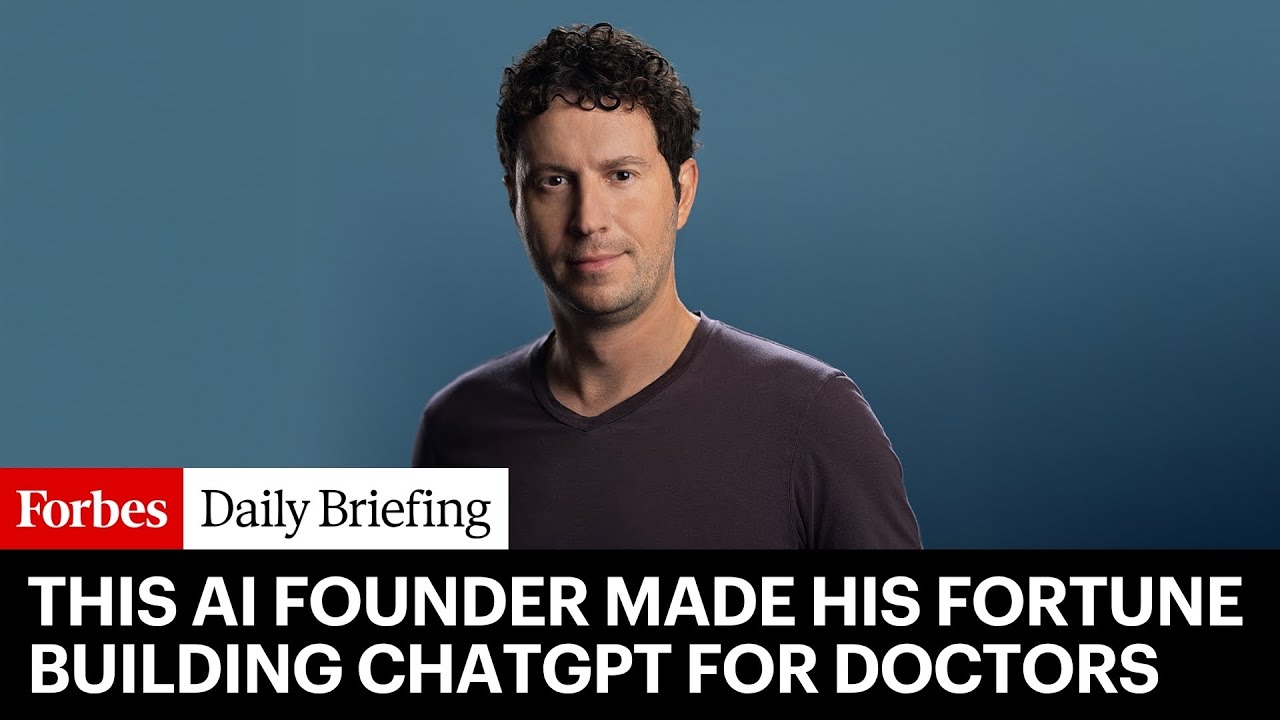
Daniel Nadler, co-founder and CEO of Open Evidence, has become a billionaire by creating an AI-powered platform designed to help doctors keep up with the overwhelming influx of medical research. With a new medical paper published every 30 seconds, physicians face an almost impossible challenge in staying current with the latest breakthroughs while managing heavy patient loads. Nadler, a Harvard PhD and successful entrepreneur, recognized this problem and developed Open Evidence to use artificial intelligence to sift through millions of peer-reviewed studies, providing doctors with fast, accurate, and fully cited answers to clinical questions.
Open Evidence’s proprietary algorithms scan top medical journals such as the New England Journal of Medicine and the Journal of the American Medical Association, enabling doctors to quickly find the best treatment options supported by the latest research. The platform is offered free to verified physicians and generates revenue through advertising, similar to Google’s business model. This approach has attracted significant investment and praise, with Kleiner Perkins chairman John Doerr comparing Open Evidence’s potential impact on healthcare to Google’s influence on the internet.
Since its founding in 2022 and based in Miami, Open Evidence has rapidly gained traction, signing up over 430,000 doctors—about 40% of U.S. physicians—and adding 65,000 new users monthly. Its advertising revenue is estimated at an annualized $50 million, and the company has raised $210 million in funding led by GV (Google Ventures) and Kleiner Perkins, valuing the startup at $3.5 billion. Nadler, who invested $10 million of his own money as the seed investor, owns roughly 60% of the company, making his net worth approximately $2.3 billion. Co-founder and CTO Zach Ziegler holds about 10%, worth around $350 million.
The challenge Open Evidence addresses is growing rapidly as medical literature doubles every five years, fueled by advances like gene therapies and complex drug interactions. While other companies like UpToDate have long provided medical information, Open Evidence is unique in integrating AI from the ground up to deliver more precise and accessible answers than general AI tools like ChatGPT. The platform is now used in approximately 8.5 million consultations monthly, and because it is not classified as a diagnostic tool, it avoids FDA approval hurdles, allowing for faster adoption by doctors without bureaucratic delays.
Open Evidence’s free, AI-driven model has revolutionized how physicians access medical knowledge, helping to reduce burnout and improve patient care by making the latest research more manageable and actionable. With strong investor backing and rapid user growth, the company is poised to become an indispensable resource in healthcare, transforming the way doctors stay informed in an era of information overload. For more details, Forbes reporters Amy Feldman and Rashi Shrivastava provide comprehensive coverage of this breakthrough innovation.