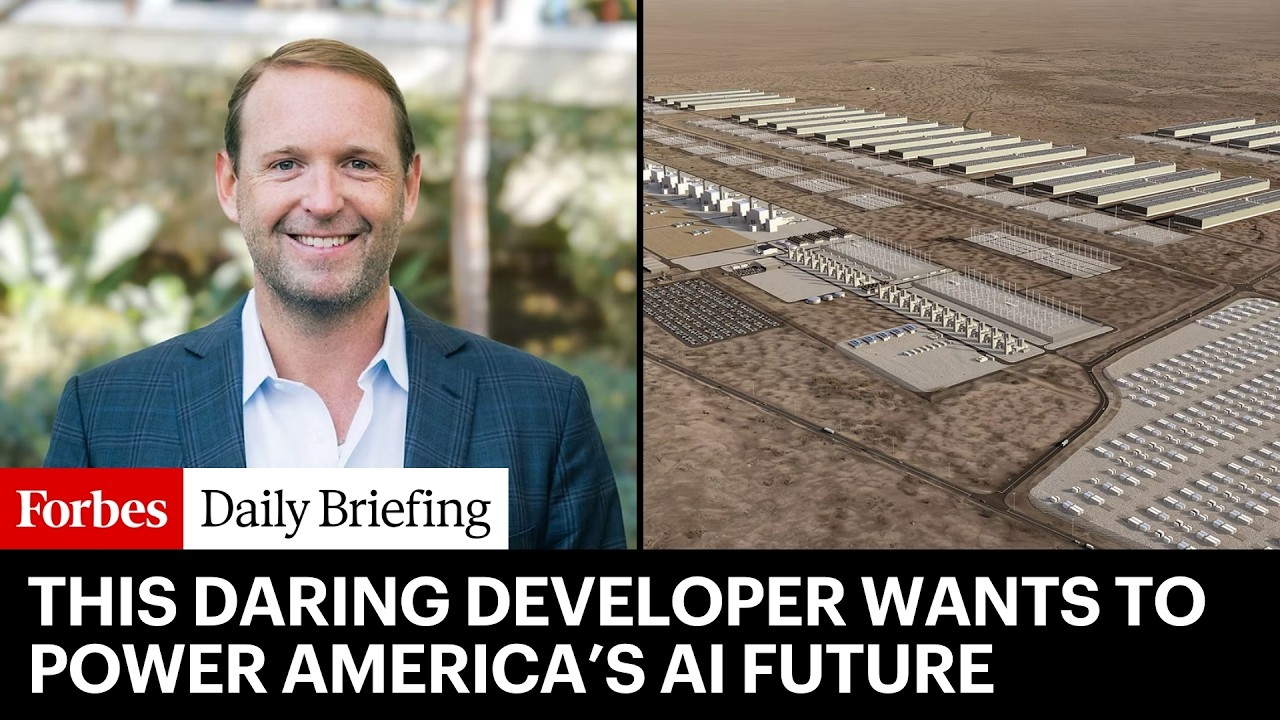
Nate Franklin, CEO of Pacificico Energy, is spearheading an ambitious project to power America’s AI future by building the nation’s largest electric power generating complex in Pecos County, West Texas. The area is sparsely populated, with only about 14,000 residents spread over 4,800 square miles. Franklin has secured an option on 84 acres of land and obtained air emission permits from the Texas Commission on Environmental Quality, allowing Pacificico to proceed with constructing dozens of natural gas turbines capable of generating 7.5 gigawatts of power.
The planned complex, named GW Ranch, will also feature solar panels producing 750 megawatts and batteries with a storage capacity of 1.88 gigawatt-hours. Altogether, the facility could supply enough electricity to power five million Texas homes or all of New York City on most days. However, Franklin still needs to secure the estimated $12 billion required for construction, as well as commitments from major cloud service providers—such as Amazon, Microsoft, and Google—to build AI data centers that would consume the generated power. These commitments are crucial to attracting the necessary investment.
Franklin is optimistic about the project’s prospects, citing the explosive growth in demand for AI computing power. Hyperscalers are projected to spend $650 billion in 2026 alone, and industry leaders like Elon Musk are even considering building AI data centers in space. To minimize costs and local opposition, Franklin plans to keep the GW Ranch disconnected from the state power grid managed by ERCOT (the Electric Reliability Council of Texas), instead relying on the region’s abundant and inexpensive natural gas.
The site’s proximity to the Waha Hub—a major intersection of natural gas pipelines—means Pacificico can access some of the cheapest gas in the world, often a byproduct of oil drilling that can even have negative prices when oil production is high. If completed, the GW Ranch could power approximately $200 billion worth of AI supercomputers, filling millions of square feet with racks of GPUs from companies like Nvidia. Despite not having customers yet, Pacificico has already ordered gas turbines and expects initial deliveries later this year, aiming to ramp up to 1 gigawatt of gas-fired power by 2028.
Franklin’s track record in Japan, where he built Pacificico Energy into the country’s largest solar developer, could help attract international investment—particularly from Japanese companies that have already invested heavily in U.S. natural gas assets. Recent agreements and investments by Japanese firms, as well as new commitments announced by former President Trump, suggest a favorable environment for large-scale energy projects. For more details, readers are encouraged to check out Christopher Helman’s full coverage on Forbes.com.