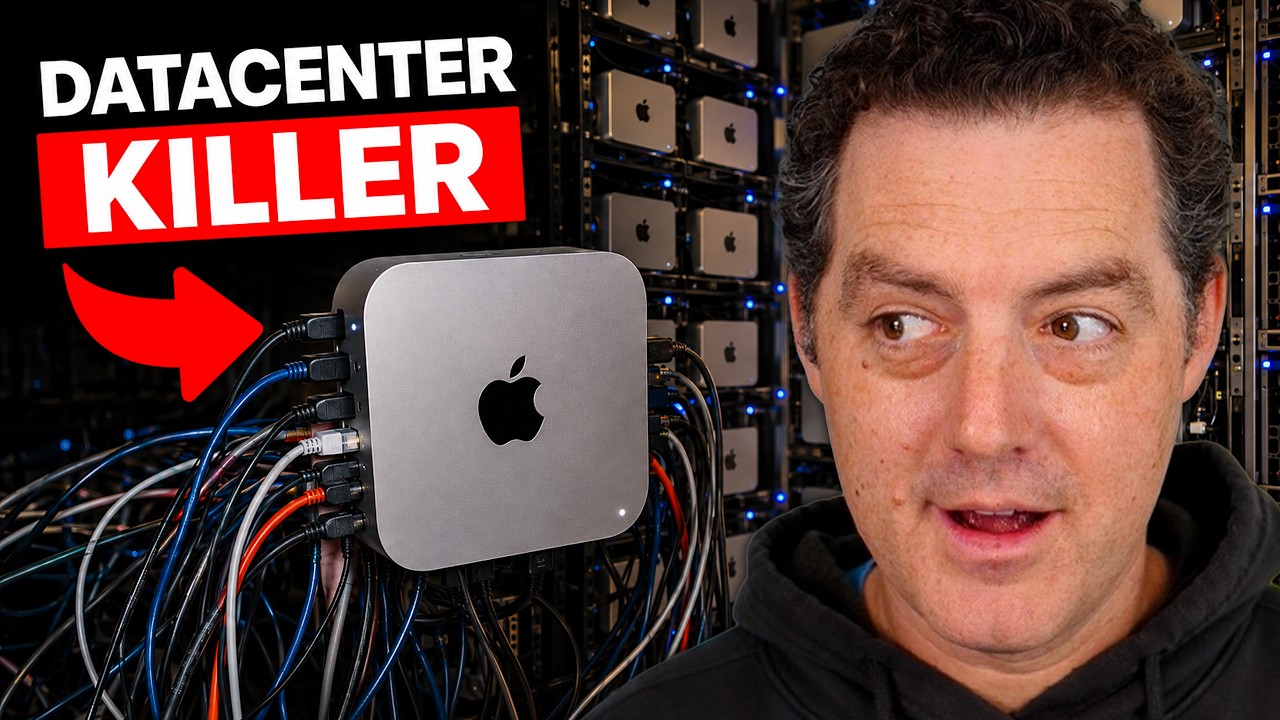
The video introduces Dark Bloom, a new project that transforms individual computers into nodes of a massive distributed data center. Instead of relying on large, centralized data centers—which are often unpopular due to their environmental and social impact—Dark Bloom allows users to share their computer’s idle processing power to serve open-source AI models. This decentralized approach is likened to solar energy installations, where everyone contributes to a collective resource. Users can earn money by participating, though the presenter emphasizes that the real excitement lies in the concept of distributed compute rather than the earnings, which are modest but essentially passive.
Dark Bloom currently supports several smaller AI models like Quen 3.6, Gemma 4, and GPT OSS, which can be run on individual machines and aggregated across many nodes to provide significant inference power. The project is integrated with Open Router, offering cheaper access to these models compared to traditional providers. The presenter highlights the environmental and social benefits of this approach, noting that it could be a viable alternative to massive data centers that consume enormous amounts of energy and face public backlash. This peer-to-peer AI model allows users to connect and share compute resources directly, reducing reliance on centralized infrastructure.
A key technical challenge addressed by Dark Bloom is privacy and security. The system ensures that when a user runs AI models on someone else’s machine, the machine owner cannot see the user’s data or model outputs. This is achieved through a hardened Swift process running on Apple silicon GPUs, eliminating software paths that could expose sensitive information. This privacy-preserving design is crucial for building trust in a distributed compute network and differentiates Dark Bloom from traditional cloud AI services where data privacy is a concern.
The installation process is straightforward, requiring users to sign up on darkbloom.dev, install a command-line interface on their Mac, and enroll their device. The presenter demonstrates the setup, showing how the system tests hardware capabilities and token processing speeds. A minimum of 48 GB RAM is currently required due to high demand and quality control, but this may be adjusted in the future. Payments are handled via Stripe, ensuring secure and direct payouts to users. The presenter reassures viewers about the legitimacy of the project, noting that the code is open-source, publicly auditable, and has been reviewed for malicious content, with no red flags found.
In conclusion, Dark Bloom represents an innovative step toward democratizing AI compute power by leveraging idle resources on personal devices. While still in its early stages and experimental, it offers a promising alternative to centralized data centers, empowering individuals to participate in AI infrastructure. The project underscores the importance of open-source AI models and distributed computing as a way to decentralize power and foster a more equitable AI ecosystem. The presenter encourages viewers to stay informed about AI developments and expresses enthusiasm for exploring this frontier alongside the community.
Useful Links
- Dark Bloom Official Website — Directly substantiates and enables action on the main claim about Dark Bloom’s distributed compute platform.