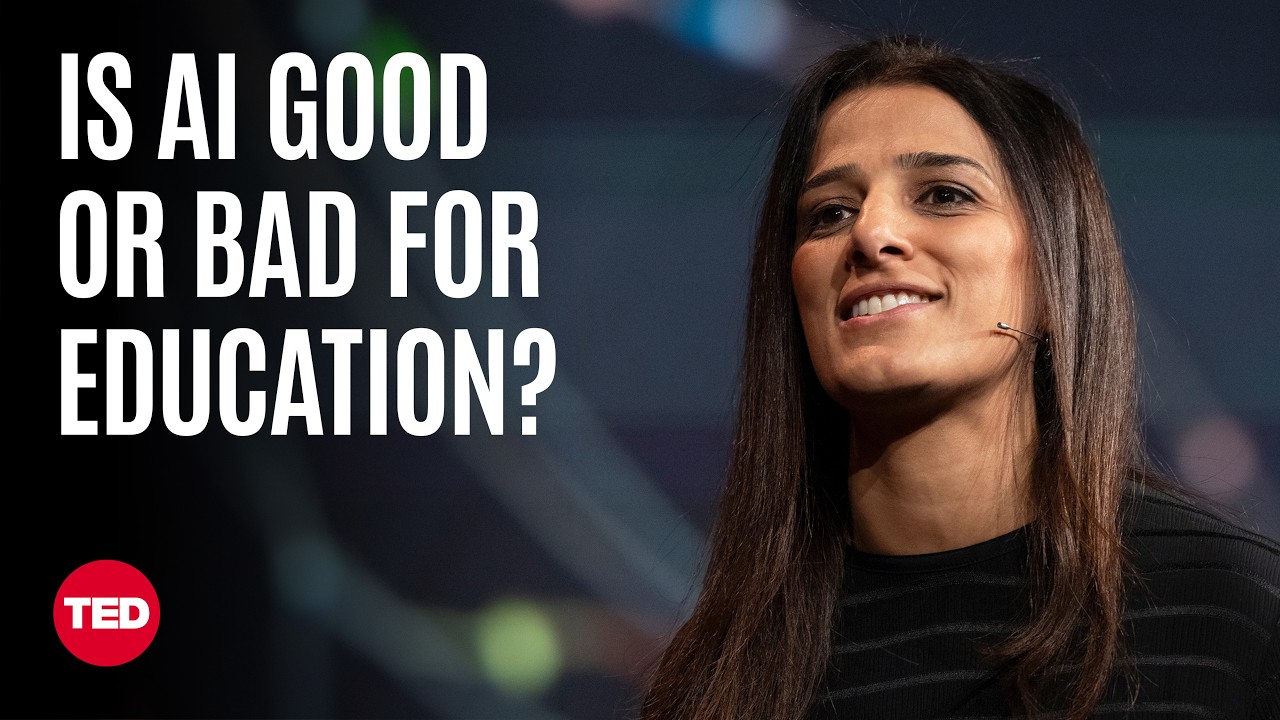
Priya Lakhani begins her talk by reflecting on her journey as a social entrepreneur, initially believing she was making a significant impact by funding meals, vaccines, and schools for underprivileged communities. However, she was shocked to learn that even in the UK, with its resources and qualified teachers, 20 percent of students leave secondary school unable to read or write well. This revelation led her to question the effectiveness of traditional education systems and motivated her to investigate the root causes of these persistent issues.
Upon visiting schools and speaking with educators, Lakhani identified two critical problems: the continued use of a one-size-fits-all approach to teaching, and the overwhelming workload faced by teachers, who are forced to act as both educators and data analysts. She observed that while technology and machine learning were transforming other aspects of life, such as shopping and health, similar innovations were largely absent from classrooms. This inspired her to develop AI-driven educational tools that could personalize learning and reduce teacher workload.
Lakhani’s team built an AI platform that is now used by students in over 140 countries, collecting billions of data points on how children learn. She shared feedback from students, highlighting both their appreciation for the platform and their attempts to use AI as a shortcut to avoid learning. This mirrors a broader trend, with many students admitting to using AI chatbots to complete their homework for them, rather than as a tool to enhance their understanding.
Drawing on research from neuroscience and learning sciences, Lakhani emphasized that true learning requires “productive struggle”—mental effort that strengthens understanding and memory. She outlined four effective learning techniques: retrieval (actively recalling information), spacing (spreading learning over time), generation (producing answers independently), and reflection (evaluating progress and identifying gaps). These methods are more challenging but lead to deeper, more durable learning, as demonstrated by studies such as those involving London taxi drivers who develop larger hippocampi through intensive memorization.
Lakhani concluded by arguing that while AI has the potential to revolutionize education, it should not be used to bypass the learning process. Instead, AI should complement human cognition, providing personalized support and insights while still requiring learners to engage in meaningful mental effort. She stressed that human expertise, creativity, and discovery are built on the foundation of hard-earned knowledge, and that the struggle inherent in learning is essential for growth and innovation.