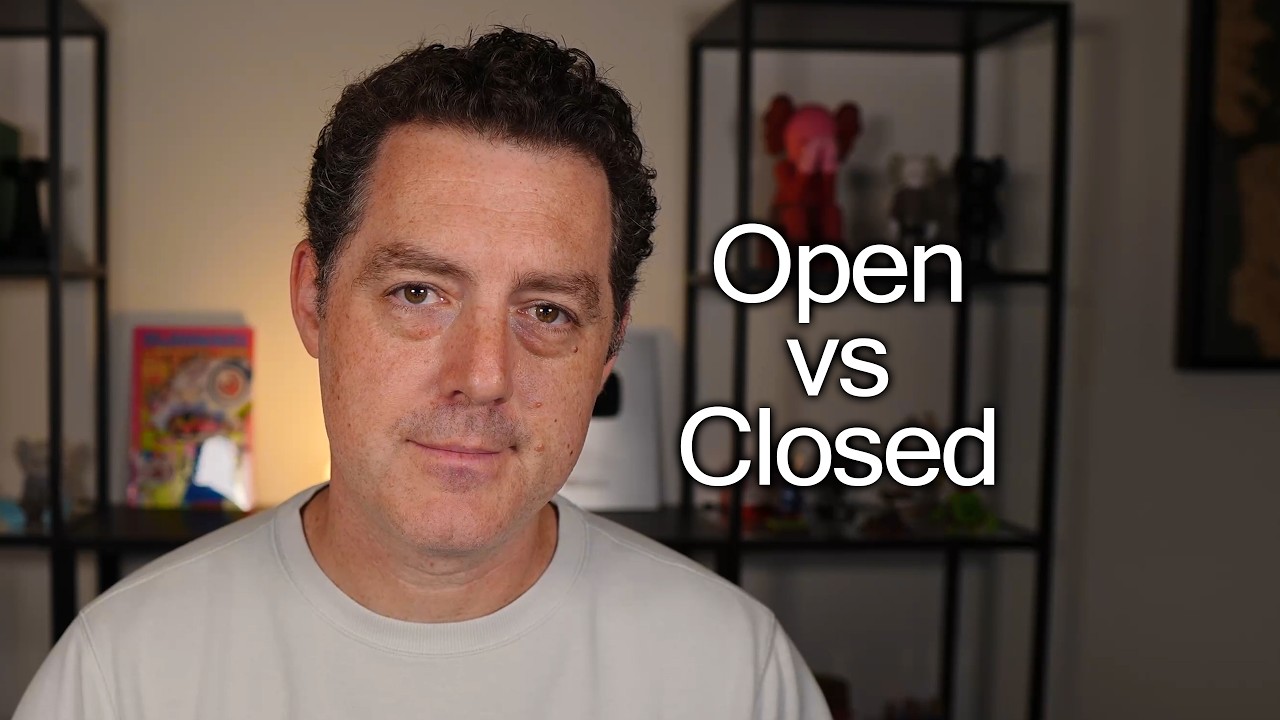
The video explores the ongoing ideological battle in the AI industry between proponents of open source AI and advocates for closed source models. Open source AI allows anyone to use, modify, and share software freely, fostering competition, innovation, and transparency, much like how the open internet evolved in the 1990s. Closed source AI, championed by companies like OpenAI and Anthropic, restricts access to their models, citing safety concerns and the need to protect their business models. The video highlights NVIDIA’s CEO Jensen Huang’s pro-open source stance and the widespread support from major tech companies, contrasting with Anthropic’s opposition and campaigning against open source AI due to perceived risks.
Open source AI models, while generally slightly behind closed source models in performance, are rapidly catching up, with companies like Moonshot AI producing competitive models. The main challenges for open source AI stem from the massive investment required to build and scale models, which closed source companies have been able to fund through lucrative business models. Open source AI relies on alternative revenue streams such as applications and infrastructure, but the economics remain difficult, especially for startups. NVIDIA stands out as a unique player investing heavily in open source AI, benefiting from both closed and open ecosystems due to its GPU sales.
The video also discusses China’s significant role in the open source AI landscape. Chinese companies are producing some of the best open source models, driven by their vast energy resources, large researcher base, and government support, despite lacking access to cutting-edge chips like those from NVIDIA. China’s strategy of giving away AI models for free aims to increase competition and reduce the profitability of U.S. AI companies, potentially undermining the U.S.’s dominance in AI innovation. This geopolitical dimension adds complexity to the open source versus closed source debate, with concerns about dependency on Chinese technology if their models become the global standard.
Addressing safety concerns, the video critiques Anthropic’s position that open source AI is inherently unsafe due to the potential removal of safeguards and misuse by bad actors. It argues that closed source models are not immune to these risks and that open source AI benefits from greater transparency, more contributors improving safety tools, and reduced concentration of power. The video emphasizes that running powerful AI models requires substantial compute resources, limiting misuse by individuals. It also highlights the importance of clear responsibility frameworks for misuse and supports collaborative safety efforts like NVIDIA’s Open Secure AI Alliance.
Finally, the video covers the contentious issue of AI model distillation, where one AI model teaches a smaller model to improve efficiency. While some U.S. officials and companies accuse Chinese firms of illicitly distilling proprietary models, the practice itself is legal and common in AI development. The video calls for balanced regulation that prevents IP theft without stifling innovation or creating barriers that favor large incumbents. It concludes by advocating for continued support and funding for open source AI as essential basic research, warning against protectionism and emphasizing the benefits of open ecosystems for competition, innovation, and global AI safety.