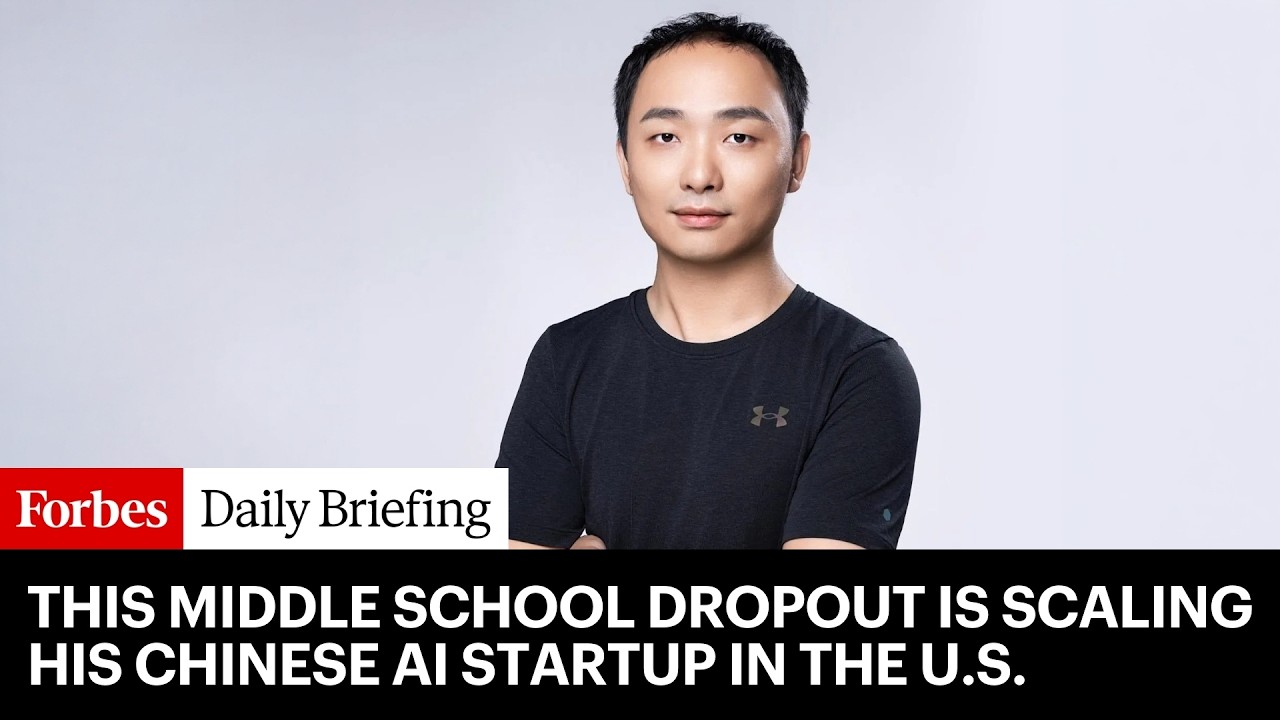
Lu Yuzong, a middle school dropout and founder of the AI startup Diffy, relocated his company from China to Silicon Valley to leverage the region’s talent, capital, and competitive environment despite language barriers and political tensions. This move reflects a broader trend of Chinese AI entrepreneurs expanding to the U.S. to build global AI infrastructure, navigating challenges like export controls and anti-Chinese sentiment while focusing on innovation over ideology.
Lu Yuzong, a middle school dropout and coding prodigy from China, founded the AI startup Diffy and is now scaling it in Silicon Valley despite language barriers and political tensions. After moving to the U.S. last year, Lu prioritized work over improving his English, emphasizing the urgency of building his company. Diffy, which began as an open-source project to simplify AI application development through a low-code interface, has grown to employ around 100 people, serve over 280 enterprise customers, and recently raised $30 million at a $180 million valuation.
Lu is part of a growing trend of Chinese AI founders relocating their companies and families to Silicon Valley, despite tightened U.S. export controls and concerns about intellectual property theft. He believes that to build a global AI infrastructure company, it is essential to be where the global competition is most intense. Many Chinese startups adopt a hybrid model, keeping core engineering teams in China while expanding sales and operations overseas, to navigate political sensitivities and regulatory scrutiny.
The move to the U.S. is also driven by broader economic factors, including reduced foreign capital inflows into China and tighter venture funding. Investors and entrepreneurs note that at least 100 Chinese founders have expressed interest in relocating to the U.S. in recent years. However, these founders remain cautious due to political backlash, recalling incidents like TikTok’s forced sale of its U.S. operations amid national security concerns.
Despite challenges such as anti-Chinese sentiment in Silicon Valley and U.S. policymakers’ worries about technology transfer, Lu argues for a nuanced view of AI startups. He highlights that Diffy’s open-source platform is typically hosted on customers’ own servers, placing it outside sensitive sectors. Moreover, many American AI companies rely heavily on Chinese talent, underscoring the interconnectedness of the AI ecosystem across borders.
Ultimately, Lu’s decision to relocate Diffy to Silicon Valley is driven by practical considerations rather than ideology. He sees Silicon Valley as the richest source of AI talent, capital, and ambition, stating that Chinese entrepreneurs in the U.S. are focused on building impactful products rather than political agendas. This perspective reflects a broader trend of Chinese AI founders seeking to compete on a global stage by leveraging the resources and opportunities available in the U.S.