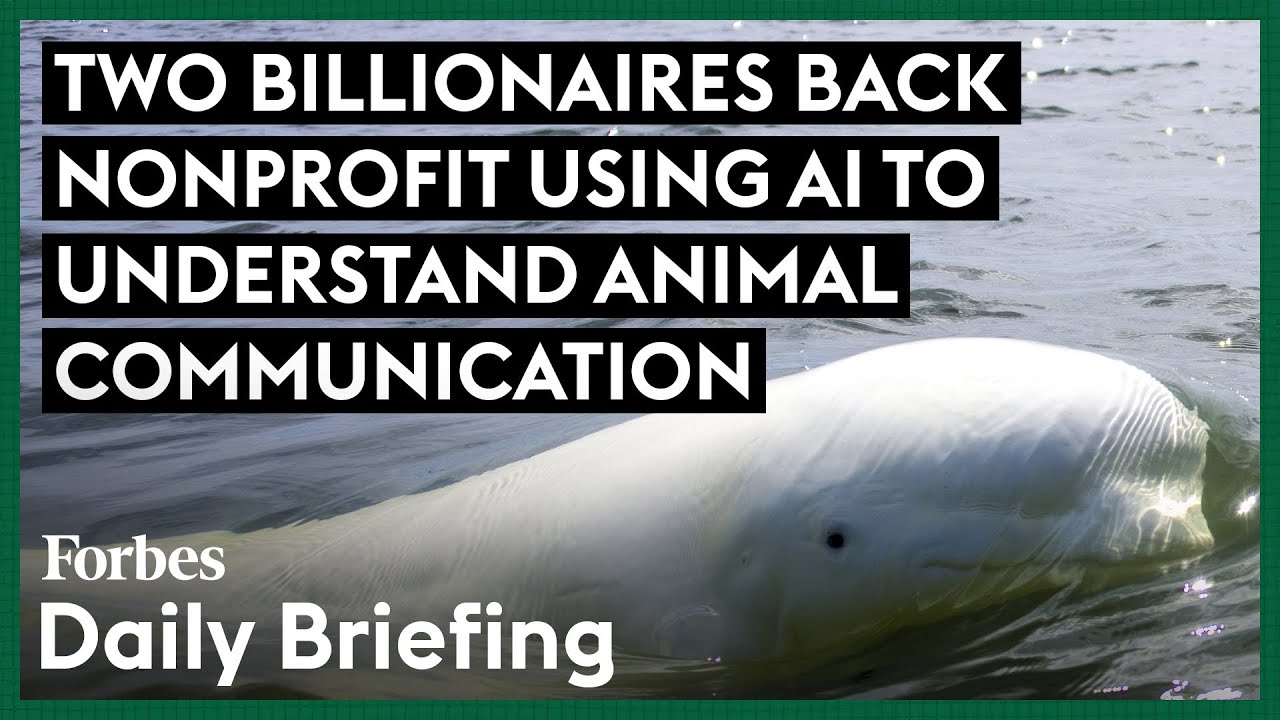
The Earth Species Project, a nonprofit focused on decoding animal communication using AI, has secured $17 million in funding from billionaires Reed Hoffman and Laurene Powell Jobs to expand its research team and capabilities. The organization aims to enhance understanding of animal vocalizations and develop an AI model to facilitate communication with other species, ultimately promoting biodiversity and climate change efforts.
The Earth Species Project, a U.S.-based nonprofit, is on a mission to decode animal communication using artificial intelligence (AI). Recently, the organization announced it has secured $17 million in new funding from two billionaire backers: Reed Hoffman, a prominent investor and entrepreneur, contributed $10 million through his Aphorism Foundation, while the Waverly Street Foundation, associated with billionaire Laurene Powell Jobs, pledged $7 million over three years. This funding is set to significantly expand the nonprofit’s research capabilities, allowing it to more than double its current eight-person global research team.
The Earth Species Project aims to enhance human understanding of animal communication, with a particular focus on bird vocalizations and the development of an early AI model akin to ChatGPT for animals. The organization’s ultimate goal is to shift humanity’s perspective on its role in the natural world, which could contribute to efforts in combating climate change and preserving biodiversity. Co-founder and president AAR Rasin emphasizes that advancements in AI could lead to profound discoveries about the interconnectedness of all species.
Rasin’s interest in animal communication began in 2013 when he heard a story about the gelada monkey’s human-like vocalizations. This sparked the idea that animal communication could be decoded, leading to the founding of the Earth Species Project in 2018 alongside fellow Silicon Valley alumni Brit Selvel and Katie Zakarian. The organization aims to enable humans to communicate with other species or at least understand their communications by the year 2030.
To achieve its goals, the Earth Species Project has funded research on various animal vocalization patterns, including studies on beluga whales, crows, and zebra finches. The organization is also developing a foundational AI model that identifies patterns in audio recordings of animal sounds across species. This model employs machine learning techniques, such as embedding, to group sounds and images by similarity, allowing researchers to extrapolate potential meanings from the data without prior knowledge of its significance.
Since its inception, the Earth Species Project has published five peer-reviewed papers and has a sixth in progress, focusing on both specific species and its foundational model. The organization has primarily relied on donations from wealthy individuals, leveraging the co-founders’ connections in Silicon Valley. Rasin notes that making animals appear more “human” could foster greater public interest in biodiversity and conservation efforts, ultimately benefiting both the planet and humanity.