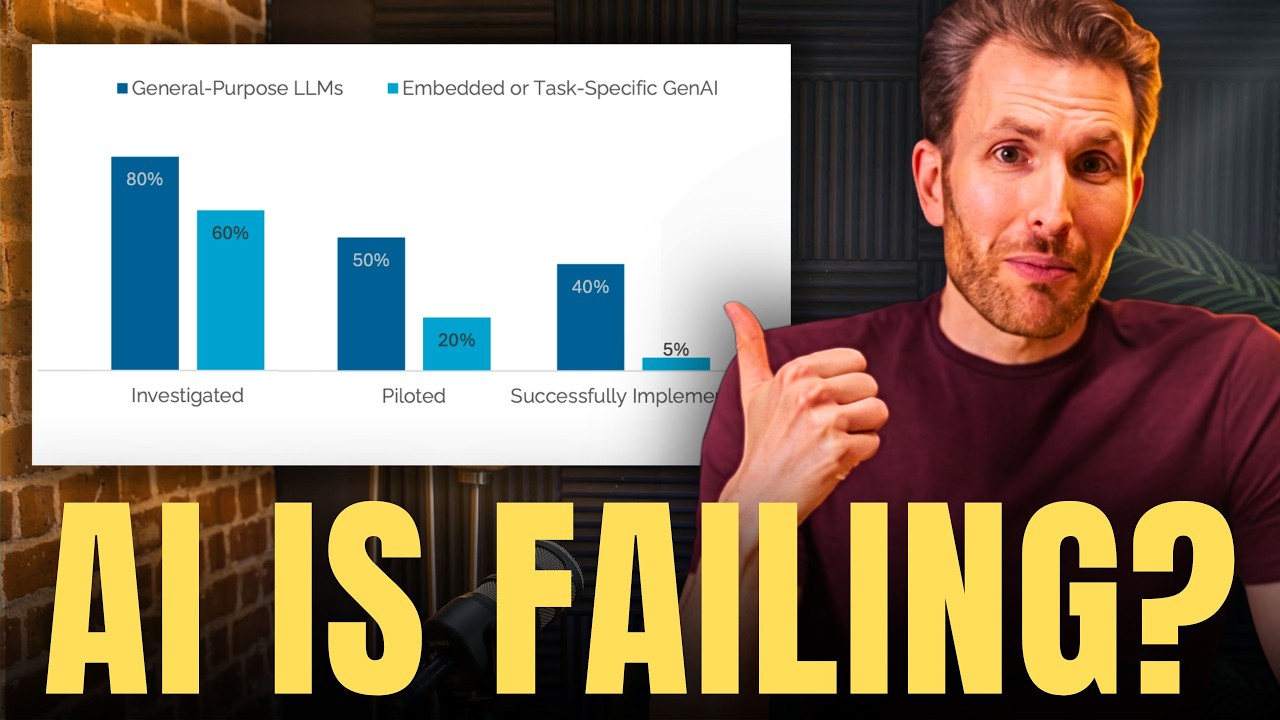
The widely reported MIT study claiming that 95% of generative AI pilots at companies were failing is fundamentally flawed and misrepresented. Contrary to media headlines, the study found that only 20% of surveyed organizations had actually piloted custom AI tools, and among those, about 25% were successful in deploying them to production. This translates to roughly 5% of all surveyed companies having successful AI projects, a figure based on a very small sample size of just 52 interviews, making the results highly uncertain. Moreover, the study set an exceptionally high bar for success, requiring a marked and sustained productivity or profit impact within six months, which is uncommon for new enterprise technologies.
The report also highlighted that over 90% of employees at these companies regularly use generative AI tools like ChatGPT for their work, yet the study downplayed this widespread adoption by focusing on custom AI applications. The authors argued that individual productivity gains from these tools do not necessarily translate into improved profit and loss performance, a point that many find questionable since increased employee productivity typically benefits a company’s bottom line. Additionally, the study’s data was not peer-reviewed, and the full report was not publicly accessible, limiting critical scrutiny and contributing to widespread misinformation.
A significant issue with the study is the conflict of interest among its authors, who are involved in developing and commercializing AI agent frameworks. The report concludes that current AI tools are failing because they lack learning, memory, and contextual adaptation, and it promotes agentic AI frameworks—precisely the technology the authors are working on—as the solution. This self-serving conclusion was presented under the prestigious MIT brand without disclosing these conflicts, misleading the public and investors about the study’s impartiality and validity.
The media’s role in amplifying the flawed study without proper fact-checking or access to the full report contributed to a viral narrative that AI is overhyped and failing in business. This narrative influenced market reactions, including a Nasdaq selloff, and shaped public and policymaker perceptions based on incomplete and misleading information. The study’s small sample size, opaque methodology, and lack of peer review should have prompted more skepticism before it was widely accepted as authoritative.
Ultimately, this episode serves as a cautionary tale about the dangers of sensational headlines, undisclosed conflicts of interest, and the rush to judgment in technology reporting. It underscores the importance of critically evaluating research claims, especially those that align conveniently with certain agendas or commercial interests. Rather than providing clear insights into AI’s effectiveness in the workplace, the study reveals more about media incentives and the complexities of interpreting early-stage technology adoption data.