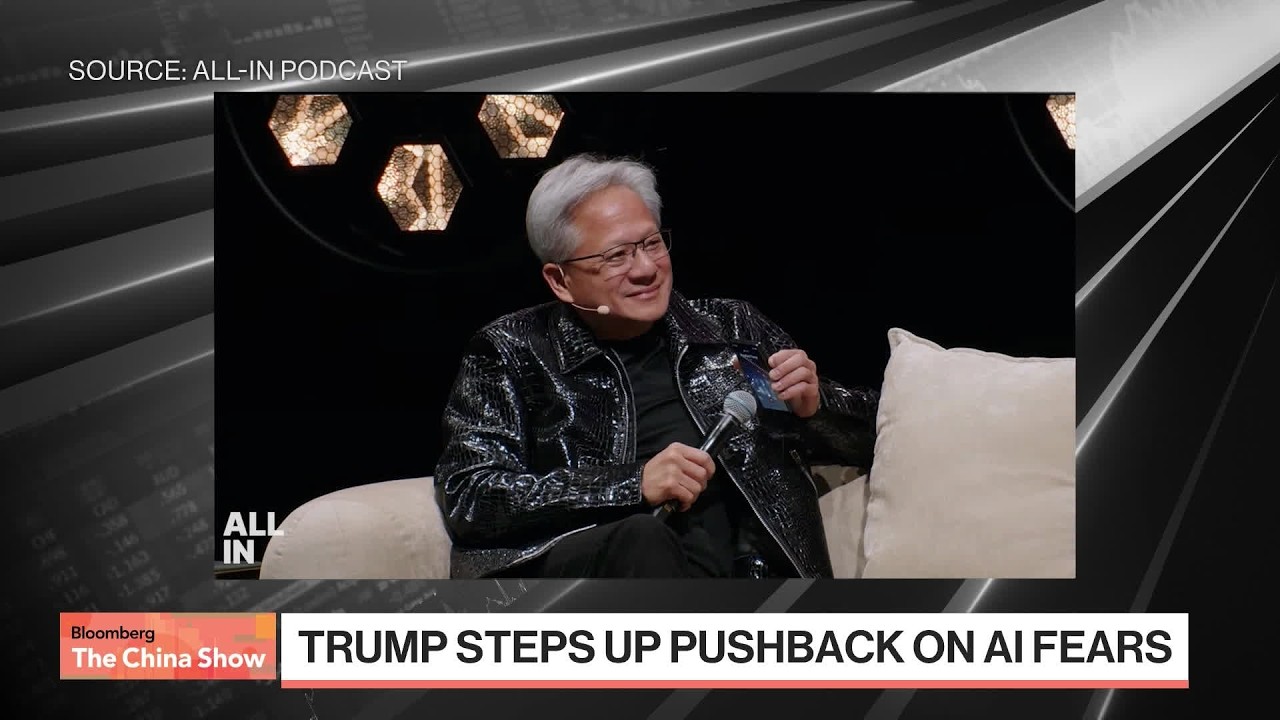
The video highlights the contrasting stances of the U.S. and China on slowing AI development, with President Trump and Chinese officials dismissing calls to pause progress amid concerns over safety and competition. While the U.S. debates regulation and safety ahead of elections, China advances its AI ambitions through strategic plans, making the upcoming U.S.-China summit a pivotal moment for potential cooperation despite ongoing tensions.
The video discusses the contrasting responses from the United States and China regarding calls to slow down the development of artificial intelligence (AI). President Trump dismisses concerns about AI as a hoax, suggesting that fears are politically motivated and possibly influenced by China. He emphasizes that the U.S. will not allow such fears to hinder AI progress. Similarly, a Chinese foreign ministry spokesperson criticizes the calls from U.S. tech leaders as fear-mongering, advocating for open and inclusive AI development and warning that confrontation and competition could disrupt global AI governance.
In the U.S., there is a growing debate involving AI lab leaders and bipartisan politicians who suggest pacing AI development to address safety and ethical concerns. However, President Trump strongly opposes these calls, especially with the midterm elections approaching. AI companies appear to want government regulation to help manage risks and liabilities, but the U.S. government remains resistant, partly due to the economic importance of AI-related IPOs and the semiconductor industry.
China is advancing its own AI and electronics ambitions through its five-year plan, targeting significant growth in electronics revenue by 2030. This plan includes a focus on chips, computing, and consumer electronics, aligning with its broader AI strategy. The Chinese government’s pushback against U.S. calls to slow AI reflects both competitive tensions and a desire to catch up technologically. While China publicly dismisses some safety concerns, it does recognize AI safety as a priority in certain areas, showing some overlap with U.S. interests.
The upcoming U.S.-China summit adds complexity to the AI debate, with expectations for concrete agreements on AI safety being low. Nonetheless, the meeting could serve as an important signal of mutual recognition of AI risks and the need for cooperation. Both sides face challenges in balancing competition with the necessity of addressing AI governance and safety, making the summit a critical moment for future dialogue.
Finally, there is discussion about how slowing AI development in the U.S. might impact China. Some believe that restrictions in the U.S. could allow China to catch up, while others note China’s dependency on frontier AI models developed elsewhere. Chinese developers express determination to accelerate their AI efforts despite challenges. Past experiences with chip controls suggest that restrictions can sometimes fuel greater resolve in China, potentially leading to unintended consequences in the global AI race.
Useful Links