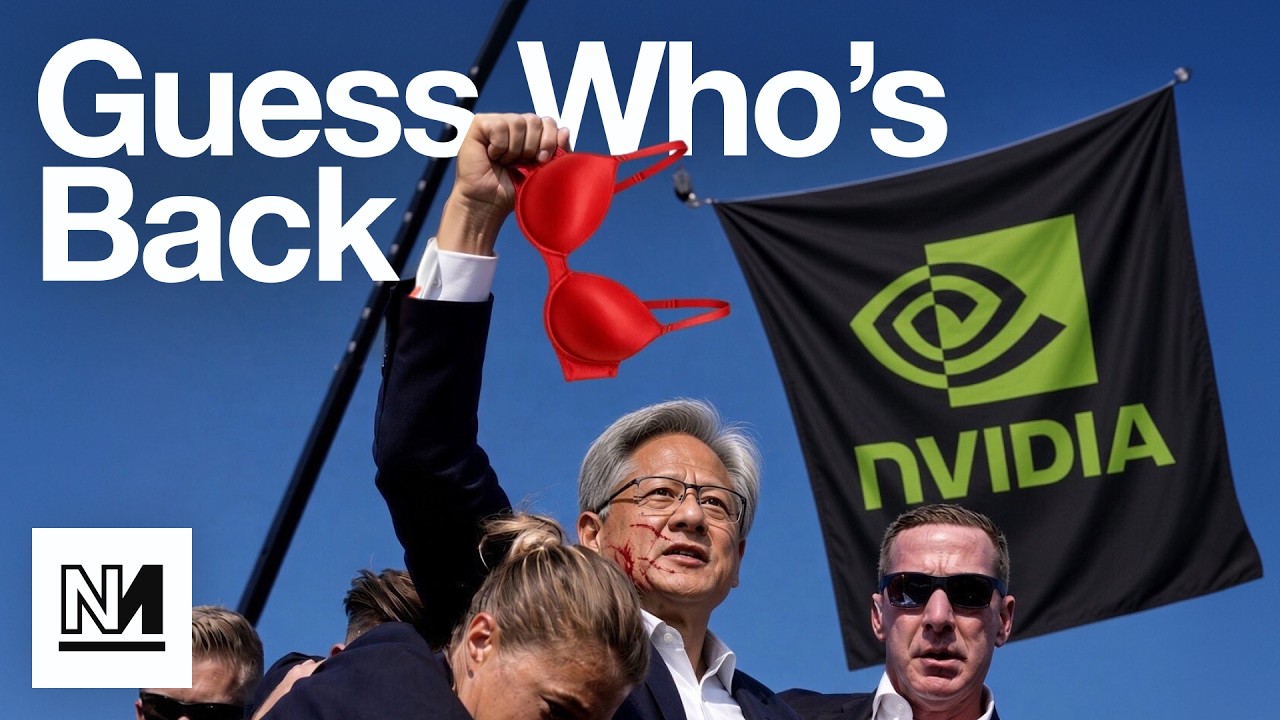
The video discusses the dramatic reinstatement of Jensen Huang as Nvidia’s CEO and board director less than two weeks after his controversial firing due to allegations of inappropriate relationships with subordinates and connections to a Chinese spy. Despite the serious nature of these allegations, Huang’s return was largely driven by intense lobbying, notably involving former President Donald Trump, who intervened as Nvidia’s stock plummeted by around 40-50% following Huang’s departure. Trump’s involvement, including public posts on Truth Social and his significant financial interests in Nvidia shares, highlights the intertwining of political influence and corporate governance.
Huang’s reinstatement had an immediate positive impact on Nvidia’s stock, which surged by 33%, and also boosted broader US stock markets like the S&P 500 and NASDAQ. This recovery underscores how closely Nvidia’s fortunes are tied to the health of the American tech sector and economy. Trump’s emphasis on stock market performance as a measure of his presidency reflects a broader trend where financial markets and corporate valuations are central to political and economic narratives. The video also notes that while Nvidia’s stock rebounded, the company remains below its peak valuation from October, indicating ongoing challenges.
The discussion delves into the broader implications of Nvidia’s situation, framing it within the context of a financialized American middle class increasingly reliant on speculative investments rather than traditional labor. The reinstatement of Huang symbolizes the resumption of the “AI trade,” a sector heavily influenced by borrowing, lending, and investment dynamics that complicate efforts to control inflation through interest rate adjustments. The video highlights tensions between economic policies, corporate strategies, and the speculative nature of tech investments, suggesting that these contradictions will persist.
Regarding the espionage allegations, the video presents the claims about Alice Wang, Huang’s alleged partner, who is reported to have had contacts with Chinese intelligence agencies. While these claims are supported by anonymous sources and intelligence reports, the video cautions that such information may be politically motivated, serving as a tool for factions within the US government to influence corporate leadership decisions. The Nvidia board’s ongoing investigation into these matters appears largely symbolic, as Huang’s reinstatement effectively diminishes the board’s authority and oversight.
Finally, the video situates Nvidia’s story within the larger framework of American capitalism and geopolitical tensions. Nvidia is portrayed as a structurally vital company, central not only to the AI industry but also to the broader financial ecosystem, including lending to data centers and tech firms. The interplay between national security concerns, corporate profitability, and political power is complex, with competing factions both within business and government influencing outcomes. Huang’s return, backed by powerful interests, signals a prioritization of economic gains and market stability over regulatory or ethical considerations, reflecting broader trends in US economic and political life.
Useful Links