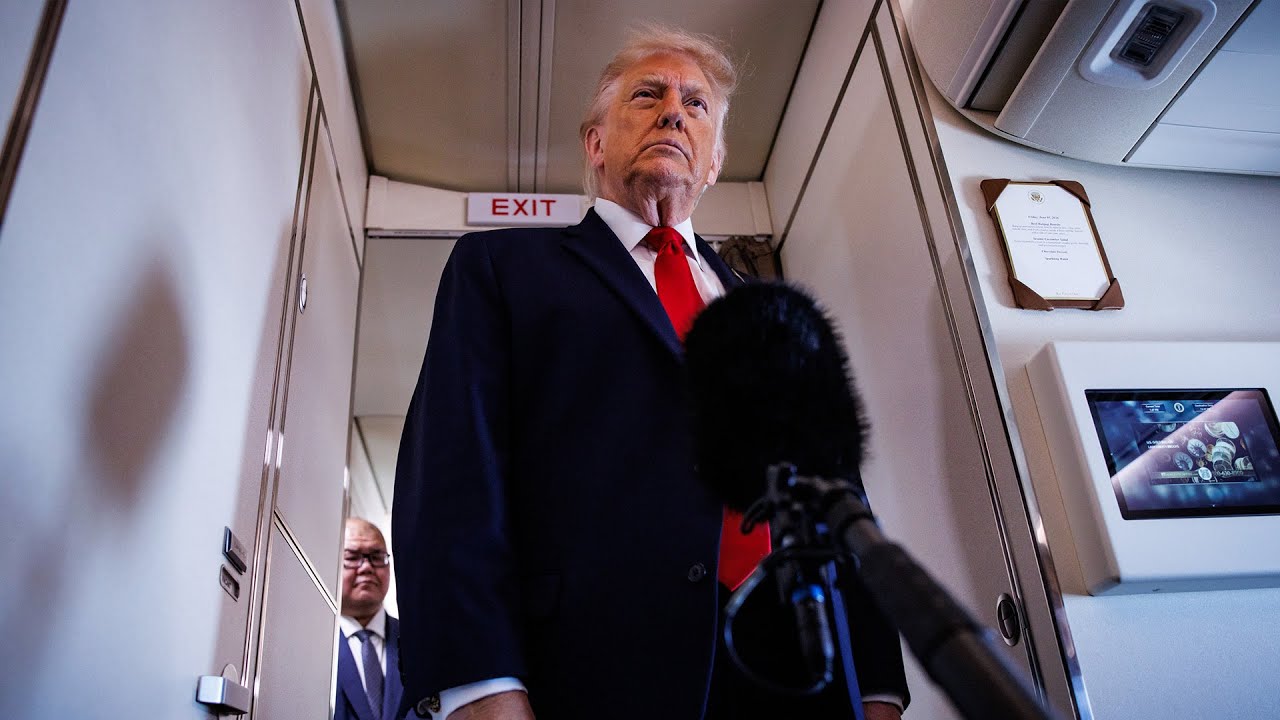
Former President Donald Trump has expressed interest in the U.S. government taking ownership stakes in leading artificial intelligence (AI) companies, suggesting a potential partnership where the American public could benefit directly from the success of these firms. Speaking to Bloomberg Television on Air Force One, Trump revealed plans for an upcoming meeting with major AI companies to discuss how the government and private sector might collaborate, emphasizing the importance of maintaining U.S. leadership over China in this critical industry. This idea aligns with broader political discussions about public stakes in AI, reflecting concerns from both populist right and left factions about the immense profits and influence of AI companies.
The concept of government stakes in AI firms is not entirely new for Trump, who has previously supported similar approaches in other industries, such as lithium materials and steel. However, the specifics of how such a partnership would work—whether through dividends to the public or a sovereign wealth fund—remain unclear and are still under discussion. The administration’s approach to AI regulation is currently cautious and voluntary, with companies encouraged to share their most advanced models with the government ahead of release. This measured stance reflects ongoing debates about balancing innovation, national security, and public accountability in the rapidly evolving AI landscape.
There is some internal disagreement within conservative circles about the idea of government involvement in private industry. Former Vice President Mike Pence, for example, has pushed back against nationalization, emphasizing free-market principles. Meanwhile, critics like former Trump adviser David Sachs warn that increased government control over AI could lead to authoritarian outcomes similar to China’s social credit system, which could stifle innovation and individual freedoms. These tensions highlight the complexity of regulating AI while fostering competitiveness and protecting democratic values.
In addition to AI, the transcript touches on Trump’s views regarding the Middle East, particularly Iran. Trump maintains that Iran is eager to negotiate a deal but is hindered by pride and the regime’s existential challenges. He underscores the domestic pressures he faces, especially from voters affected by rising fuel and fertilizer prices linked to the conflict. Despite his impatience, Trump signals a willingness to continue negotiations, warning that the situation could end either diplomatically or through more forceful means. This ongoing tension reflects the broader geopolitical and economic challenges influencing U.S. policy.
Finally, the discussion highlights broader economic concerns, including the affordability crisis facing many Americans. Trump’s comments about the high cost of sporting events like Knicks games and the World Cup underscore the growing divide between the wealthy and average citizens. Critics argue that such remarks could alienate voters, especially as economic issues remain central in the upcoming midterm elections. The contrast between booming tech IPOs and everyday financial struggles illustrates the “K-shaped” recovery, where gains are unevenly distributed, fueling political and social debates about equity and economic policy.