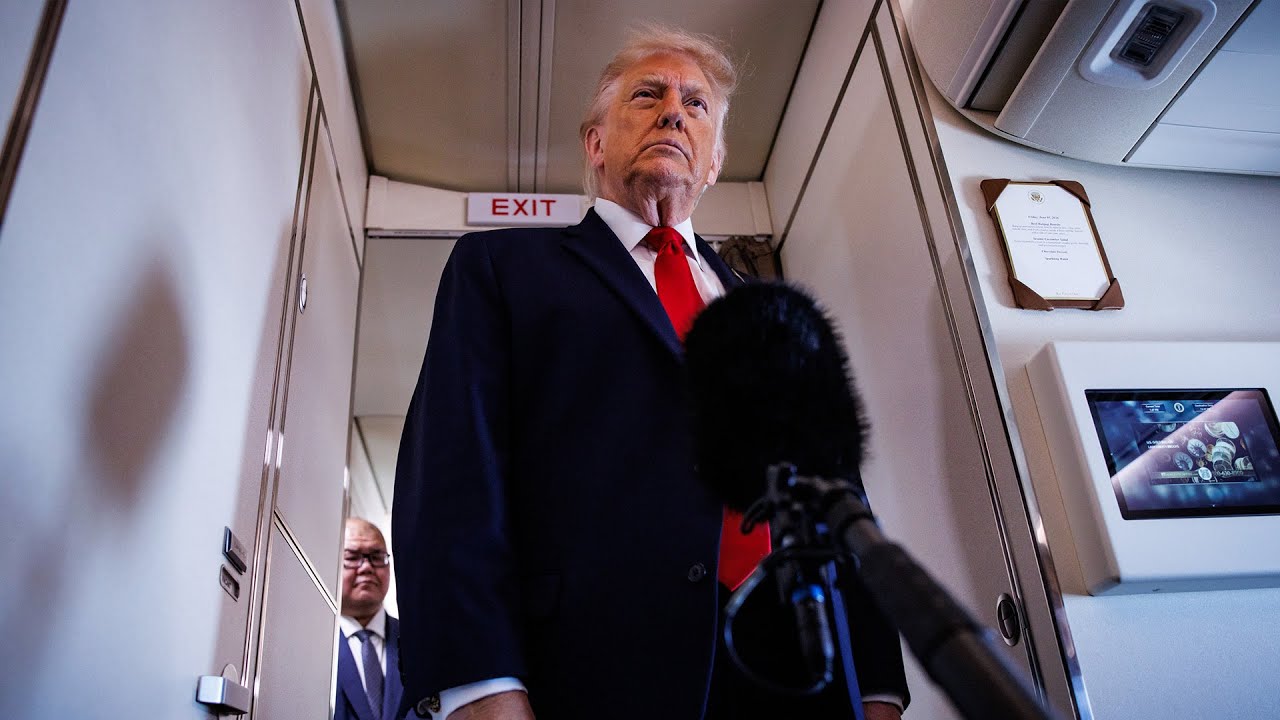
Former President Donald Trump has expressed interest in the U.S. government taking ownership stakes in leading artificial intelligence (AI) companies, suggesting a potential partnership where the American public could benefit from the success of AI. Speaking to Bloomberg Television on Air Force One, Trump revealed plans for an upcoming meeting with major AI firms, including SpaceX, Anthropic, and OpenAI, to discuss how the government and these companies might collaborate. This move aims to maintain U.S. leadership in AI technology, especially in competition with China, and could represent one of the largest industries the country has seen.
The idea of public stakes in AI companies has garnered attention across the political spectrum, with figures like Senator Bernie Sanders advocating for the American people to have a share in the profits generated by AI, which is built on collective knowledge and culture. While Trump has previously supported government stakes in strategic industries such as lithium materials and steel, the specifics of how this partnership would work—whether through dividends to citizens or a sovereign wealth fund—remain unclear. The administration’s approach to AI regulation is currently voluntary and cautious, with companies encouraged to share advanced AI models with the government ahead of release, but without compulsory mandates.
There is some internal debate and concern about the implications of government involvement in AI. David Sachs, a former presidential AI adviser, warned that nationalizing AI could lead to excessive government control reminiscent of China’s social credit system, which he views as incompatible with capitalist innovation. Meanwhile, the administration continues to balance fostering innovation with regulatory oversight, as evidenced by a recent executive order promoting diversity in AI models, partly in response to tensions between the Department of Defense and AI firms like Anthropic.
Beyond AI, the transcript also touches on Trump’s views regarding the Middle East, particularly Iran. Trump claims Iran is eager to negotiate a deal but is hindered by pride and the regime’s existential concerns. He emphasizes his administration’s firm stance on Iran’s nuclear ambitions, proxy activities, and missile programs, while acknowledging the domestic pressures he faces amid rising fuel and fertilizer prices affecting American farmers. The ongoing conflict and blockade in the Strait of Hormuz create a complex backdrop for these negotiations, with the president warning that the situation could resolve either diplomatically or through harsher means.
Finally, the transcript highlights broader economic and social issues, including the affordability crisis faced by many Americans. Trump’s comments on the high cost of sporting events, such as Knicks games and the World Cup, underscore the growing economic divide, with many citizens unable to afford leisure activities despite booming tech IPOs and corporate profits. This disparity reflects a “K-shaped” economy where wealth and opportunity are unevenly distributed, a challenge that could influence political dynamics as the country approaches midterm elections.