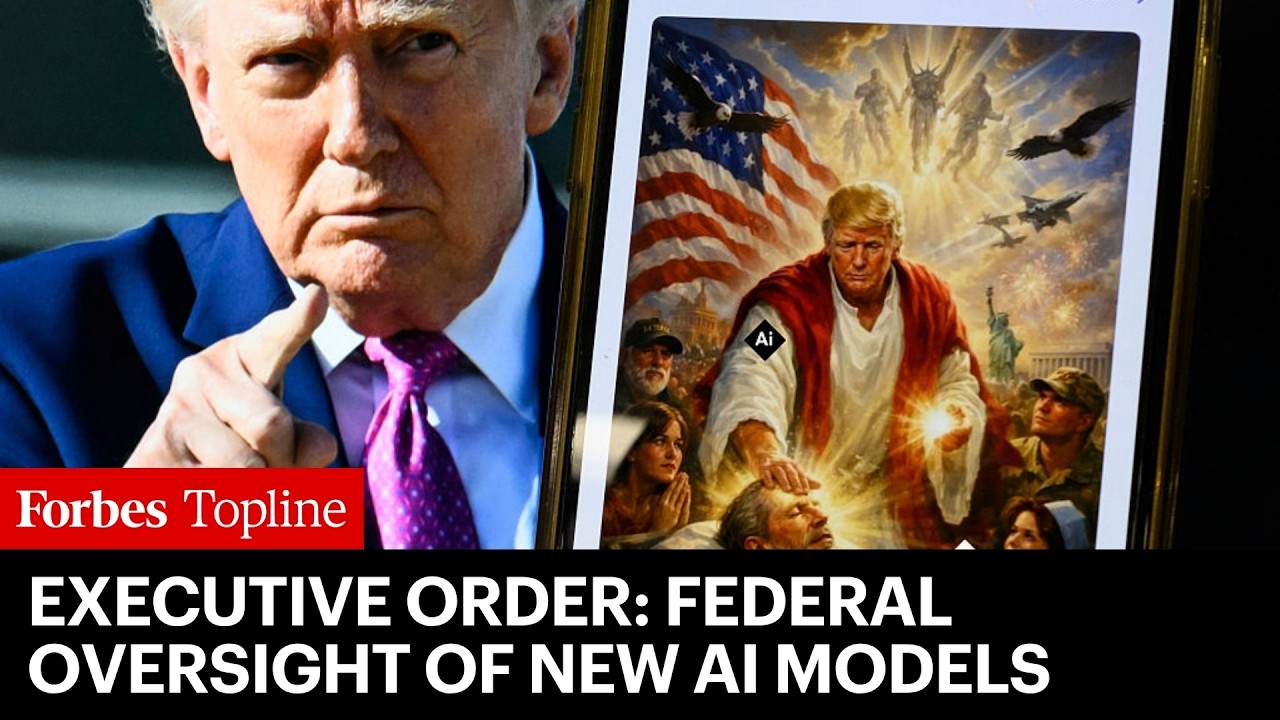
President Donald Trump signed an executive order requiring federal oversight and a 30-day review of new AI models before public release, including early government access and the creation of an AI cybersecurity clearinghouse to address security vulnerabilities. Additionally, the order emphasizes prosecuting AI-related crimes and established a new AI advisory panel featuring industry leaders to guide policy on AI governance and innovation.
On Tuesday, President Donald Trump signed an executive order mandating federal oversight of new artificial intelligence (AI) models before they are released to the public. This marks a notable shift from his administration’s earlier preference for a more deregulated approach to AI technology. The order requires companies to engage in a 30-day review process to evaluate whether their AI models possess “advanced cyber capabilities” and qualify as “covered frontier models,” though the specifics of these designations remain unclear.
The executive order stipulates that the government will receive AI models up to 90 days prior to their public release, with a 30-day window allocated for review. During this period, the government can select “trusted partners” to gain early access to the technology. This process aims to ensure that any potential risks associated with the AI models are identified and mitigated before they become widely available.
A key component of the order is the establishment of an AI cybersecurity clearinghouse, led by the Treasury Department in collaboration with the AI industry and critical infrastructure operators. This clearinghouse will review security vulnerabilities discovered in AI models and oversee their resolution. The administration emphasized its commitment to deploying secure technology swiftly to address threats to national security.
The executive order also directs the attorney general to prioritize prosecuting crimes involving AI, signaling a tougher stance on AI-related legal issues. This shift in policy appears influenced by a contract dispute earlier this year between Anthropic, an AI company, and the Pentagon. The controversy, including concerns about Anthropic’s Claude model potentially exploiting security flaws in major operating systems and browsers, led to increased scrutiny and meetings between Anthropic and Trump administration officials.
In addition to the executive order, President Trump appointed over a dozen members to a new AI advisory panel in March. This panel includes prominent figures such as Meta’s Mark Zuckerberg, Oracle’s Larry Ellison, and Nvidia’s Jensen Huang. The group is tasked with advising the president on science, technology, education, and innovation policy, reflecting the administration’s growing focus on AI governance and oversight.