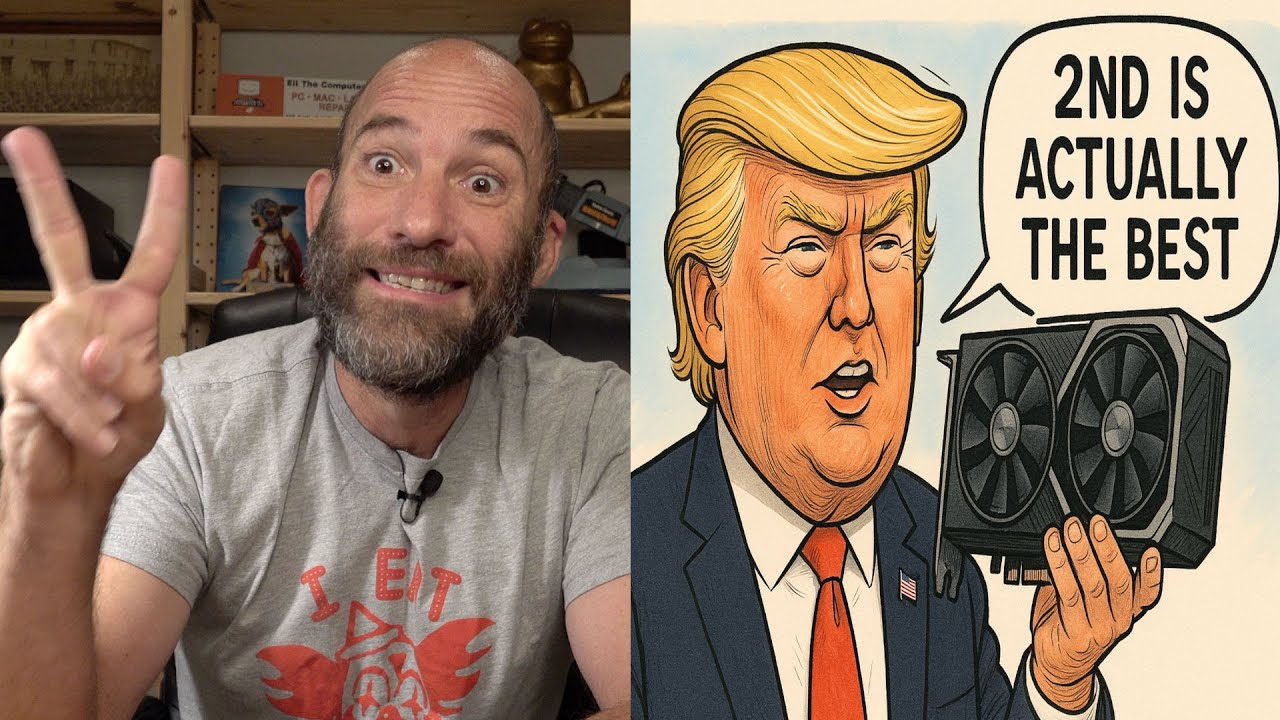
In this video, Eli, the computer guy, discusses recent developments in semiconductor manufacturing, focusing on TSMC’s new 1.4 nanometer fabrication plant being built in Taiwan. He highlights that despite efforts by the Trump administration to boost chip production in the United States, the most advanced chip manufacturing technology will still be centered in Taiwan. TSMC is investing $48.5 billion in this cutting-edge facility, which is expected to begin production by 2028. The fab will produce chips using the 1.4 nanometer process, primarily serving major clients like Apple, Qualcomm, MediaTek, Nvidia, and AMD.
Eli points out that while the U.S. is increasing its chip production capacity, especially with fabs in Arizona producing 2 nanometer chips, these facilities will focus on older nodes rather than the most advanced technology. This means that although the U.S. may gain more resilience in chip manufacturing, it will likely remain second best compared to Taiwan’s capabilities. He finds this situation curious given the Trump administration’s strong push to bring semiconductor manufacturing back to the U.S., yet the most advanced fabs are still being built overseas.
The video also explores the practical significance of shrinking nanometer sizes in chip manufacturing. Eli questions how much real-world impact these smaller nodes have for most consumers, suggesting that the benefits might be more relevant for high-performance computing, military applications, or advanced AI architectures. He notes that despite advances in chip technology, infrastructure challenges in the U.S., such as electricity supply and facility readiness, may limit the deployment and utilization of these advanced chips.
Eli further discusses the contrast between the U.S. and China in semiconductor technology. While China’s chips may be less power-efficient, China compensates by rapidly expanding its electricity generation capacity, allowing it to deploy more hardware despite inefficiencies. This raises concerns about whether the U.S. is focusing too much on hardware innovation without addressing critical infrastructure issues like power grids, water supply, and construction, which are essential for supporting advanced technology deployment.
In conclusion, Eli reflects on the broader implications of the semiconductor industry’s current state. He acknowledges TSMC’s strategic decision to keep the most advanced fabs in Taiwan while expanding older node production overseas as a sensible business move. However, he remains skeptical about whether the U.S. is truly catching up in semiconductor manufacturing or if improvements are more modest than they appear. He invites viewers to share their thoughts and promotes his hands-on technology education classes at Silicon Dojo, emphasizing the importance of practical skills alongside technological advancements.