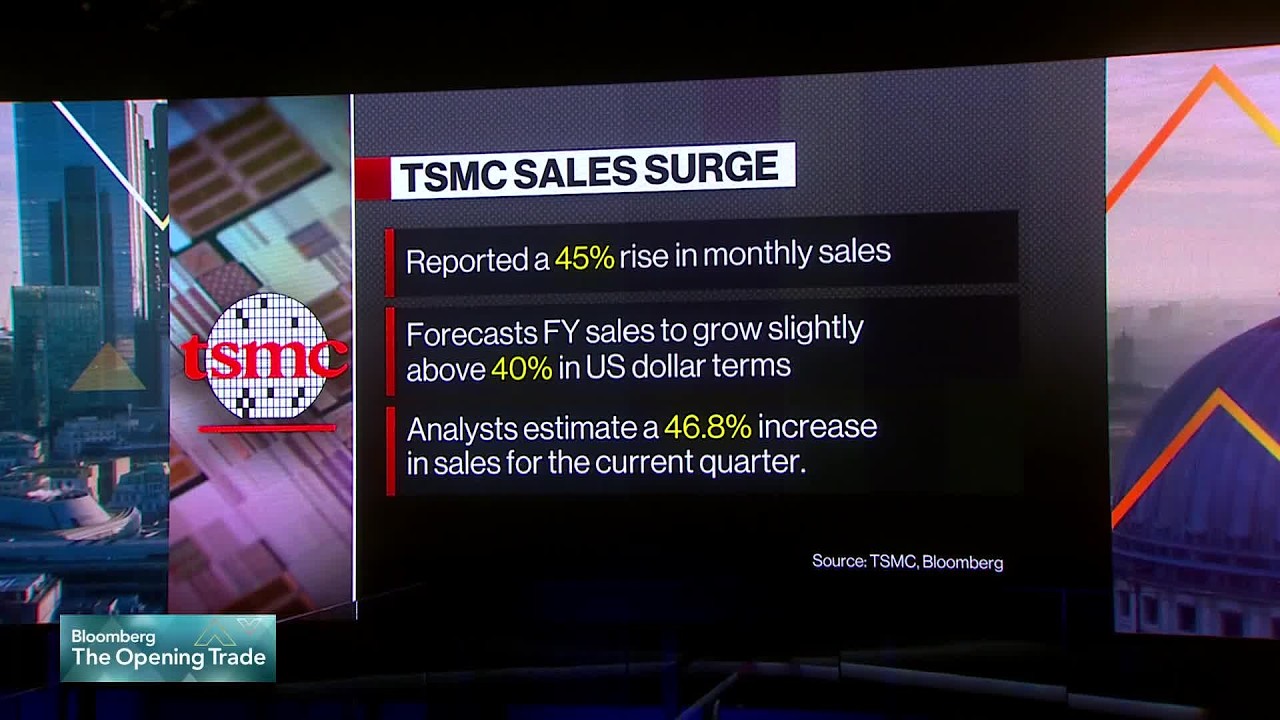
TSMC reported a 45% rise in monthly sales driven by strong demand for AI hardware, particularly in core logic chips used by major companies like NVIDIA, AMD, and Apple, marking its best quarterly performance in four years. While the memory chip market faces price volatility and supply challenges, both TSMC and competitor Samsung are well-positioned to benefit from the growing AI chip demand amid cautious investor optimism about the timeline for returns on AI investments.
TSMC has reported a significant 45% rise in monthly sales, indicating sustained strong demand for AI hardware despite recent market volatility, particularly noted in July. This growth is expected to translate into a roughly 47% increase for the full quarter, marking the highest top-line revenue for TSMC since Q3 2022 and the best performance in four years. The positive sales figures have also boosted chip equipment stocks in Europe, with companies like Applied Materials and ASML anticipated to provide further insights through their upcoming earnings reports.
A key factor behind TSMC’s robust performance is its role in manufacturing AI chips for major players such as NVIDIA and AMD, as well as producing chips for Apple’s smartphones. Unlike the more volatile memory chip sector, TSMC focuses on core logic chips—the essential processing units or “brains” of AI systems. This distinction helps explain why TSMC’s segment experiences less price and demand volatility compared to the cyclical memory market, where companies are increasing capital expenditures, potentially affecting supply and pricing dynamics.
The memory chip market is currently facing challenges, with prices for AI tokens dropping about 40% from their highs, creating a disconnect between memory pricing and token costs. Market participants anticipate that increased supply in memory, particularly DRAM, will lead to lower prices over time. However, the timeline for this adjustment remains uncertain, contributing to ongoing volatility in the memory sector compared to the steadier logic chip market.
Samsung, as TSMC’s main competitor in the foundry space, is also expected to benefit from the growing demand for AI-related chips. Samsung manufactures both memory and logic chips and operates a leading-edge fabrication plant in the US, giving it a strategic advantage in the local market. Both TSMC and Samsung are positioned to capitalize on the high growth projections in AI chip demand, which investors generally view more favorably than the cyclical memory market.
The broader question remains whether the AI investment boom is truly back on track after a period of uncertainty. Recent accelerating growth from major cloud providers like Microsoft and Amazon’s AWS has provided some reassurance to investors, supporting the rationale behind increased capital expenditures in AI hardware. However, while some companies are poised to benefit significantly from the AI buildout, the timeline for realizing substantial returns on these investments is still unclear, leaving cautious optimism in the market.