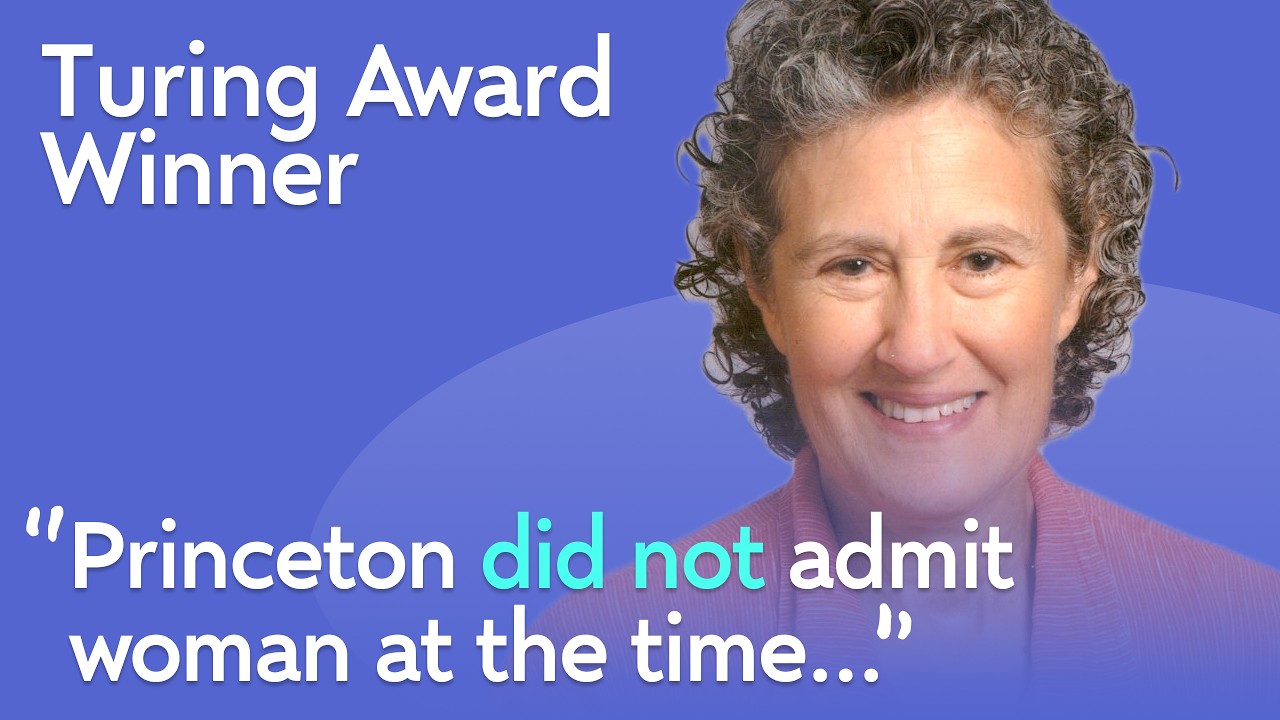
Barbara Liskov, a pioneering computer scientist and Turing Award winner, revolutionized software development by introducing data abstraction and advancing distributed systems through innovations like the CLU and Argus programming languages and the Liskov Substitution Principle. Despite facing gender barriers and skepticism, her foundational work on modularity, fault tolerance, and behavioral subtyping has profoundly shaped modern programming languages and reliable distributed computing.
Barbara Liskov, a Turing Award winner, shares insights from her pioneering career in programming languages and distributed systems. She recounts the challenges she faced as a woman entering computer science during a time when institutions like Princeton explicitly barred women from graduate programs. Despite these obstacles, Liskov found her way into programming somewhat by chance after completing her undergraduate degree in mathematics, eventually making significant contributions to the field through research and teaching.
Liskov discusses the software crisis of the 1970s, where large software projects frequently failed due to the lack of effective modularity in programming. She introduced the concept of data abstraction, which allowed programmers to create modules with well-defined interfaces hiding their internal implementations. This breakthrough enabled more reliable and maintainable software systems. Her work on the CLU programming language and the concept of abstract data types influenced later languages such as Ada and Java, shaping modern software development practices.
Transitioning to distributed computing, Liskov developed the Argus programming language, which supported distributed transactions and fault tolerance. She also contributed to the development of viewstamped replication, a protocol for ensuring data consistency and availability across multiple networked nodes, paralleling Leslie Lamport’s Paxos algorithm. These innovations laid foundational work for cloud storage systems and resilient distributed applications, addressing challenges like node failures and network partitions without relying on synchronized clocks.
Liskov reflects on the differences between her approach to modularity and the object-oriented programming movement on the West Coast, particularly regarding inheritance and behavioral subtyping. She formulated the Liskov Substitution Principle, emphasizing that subclasses should be substitutable for their base classes without altering program correctness. This principle became a cornerstone of object-oriented design and formal specification, highlighting the importance of behavior over implementation details.
Throughout the interview, Liskov emphasizes the importance of pursuing significant, non-incremental research problems and the interplay between teaching and research. She candidly addresses controversies surrounding her work, such as the backlash to Edsger Dijkstra’s “Go To Statement Considered Harmful” letter, and the skepticism she faced upon receiving the Turing Award. Ultimately, she credits a combination of luck, perseverance, and community recognition for her successful career, underscoring the evolving landscape of computer science and the lasting impact of foundational ideas like data abstraction and distributed system protocols.